
Nara Deer Park is one of the most famous places in Japan to see deer, and I still think it is worth visiting at least once.
It is iconic, easy to access, and there is something very special about walking around Nara while deer casually cross your path near temples, shrines, gardens, and old streets. For many travelers, it is one of those classic Japan experiences that feels almost impossible to skip.
But at the same time, Nara Deer Park has become extremely popular.
Around the main areas, especially near Todaiji Temple and the central parts of the park, you will usually find a lot of people. And because visitors can feed the deer with special crackers, the experience can sometimes feel less natural than expected.
You already know the deer will be there. They come directly to people. They are used to being fed. And sometimes, when they really want food, they can become a little pushy or even aggressive.
So yes, I still recommend visiting Nara Deer Park. But if you are looking for a quieter, more surprising, and maybe more emotional deer encounter in Japan, there are other places worth considering.
Some of these places have deer that you can see quite easily. Others are more about wild animals living freely in forests, islands, mountains, or marshlands, so the experience depends more on your luck.
But that is exactly what can make the moment more beautiful.
When you suddenly see a deer appearing in a quiet forest, walking near the sea, or standing in the middle of a wild landscape, it feels very different from feeding deer in a crowded tourist area.
Here are 7 peaceful alternatives to Nara Deer Park that I personally recommend if you want to see deer in Japan in a different way.
1. Miyajima Island, Hiroshima

Miyajima Island is probably the best-known alternative to Nara Deer Park, and for good reason.
The island is famous for Itsukushima Shrine and its floating torii gate, but deer are also part of the scenery here. You can often see them walking near the ferry area, resting along the streets, or moving around the quieter parts of the island.
Compared to Nara, the atmosphere feels different. Miyajima has the sea, the mountains, the shrine, the old streets, and the view of the torii gate in the background. The deer are not the only reason to visit, but they add a lot to the charm of the island.
What I like about Miyajima is that the deer feel more integrated into the landscape. You might see one walking near a stone lantern, standing close to the shore, or resting in a quiet corner away from the main tourist flow. It feels more scenic and more poetic than simply waiting for deer to come to you for food.
Of course, Miyajima can also be busy, especially around the shrine and shopping street. But if you move a little away from the busiest parts, the experience becomes much more peaceful.
Why visit instead of Nara Deer Park?
Miyajima gives you a more complete travel experience. You are not only going there to see deer. You also get one of the most beautiful shrine settings in Japan, a small island atmosphere, ocean views, hiking options, and a very photogenic traditional landscape.
Best for
Couples, photographers, first-time visitors to Hiroshima, and travelers who want a scenic deer encounter with temples, sea views, and traditional Japan in the same place.
Photo tip
Try to visit early in the morning or later in the afternoon. The light is softer, the island feels calmer, and you have a better chance of seeing deer in quieter moments around the streets, lanterns, or waterfront.
2. Yakushima Island, Kagoshima
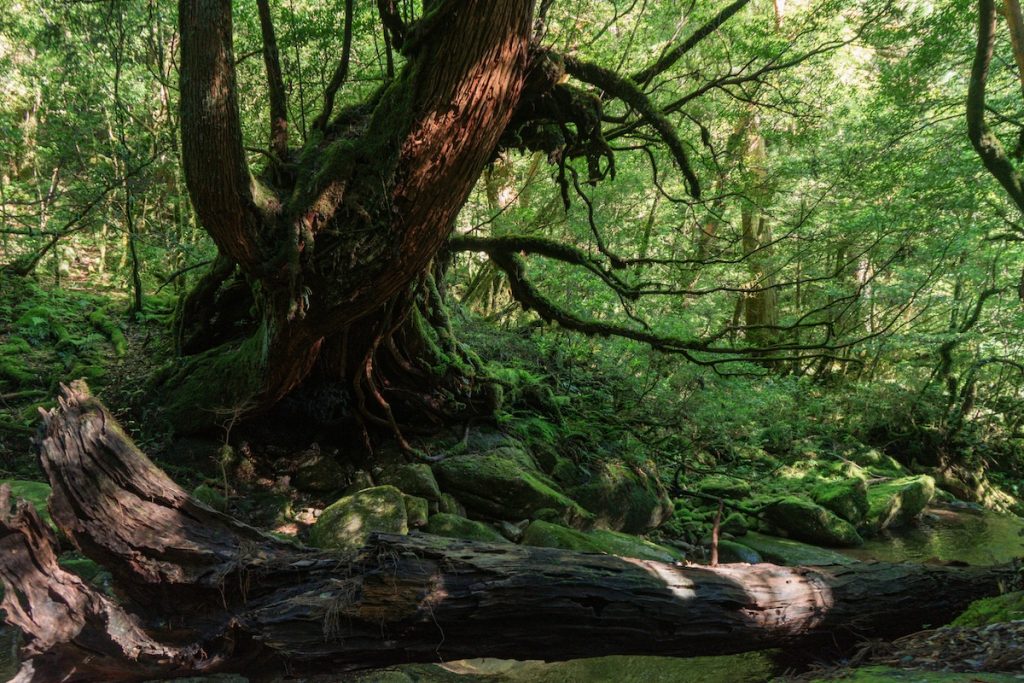
Yakushima is one of the most magical islands in Japan.
It is famous for its ancient cedar forests, mossy trails, mountain hikes, waterfalls, and deep green landscapes that feel almost unreal. But Yakushima is also home to deer, and seeing them there feels completely different from seeing deer in Nara.
Here, the deer are part of the wild nature of the island.
You might see them while driving along forest roads, walking near the coast, or exploring the western side of the island. They are not there to perform for tourists. They are not waiting for crackers. They are simply living in their environment.
That makes the encounter much more powerful.
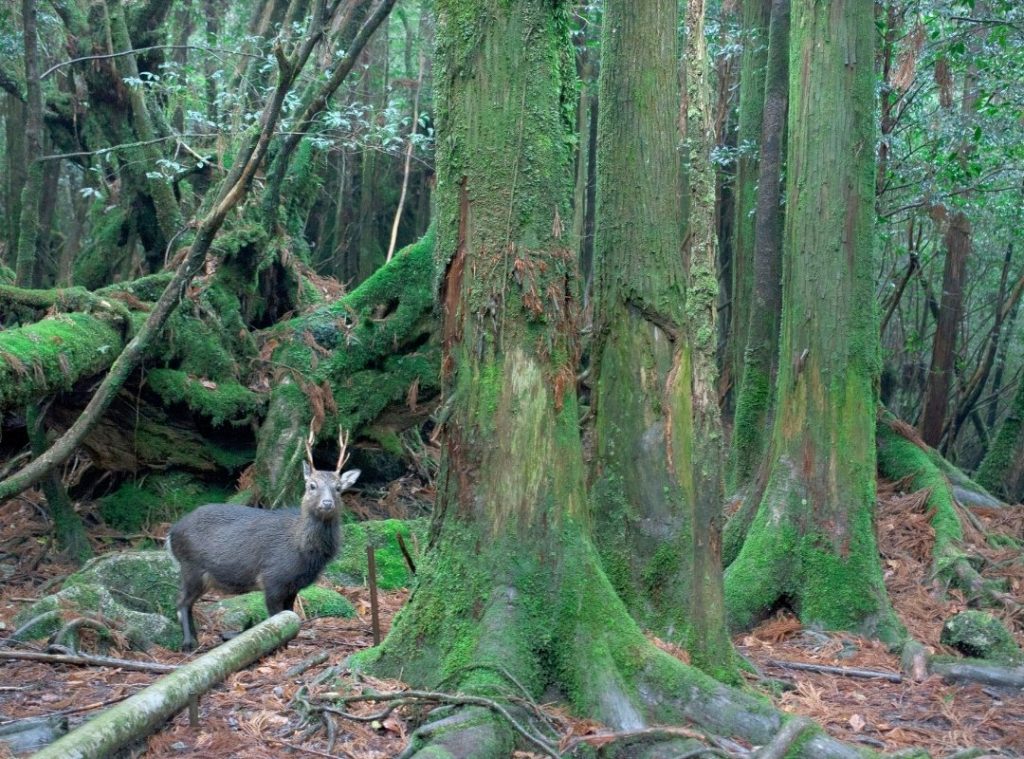
There is something very beautiful about seeing a deer quietly standing in the forest, surrounded by huge trees, moss, and mist. It feels like a real wildlife moment, not a tourist attraction.
Yakushima is not the easiest place on this list to visit. You need to take a flight or ferry, and you should plan your trip properly. But if you love nature, hiking, photography, and quiet places, it is one of the most rewarding destinations in Japan.
Why visit instead of Nara Deer Park?
Yakushima gives you a wilder, more emotional deer encounter. The deer are part of a larger natural world, surrounded by ancient forests, mountains, and a very strong island atmosphere.
Best for
Nature lovers, hikers, photographers, adventurous travelers, and people who want to see deer in a truly wild setting.
Photo tip
The forest atmosphere in Yakushima is incredible, but the light can be low under the trees. If you are using a camera, bring a lens that performs well in darker conditions, or be ready to increase your ISO. Misty weather can actually make your photos look even better.
3. Kasuga Taisha Primeval Forest / Mount Wakakusa Area, Nara
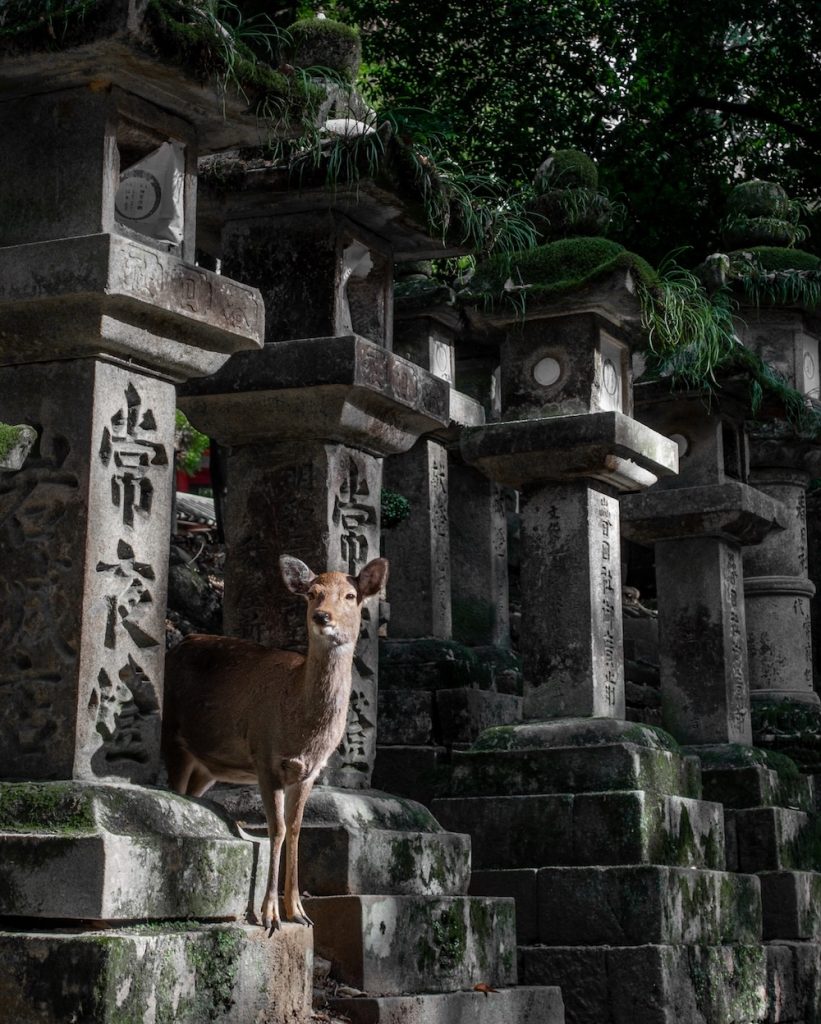
If you still want to visit Nara but prefer a calmer experience than the main deer park area, I recommend exploring around Kasuga Taisha Primeval Forest and Mount Wakakusa.
This is still Nara, so you are not completely escaping the deer park atmosphere. But the experience can feel more peaceful if you move away from the most crowded zones.
Kasuga Taisha is one of the most atmospheric shrines in Japan, with beautiful stone lanterns, forest paths, and sacred deer connected to the shrine’s history. As you walk around the shrine approach and nearby forest areas, the scenery feels more spiritual and less chaotic than the central parts of Nara Park.
Mount Wakakusa is also a great place to visit if you want more space. The hill gives you wide views over Nara, and the open landscape makes the experience feel different from the crowded areas near Todaiji.
For me, this is the best option if you are already visiting Nara but want to make the deer experience feel more elegant and less touristy.
Instead of staying only where everyone buys deer crackers, walk further, slow down, and explore the quieter surroundings.
Why visit instead of the main Nara Deer Park area?
You still get the symbolic Nara deer experience, but with a more beautiful and peaceful setting around forest paths, shrine lanterns, and open views.
Best for
First-time visitors to Nara who still want to see the deer but prefer a calmer, more photogenic route.
Photo tip
The stone lantern paths around Kasuga Taisha are beautiful for portraits and travel photos. If you see deer there, the scene can look much more atmospheric than in the busy open areas of the park.
4. Rokko Garden Terrace / Mount Rokko Pasture Area, Hyogo
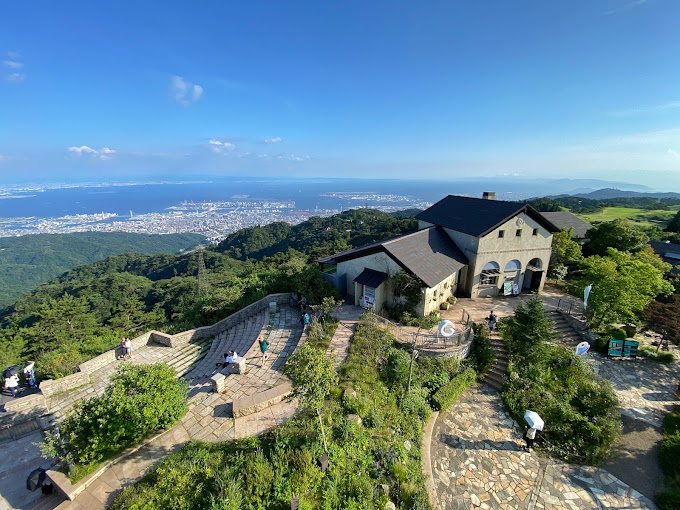
Mount Rokko is a great option if you are staying in Kobe, Osaka, or even Kyoto and want a peaceful mountain escape where you may also spot deer.
The area is famous for its panoramic views over Kobe and Osaka Bay, especially from Rokko Garden Terrace. It is also home to nature trails, forested areas, observatories, gardens, and Mount Rokko Pasture, a family-friendly farm area where visitors can enjoy animals and open mountain scenery.
For deer specifically, the experience is different from Nara. You should not expect deer to come to you for food or gather around the main tourist area all day. Around Mount Rokko, deer are more likely to be seen as wild animals, especially around quieter forest roads, hiking paths, and less crowded parts of the mountain.
The best way to increase your chances is to go early in the morning or close to sunset, when wildlife is usually more active and the mountain is quieter. If you are driving, keep your eyes open around wooded roads and open edges near the forest. If you are walking, choose quieter trails instead of staying only around the restaurants and viewpoints of Rokko Garden Terrace.
Mount Rokko Pasture is also worth including in the same trip if you want a softer animal and countryside atmosphere. It is not a wild deer park, but it gives the day a more peaceful nature feeling, especially for families or travelers who want to escape the city.
What I like about Rokko is that it is not a “come here and feed the deer” experience. It feels more natural. You go for the mountain, the views, the forest, and the fresh air, and if you spot deer along the way, it becomes a beautiful surprise.
Why visit instead of Nara Deer Park?
Mount Rokko offers a calmer and more natural mountain experience near Kobe. Seeing deer here feels less staged than in Nara because they are not waiting for visitors to feed them. It is more about spotting wildlife while enjoying the scenery.
Best for
Travelers staying in Kobe or Osaka, families, couples, people who like mountain views, and anyone looking for a peaceful half-day trip in Kansai.
Photo tip
Go around golden hour if possible. The light is beautiful over Kobe, the mountain roads become quieter, and if you are lucky enough to see deer near the forest edge, the scene will feel much more natural and cinematic than a crowded park photo.
5. Shiretoko Peninsula, Hokkaido
View this post on Instagram
Shiretoko is one of the wildest and most impressive places in Japan.
Located in eastern Hokkaido, it is a UNESCO World Natural Heritage area with mountains, forests, lakes, coastline, drift ice in winter, and a lot of wildlife. This is not a place where you go to feed deer. This is a place where you go to feel nature.
Ezo deer are commonly seen in Hokkaido, and Shiretoko is one of the best areas to experience that wild northern atmosphere. You might see deer near roads, open fields, forests, or coastal areas, depending on the season and your route.
The feeling is completely different from Nara.
In Shiretoko, the deer are part of a much larger ecosystem. You are in a place where you might also hear about brown bears, foxes, eagles, and marine wildlife. It feels raw, remote, and powerful.
This is one of the best options on this list if you want the deer encounter to feel like wildlife photography rather than tourism.
However, Shiretoko requires more planning. It is far from Tokyo, Kyoto, and Osaka, and it is better for people doing a Hokkaido road trip or a serious nature-focused itinerary.
Why visit instead of Nara Deer Park?
Shiretoko gives you a true wild Japan experience. Seeing deer there feels more natural, more dramatic, and more connected to the landscape.
Best for
Wildlife lovers, road trip travelers, photographers, and people visiting Hokkaido for nature.
Photo tip
Use a longer lens if you have one. You should never approach wild animals too closely, and a telephoto lens lets you capture deer naturally without disturbing them.
6. Kushiro Marsh / Eastern Hokkaido, Hokkaido
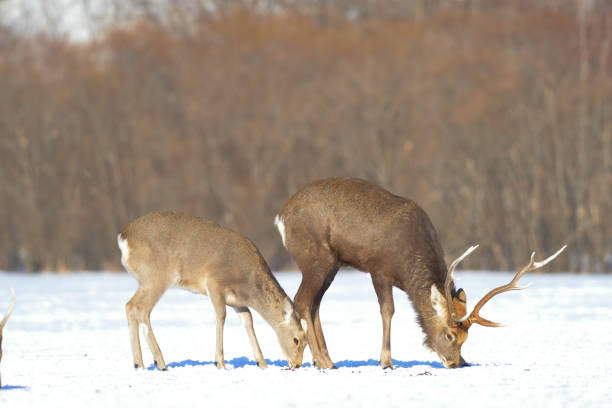
Kushiro Marsh is another excellent place in Hokkaido for travelers who want a more natural wildlife experience.
It is Japan’s largest marshland, and it has a very different atmosphere from most places people visit in Japan. Instead of temples, shopping streets, or city views, you get wide open wetlands, rivers, boardwalks, observation points, and quiet landscapes.
This area is especially famous for red-crowned cranes, but Ezo deer can also be seen in eastern Hokkaido. Depending on your timing, route, and luck, you may spot them near the marsh, along roads, or during guided nature activities.
What makes Kushiro interesting is the feeling of space.
In Nara, the deer are close, familiar, and surrounded by people. In Kushiro, the experience is more about watching wildlife from a distance in a huge natural landscape. It feels slower, quieter, and more contemplative.
I would especially recommend this area if you are interested in photography. The combination of marshland, mist, winter snow, cranes, deer, and soft light can be stunning.
Why visit instead of Nara Deer Park?
Kushiro Marsh is not about guaranteed close encounters. It is about seeing deer and other wildlife in a beautiful natural environment, where the surprise is part of the experience.
Best for
Hokkaido road trips, wildlife photographers, birdwatchers, and travelers who like quiet landscapes.
Photo tip
Early morning is often the most atmospheric time, especially if there is mist over the marsh. Even if you do not see deer immediately, the landscape itself is worth photographing.
7. Kerama Islands / Aka Island, Okinawa
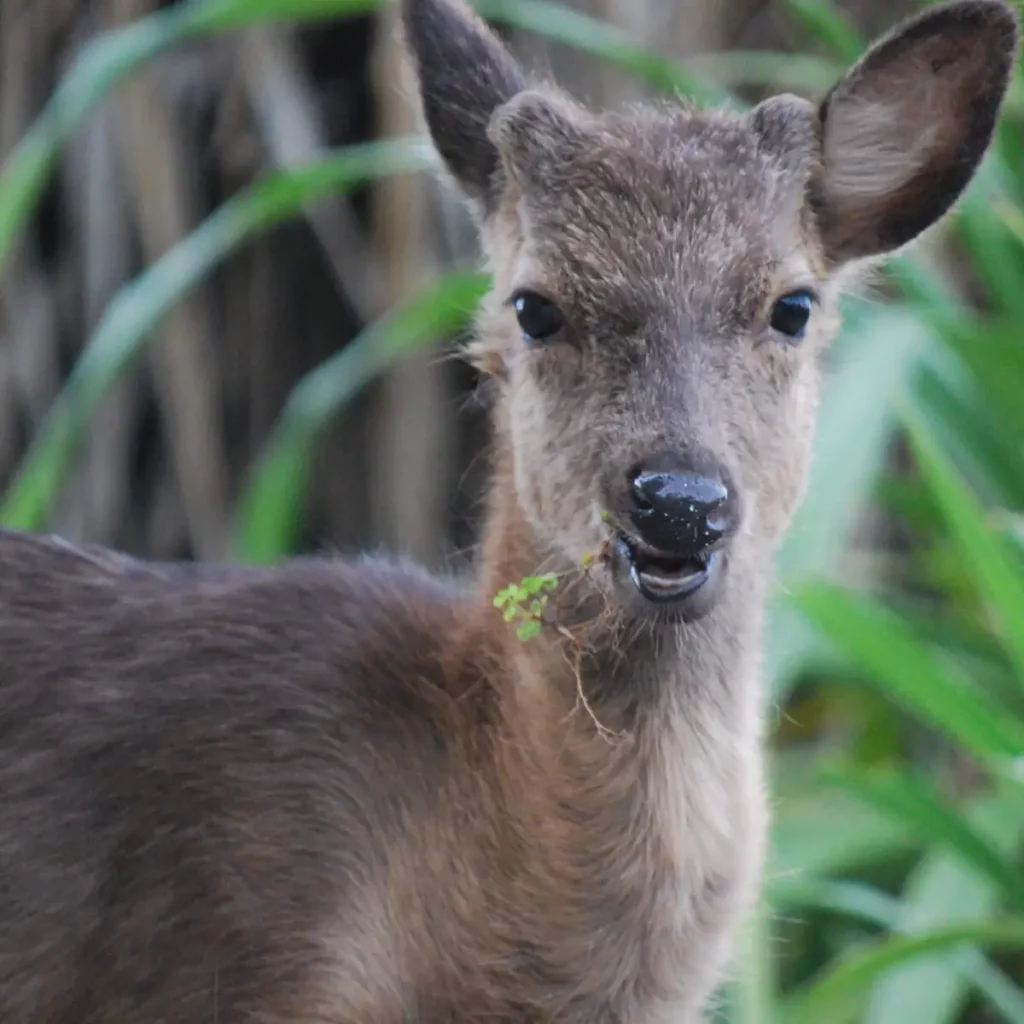
Aka Island in the Kerama Islands is one of the most unique places in Japan to see deer.
When people think about deer in Japan, they usually imagine Nara, temples, forests, or maybe Hokkaido. They do not usually imagine tropical islands, white sand beaches, turquoise water, and Okinawan scenery.
That is what makes Aka Island so interesting.
The Kerama Islands are known for their beautiful beaches, clear water, snorkeling, diving, and relaxed island atmosphere. But Aka Island is also home to Kerama deer, a protected deer species that lives in the area.
This is not a place where you should expect the same type of interaction as Nara. The deer are not there to be fed by tourists. You may encounter them while walking or exploring the island, but it is more of a natural island wildlife moment.
And honestly, that makes it special.
Seeing deer in a tropical Okinawan setting feels unexpected. It is not the classic image of Japan, which is exactly why I like it.
Aka Island is best for travelers who want something different, slow, and peaceful. You can enjoy the sea, the beaches, the local island rhythm, and maybe have a quiet deer encounter along the way.
Why visit instead of Nara Deer Park?
Aka Island offers one of the most unusual deer experiences in Japan. It combines wildlife with tropical scenery, beaches, and a peaceful island atmosphere.
Best for
Okinawa travelers, beach lovers, couples, photographers, and people looking for a more hidden Japan experience.
Photo tip
Do not focus only on close-up animal photos. The beauty of Aka Island is the setting. If you see deer with tropical greenery, village roads, or the sea in the background, try to include the landscape in your composition.
So, Should You Skip Nara Deer Park?
No, I would not say that.
Nara Deer Park is still iconic, and if it is your first trip to Japan, it can absolutely be worth visiting. The combination of deer, temples, old streets, and historic atmosphere is still very special.
But I think it is important to know what kind of experience you are going to get.
Nara is famous. Nara is convenient. Nara has many deer. But it is also busy, very popular, and the feeding culture makes the encounter feel less wild and less surprising.
If you want something more peaceful, more natural, or more emotional, then these alternatives are worth considering.
Miyajima is probably the easiest and most scenic alternative. Yakushima is the most magical. Shiretoko and Kushiro are the best for true wildlife. Aka Island is the most unexpected. And the Kasuga Taisha / Mount Wakakusa area is perfect if you still want to enjoy Nara, but in a calmer way.
At the end of the day, seeing deer in Japan does not have to be only about feeding them in a crowded park.
Sometimes, the most beautiful moment is when you are walking quietly, not expecting anything, and suddenly a deer appears in the landscape.
That is the kind of encounter you remember.
And if you are still visiting Nara, feel free to check out our travel guide on the most photogenic locations in Nara here!
Written by Mehdi, photographer at Photo Trips.