Seoul’s parks can change the way you remember the city. Between palace visits, shopping streets and late dinners, there is room for a morning beneath tall trees, a walk through a royal garden, or an afternoon watching the light move across the Han River.
For photographs, those quieter moments are often the ones worth making time for. A tree-lined path gives you somewhere to walk naturally. A pond adds a reflection. An old stone wall puts a little of Seoul’s history into the background without taking attention away from you.
I’ve chosen these 9 parks and gardens for the different kinds of pictures and experiences they offer. Some fit easily into a first trip. Others deserve a little detour. For each one, you’ll find specific places to look for and simple advice to help you come home with better photos, whether you are using a camera or your phone.
Which Seoul park or garden should you visit?
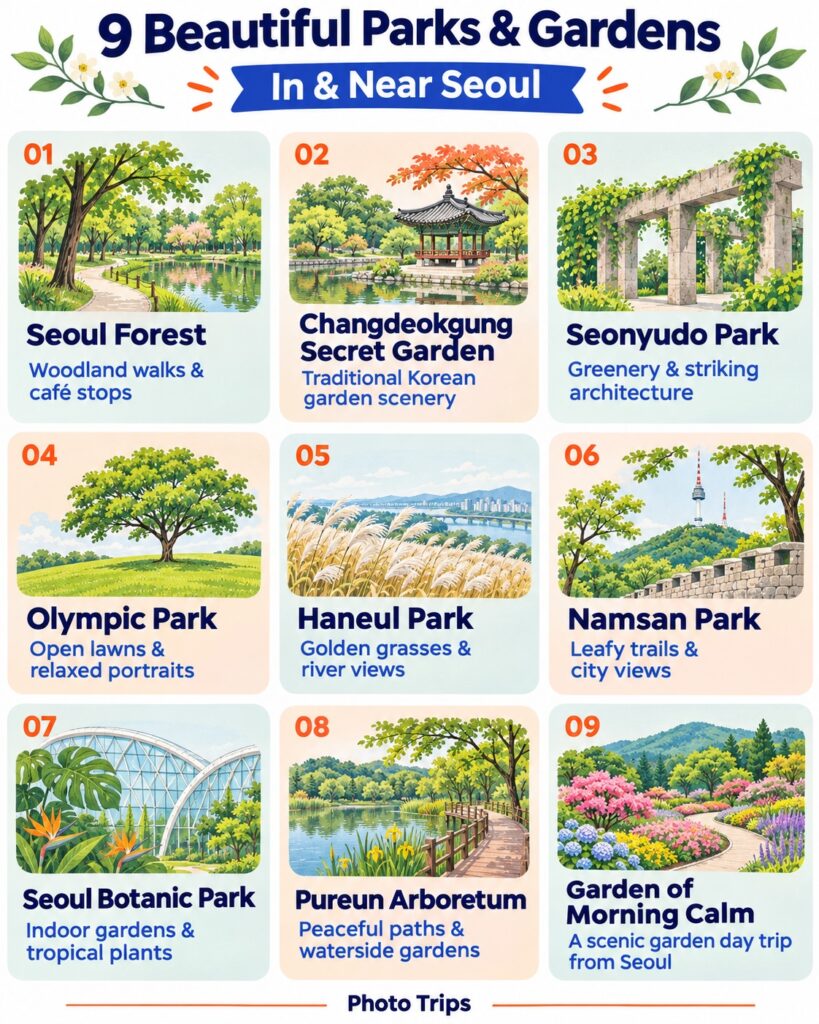
If you only have time for one, I would start with Seoul Forest for an easy, varied outing, or the Secret Garden if traditional landscapes are what brought you to Korea. Seonyudo would be my choice for something a little less obvious.
1. Seoul Forest: Trees, Reflections and a Walk Around Seongsu

Seoul Forest is an easy park to build a day around. You can spend the morning among trees and ponds, then head into nearby Seongsu for lunch and cafés. It gives you space to slow down without making the whole day about getting there.
For photos, start with Mirror Pond, also called Mirror Lake, and the metasequoia paths. The pond gives you a chance to photograph trees twice, above and below the waterline, while the tall trunks along the paths create a natural frame. Autumn brings another reason to visit, with yellow ginkgo leaves and warmer colors across the park.
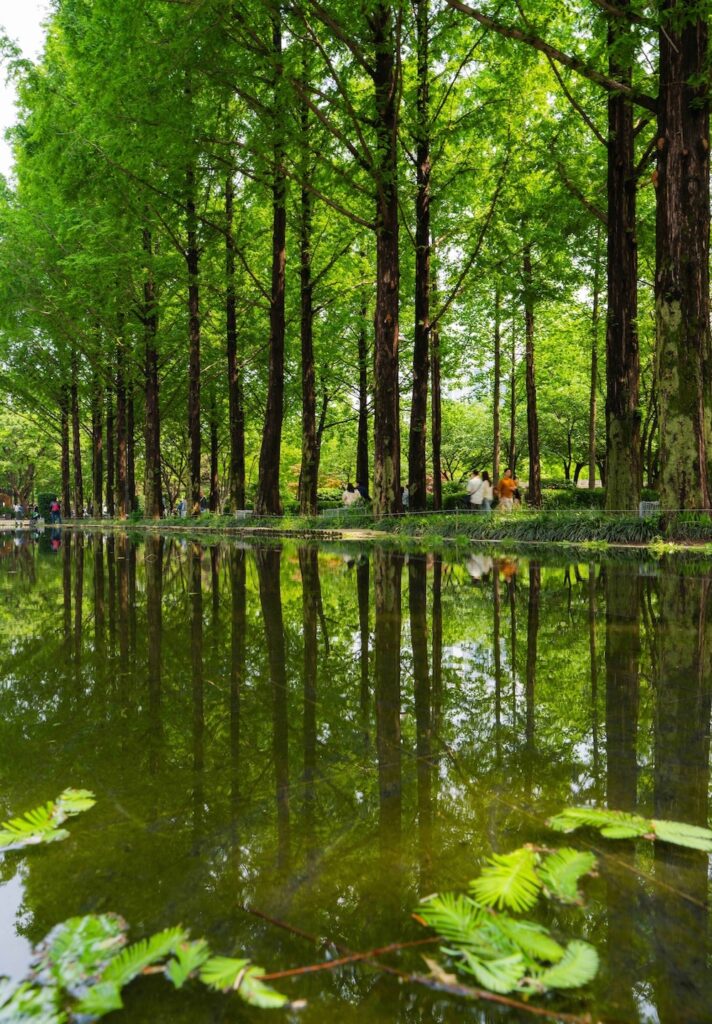
My photo tip: At the pond, lower your camera a little and see how the reflection changes. If someone is in the picture, place them to one side so they do not cover the scene behind them. On a tree-lined path, ask them to walk slowly toward you rather than hold a pose. Take a few frames while they move, keeping the path clear for others.
For softer portraits, look for even shade instead of patches of strong sunlight across the face. You do not need to wait for sunset to make a good picture here.
Getting there: Seoul Forest Station on the Suin–Bundang Line, or Ttukseom Station on Line 2. General park admission is free; individual facilities have their own schedules.
2. Changdeokgung Secret Garden: Ponds, Pavilions and Woodland

The Secret Garden, or Huwon, is the place I would choose for photographs with a distinctly traditional Korean setting. Behind Changdeokgung Palace, the garden combines wooded slopes, ponds and pavilions. The buildings are part of the landscape, with rooflines appearing between branches and above the water.
Look for Buyongji Pond and Buyongjeong Pavilion, then Aeryeonji Pond if it is included in your visit’s open route. The ponds give you a clear place to start, with water, woodland and traditional architecture in the same scene.
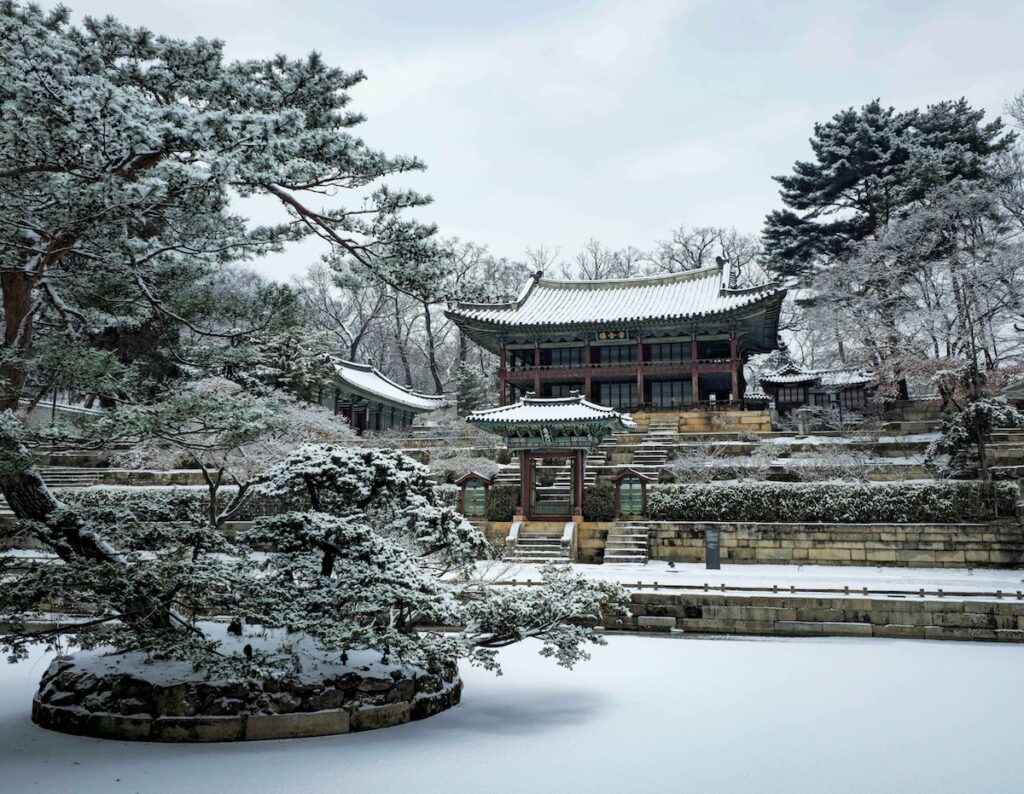
My photo tip: At Buyongji, leave enough room around the pavilion to show the trees and water that give it context. A wider picture often tells the story better than a tight crop of the roof. When photographing your travel companion, keep them slightly off-center and let a branch or roofline frame the other side. Work from the permitted paths and viewing areas.
This visit needs more planning than an ordinary park. Entry to the Secret Garden is limited to scheduled sessions, and its ticket is separate from palace admission. You also need time to walk through the palace grounds to the garden entrance. Book your garden session ahead of time and arrive at the palace early enough to reach the garden entrance before your slot begins.
Treat this as a garden visit with opportunities for photographs. A timed admission does not reserve a private setting for a portrait session.
3. Seonyudo Park: A Garden Built Around an Old Waterworks
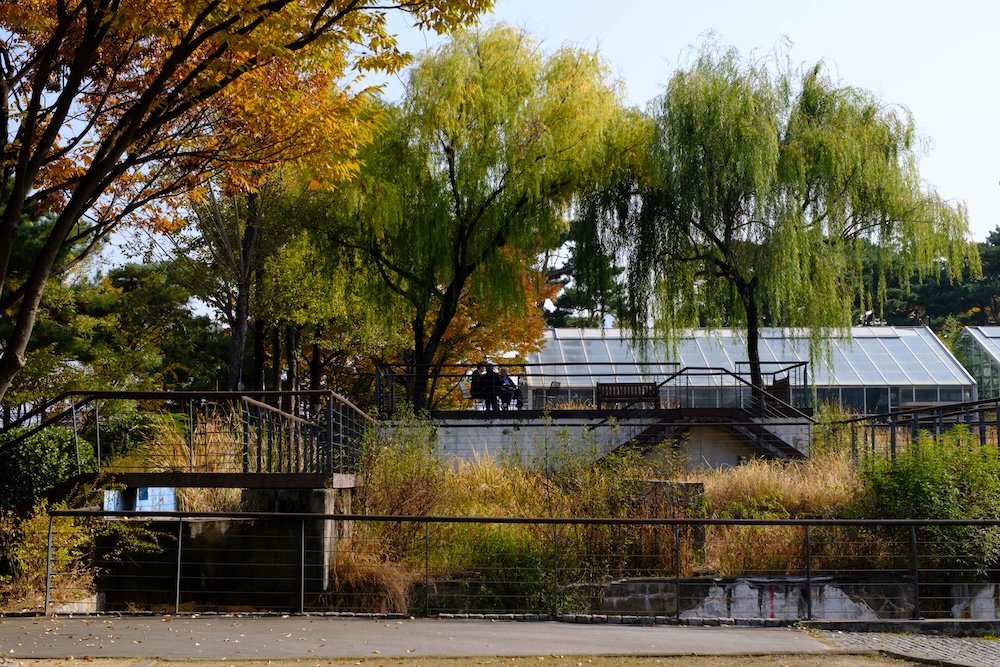
Seonyudo is one of the most interesting choices if you enjoy both gardens and architecture. On an island in the Han River, a former water purification plant has been turned into a park. Parts of the old infrastructure remain, giving the planting an unusual setting of concrete walls, basins and columns.
The Garden of Green Columns is the first area I would look for. The repeated columns give you structure, while the plants soften their edges. The Aquatic Botanical Garden, created from the former filtration facilities, offers another way to see how the site’s earlier life has shaped the garden.
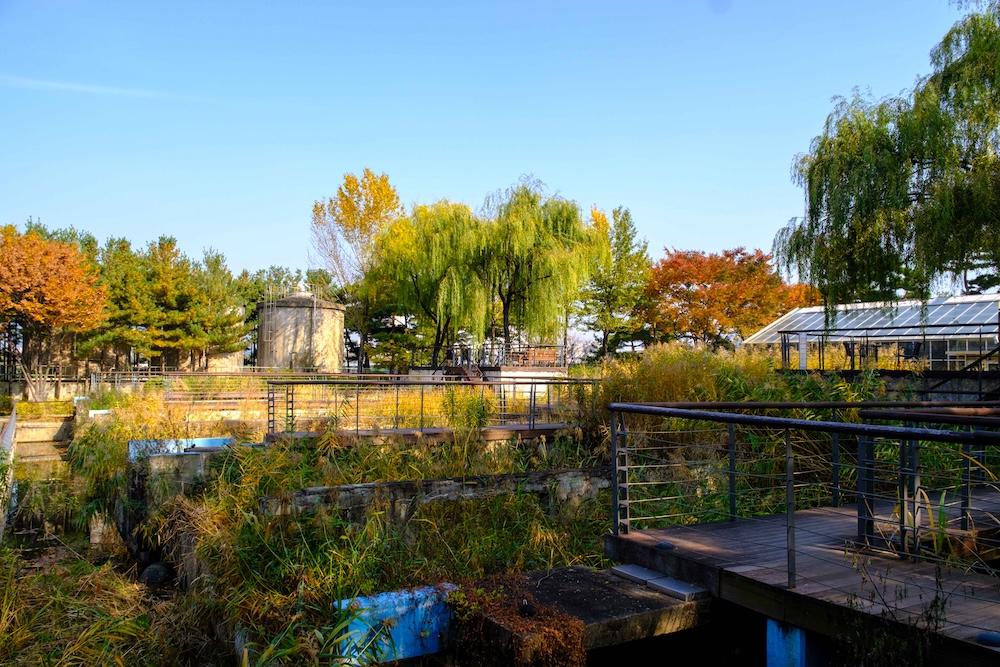
My photo tip: Try a portrait looking along a row of columns. Move a little to the left or right until the vertical lines sit beside your subject rather than appearing to grow out of their head. Keep some of the concrete in the frame: it is what makes this location different from a photograph taken in any leafy park.
An overcast day can work beautifully here, giving you gentle light without strong shadows under the structures. If the sky clears, finish your visit with a look toward the river.
Getting there: Seonyudo Station on Line 9, followed by a walk to the island. Admission is free.
4. Olympic Park: Open Space and One Tree Hill
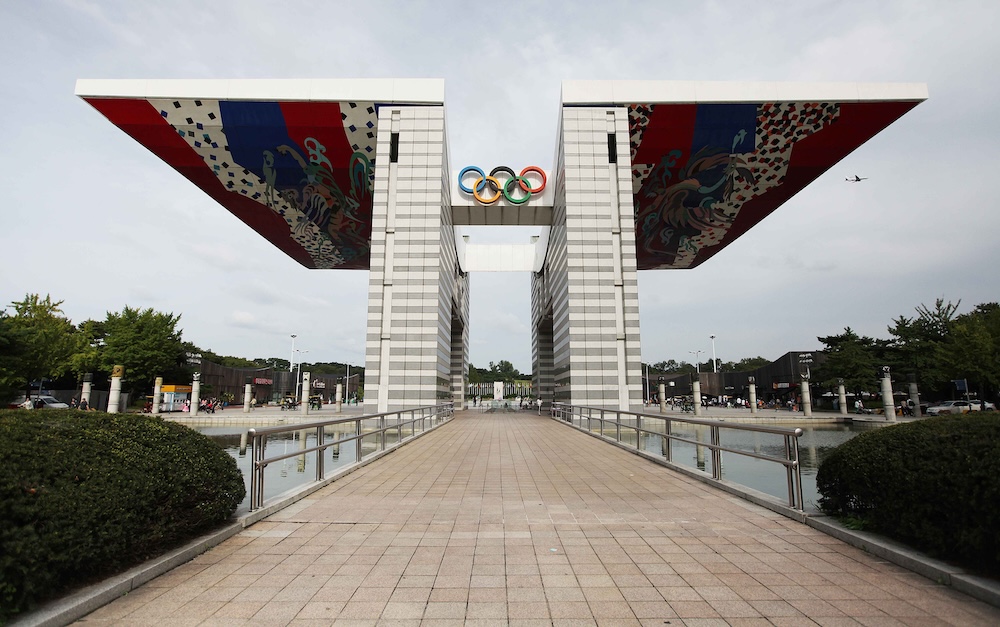
Olympic Park is my pick for photographs that need room to breathe. Its rolling landscapes, walking paths and gardens allow you to make pictures in which a person is a small part of a much larger scene.
The best-known example is One Tree Hill, often called the Lone Tree. Also look at the Mongchon Fortress walking paths and, when flowers are in season, the Rose Plaza and Flower Garden.
My photo tip: With One Tree Hill, resist filling the entire picture with the tree. Include the slope and some sky, then place your companion away from the trunk so their outline remains separate. Use permitted paths and accessible areas, and respect any barriers around the grass. The simplicity of the setting is the reason the photograph works.
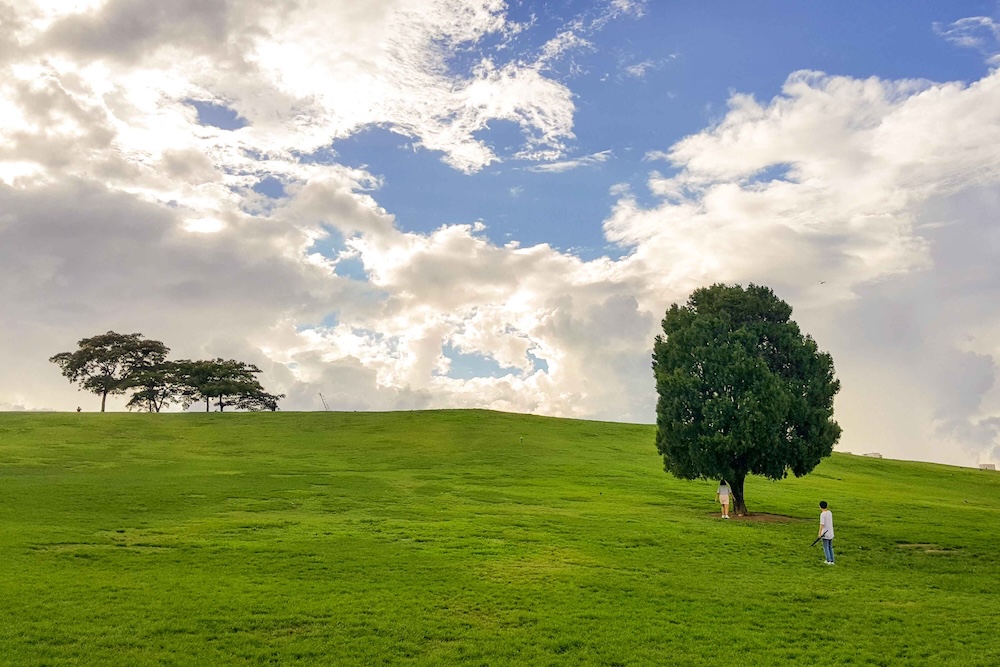
Along the fortress paths, look for a curve leading into the distance. For couples, a walking photograph with space around both people often feels more natural than standing shoulder to shoulder and looking at the camera.
Getting there: Mongchontoseong Station on Line 8 or Olympic Park Station on Lines 5 and 9. Choose your entrance around the places you want to see; the park is large.
General admission is free. If you are organizing a commercial shoot, the park requires advance permission.
5. Haneul Park: Silver Grass and Late-Afternoon Light

Haneul Park is especially appealing in autumn, when its silver grass becomes the main subject. Set above the surrounding World Cup Park area, it also has viewpoints across the Han River. The combination of tall grasses and open sky gives photographs a very different feel from Seoul’s wooded parks.
For portraits, concentrate on the designated paths through the silver grass. For a wider landscape, continue to the viewing areas.
My photo tip: When the sun is low, try placing it behind or slightly to the side of the grass. The feathery heads can catch the light while your subject stands on the path. Shift your position until a darker patch of vegetation sits behind the illuminated grasses; the contrast helps them show up.

Stay on the paths. You can create the impression of being surrounded by grass by photographing along a narrow section, without stepping into the planting.
Getting there: World Cup Stadium Station on Line 6. Allow time for the approach and climb rather than arriving just before sunset. Opening times vary through the year, so check the current schedule before planning late photographs. Bring a layer if you intend to linger in the exposed upper park.
6. Namsan Park: Greenery With Seoul in the Background

Namsan is a good choice when you want a photograph that combines nature with a recognizable part of Seoul. You can include trees, the city wall and N Seoul Tower without making every picture a skyline panorama.
I would start around Baekbeom Square, on the lower slopes, and explore the adjoining Seoul City Wall path. From here, look for angles that bring the tower, foliage and wall together in the same scene. It is a useful area to consider if a full climb to the summit is not part of your plans.
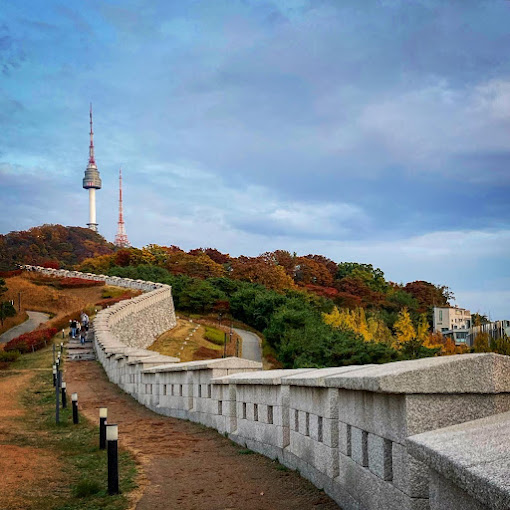
My photo tip: Use the wall as a line running into your picture. Place your companion on the path beside it, then move until the tower is visible without sitting directly above their head. A few steps sideways can make the background much cleaner.
For a couple photograph, have both people walk in the same direction and turn slightly toward each other. Keep some of the wall and surrounding trees in the frame so the picture still feels connected to the place.
Getting there: Hoehyeon Station on Line 4 is a useful starting point for Baekbeom Square. This is a hillside park, so plan for slopes and steps. Start from Exit 4 for the approach to the square.
7. Seoul Botanic Park: Greenhouse Curves and Garden Paths
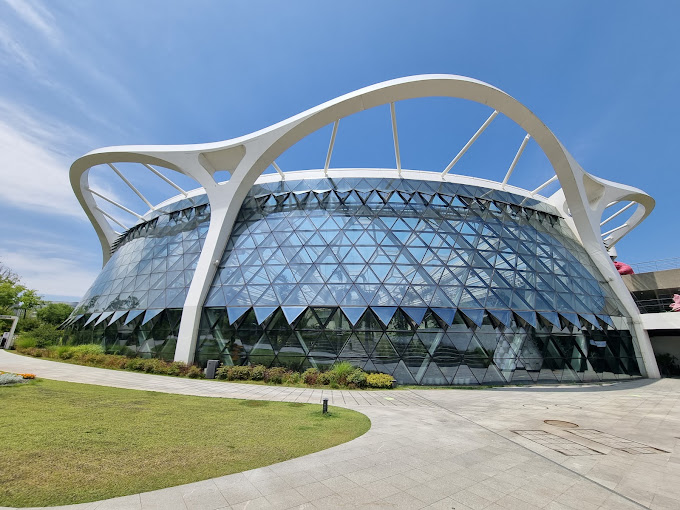
Seoul Botanic Park in Magok is a useful choice when you want garden scenery with an indoor option. The site includes outdoor landscapes and a large greenhouse, so you can approach it as both a garden visit and an architectural photography stop.
Inside, look for the elevated skywalk and the way the greenhouse structure curves above the planting. The skywalk gives you a view over the tropical planting, adding a different perspective to the photographs you take at ground level. Outside, the Lake Garden gives you a more open scene.
My photo tip: In the greenhouse, include part of the roof or walkway in your frame. Those lines give the plants a sense of scale. For a portrait, look for a patch of soft light and keep the face clear of hard shadows from the structure. Take your picture promptly and leave room for other visitors to pass.
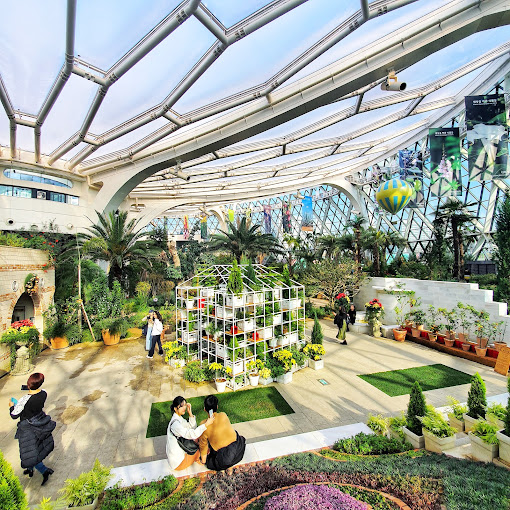
If your lens fogs after entering from the cold, give it time to adjust before photographing. The mist is on the glass, not in the scene.
Getting there: Magongnaru Station on Line 9 and the Airport Railroad serves the park.
The greenhouse and themed gardens have paid admission and normally close on Mondays. Their hours shorten in winter, with last entry before closing, so confirm the opening hours for your date before using this as your rainy-day plan.
8. Pureun Arboretum: A Garden Worth Slowing Down For
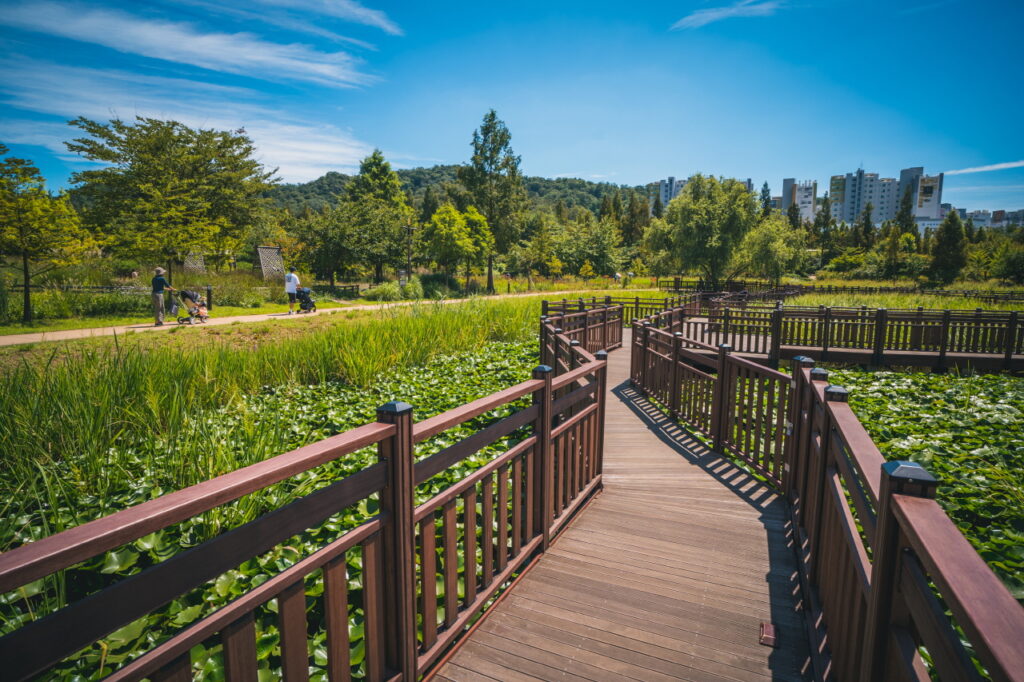
Pureun Arboretum, in Hangdong in southwestern Seoul, is the choice I would save for travelers who actively enjoy gardens. It takes you away from the usual central sightseeing route, so it makes more sense as a deliberate outing than something squeezed between palace visits.
The Hangdong Reservoir and the surrounding themed gardens are the main draw. Look for the waterside paths, then explore smaller areas such as the Herb Garden and Rock Garden.
My photo tip: Start with a wider photograph across the reservoir, then make a second picture using the curve of the waterside path. If you include someone, leave enough space ahead of them to show where they are walking. It gives the photograph a sense of movement without needing an elaborate pose.
This is also a good place to vary your pictures. After the wide views, look for a leaf, a seed head or a small patch of planting. A handful of details makes a travel album feel more personal than eight versions of the same full-length portrait.
Planning your visit: The arboretum is in Guro-gu. Onsu and Cheonwang are useful stations to consider when checking your route, but allow for the onward walk or local connection. Use the current address, 240 Yeondong-ro, when planning directions.
9. The Garden of Morning Calm: A Beautiful Garden Day Trip From Seoul

The Garden of Morning Calm is the place I would add if you have time to venture beyond Seoul. Set beneath wooded mountains in Gapyeong, it brings together carefully arranged flower beds, traditional Korean garden scenery and winding paths. Give it a proper place in your itinerary so you can enjoy the gardens without constantly watching the clock.
Start with the Sunken Garden, where colorful planting forms the shape of the Korean Peninsula. This is a good place for a wider photograph that shows how the flower beds fit into the surrounding landscape. Then make your way to Seohwayeon Pond for a different mood, with water and greenery creating a softer setting.
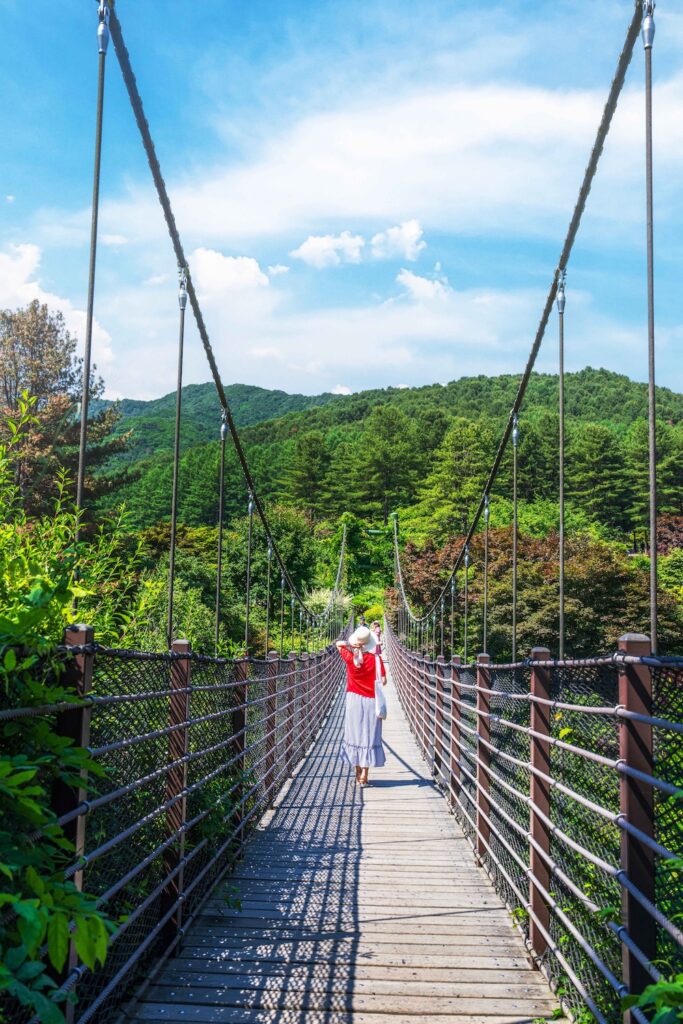
My photo tip: Around the Sunken Garden, use the curves of the flower beds to lead the eye toward your companion, keeping them on a designated path. Leave some of the wooded hillside in the background to show the garden’s setting. At Seohwayeon, look for reflections when the water is still and avoid placing your subject directly in front of the detail you want to capture. A slight shift to one side can give you both a natural portrait and a beautiful view.
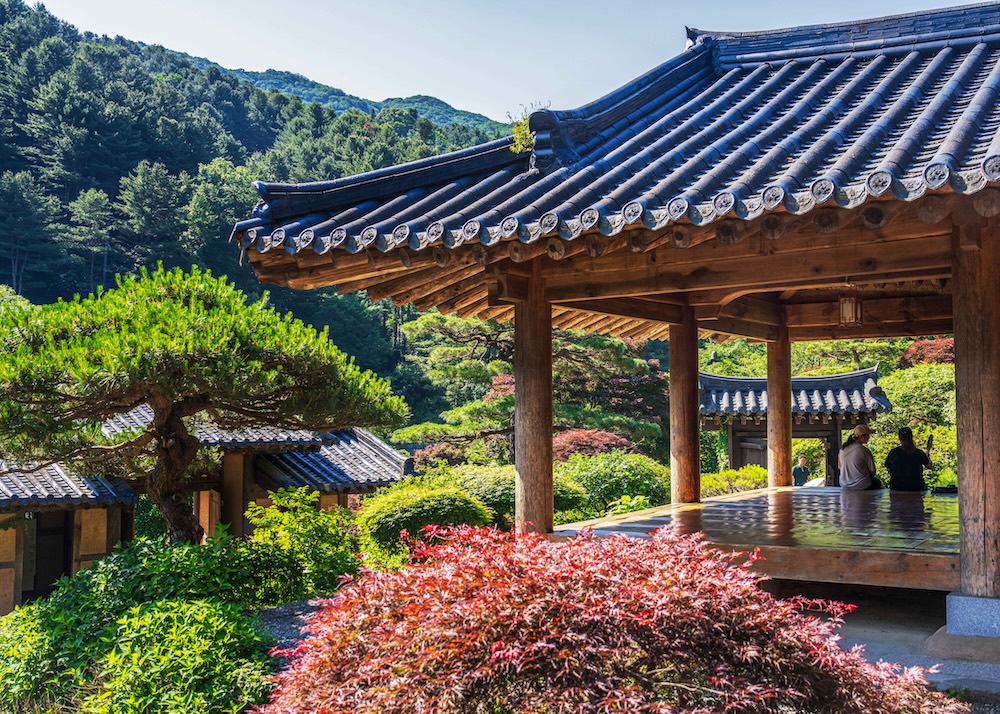
I would allow at least a couple of hours here, especially if photography is part of the plan. The planting changes with the seasons, so leave room to explore whichever areas are looking their best during your visit.
Getting there: The garden is in Gapyeong, outside Seoul. Travel to Cheongpyeong Station on the Gyeongchun Line, then continue by local bus or taxi. Allow for the connection and check your return transport before setting off. This is a day-trip addition, rather than another stop on a central Seoul walk.
A Few Photography Tips Before You Go
Choose a park for the season you are actually visiting. Flowers and autumn colors do not follow an exact calendar. Check recent park updates if a particular display is the reason for your trip. Outside those periods, look for permanent features such as Seonyudo’s columns, Namsan’s wall or the greenhouse at Seoul Botanic Park.
You May Also Like: Cherry Blossom Forecast in South Korea
Give yourself time in one place. A relaxed visit to one park usually produces better photographs than rushing between three. Spend a few minutes watching the light and choosing your background before asking someone to pose.
Photograph the person and the place together. Take one wide image showing the setting, one closer portrait and a few small details. For couples and families, walking or talking often gives you more natural expressions than repeatedly asking everyone to smile.
Check arrangements for a professional session. Visitor access and permission for a paid photoshoot are not always the same. Agree on the location with your photographer first, especially for palace gardens and indoor venues.
You May Also Like: Photography Etiquette in South Korea
Be in the Photos, Too
A beautiful park is a lovely part of a Seoul trip, but it is even better when your photographs include the people you shared it with.
Photo Trips connects you with local photographers in Seoul for private sessions shaped around your plans. Browse their portfolios, choose a style you like, and discuss the setting and timing before your shoot. Your photographer can help you feel comfortable in front of the camera and work out which locations are suitable for your session.
Whether you are traveling alone, visiting as a couple or trying to get the whole family into the same picture, leave a little room in the itinerary to enjoy being there together.