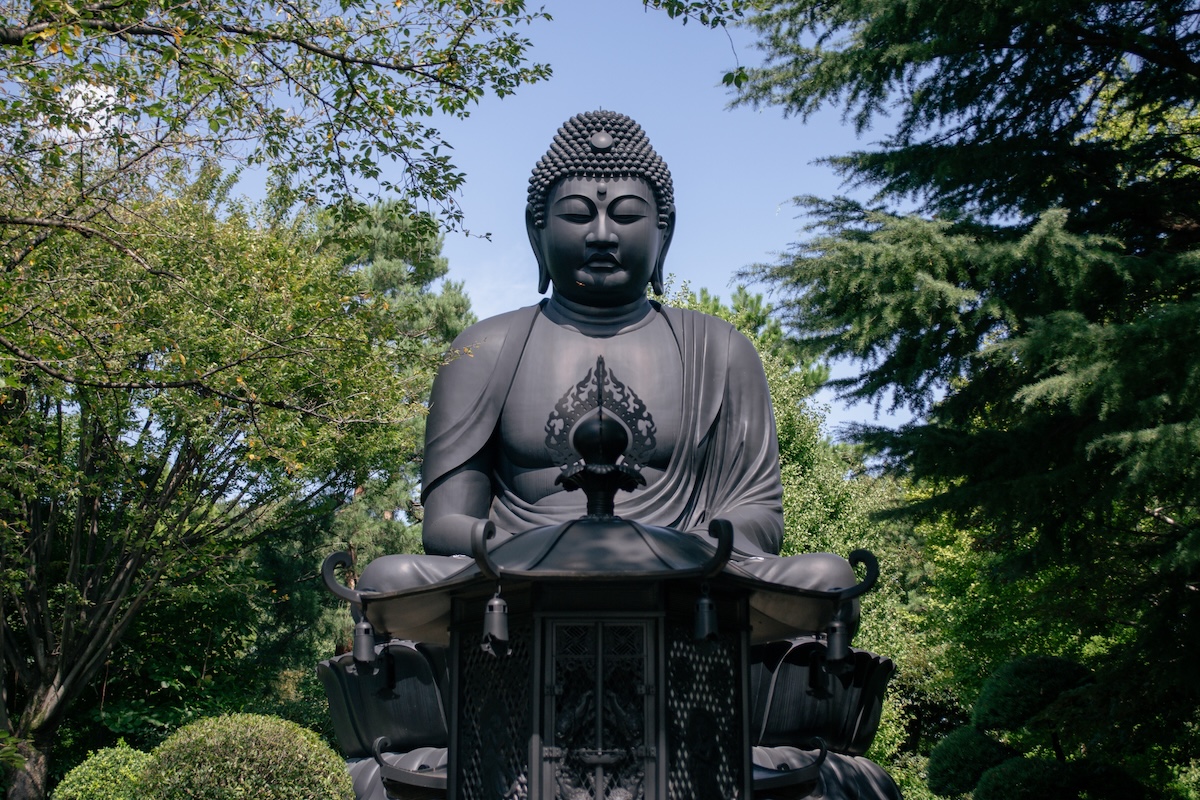
When people talk about giant Buddha statues in Japan, places like Kamakura usually get all the attention. What many visitors don’t realize is that Tokyo has its own giant Buddha, quietly hidden in a residential neighborhood far from the city’s usual tourist crowds.
I discovered Jōrenji Temple while exploring northern Tokyo, and it immediately struck me as the kind of place that deserves far more attention than it receives. Located in the quiet neighborhood of Shimoakatsuka, the temple is home to Tokyo Daibutsu, an impressive bronze Buddha statue that towers above the surrounding grounds. Unlike many of Tokyo’s more famous attractions, however, you can often enjoy the entire place almost by yourself.
As a Tokyo-based photographer, I enjoy finding locations that feel authentic and slightly overlooked. Jōrenji Temple is exactly that. Between the giant Buddha, the charming statues of the Seven Lucky Gods, and the peaceful atmosphere of the temple grounds, it offers a rewarding experience for travelers who want to explore beyond Tokyo’s most famous sights.
History and Local Context
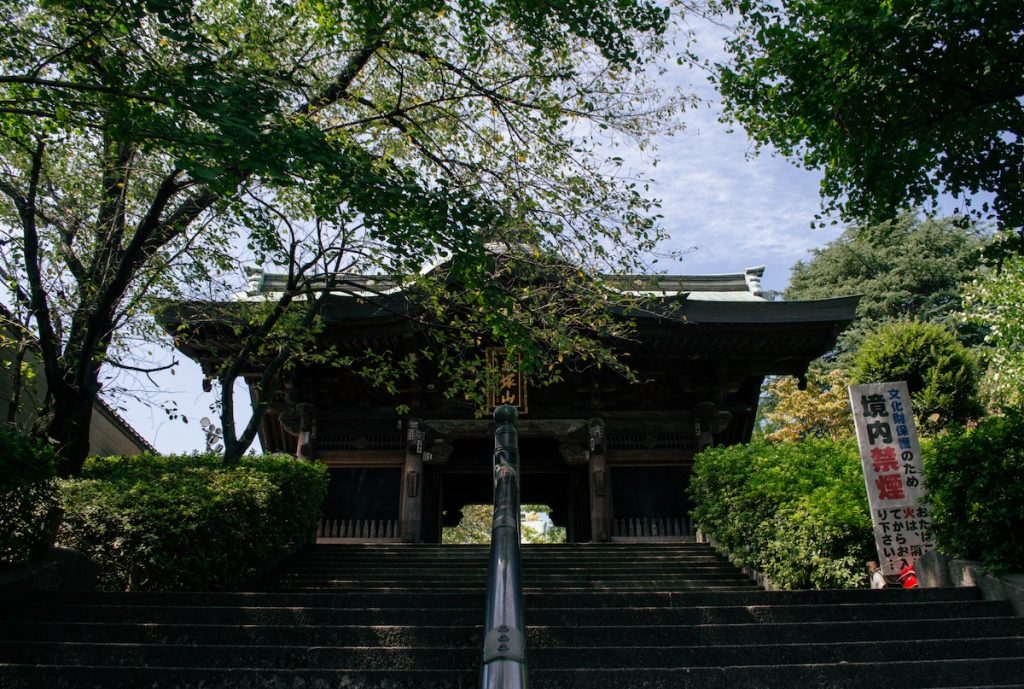
Jōrenji Temple is a Buddhist temple located in Itabashi Ward, a part of Tokyo that most international visitors rarely explore. While districts such as Shibuya, Asakusa, and Shinjuku attract millions of visitors every year, Itabashi remains largely residential and local.
That is part of what makes visiting Jōrenji Temple interesting.
The temple has served the local community for centuries, but today it is best known for Tokyo Daibutsu, one of the largest bronze Buddha statues in Japan. Standing within the temple grounds, the statue feels almost unexpected. You leave the station, walk through quiet residential streets, and suddenly find yourself standing in front of a giant Buddha.
Unlike many popular attractions in Tokyo, there are no large crowds, souvenir shops, or long lines here. The experience feels much more relaxed and personal.
What to See at Jōrenji Temple
Tokyo Daibutsu
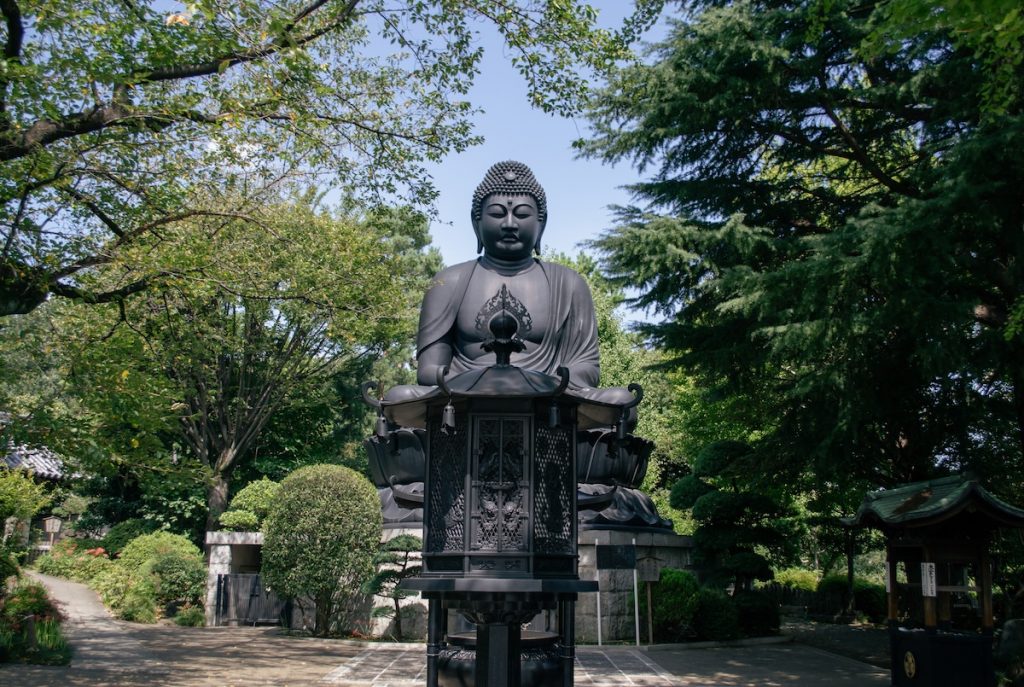
The main attraction is undoubtedly Tokyo Daibutsu.
Standing approximately 13 meters tall, the statue is one of the largest Buddha statues in Japan and one of Tokyo’s most overlooked landmarks. The first thing that struck me when visiting was not only its size, but also how peaceful the setting feels.
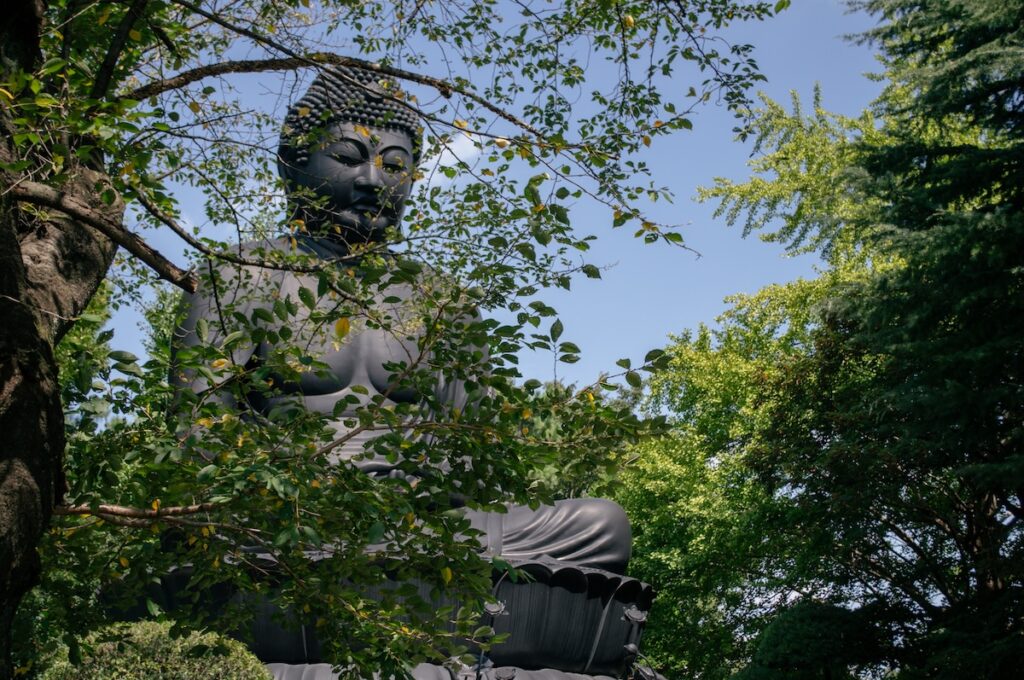
Many visitors travel to Kamakura to see the Great Buddha, but very few know that Tokyo has a giant Buddha of its own. The difference is that here, you can often appreciate it without dozens of people standing in front of your camera.
The statue is impressive from every angle. Up close, the details become more visible, while from farther away you can appreciate its scale against the surrounding temple grounds.
The Seven Lucky Gods
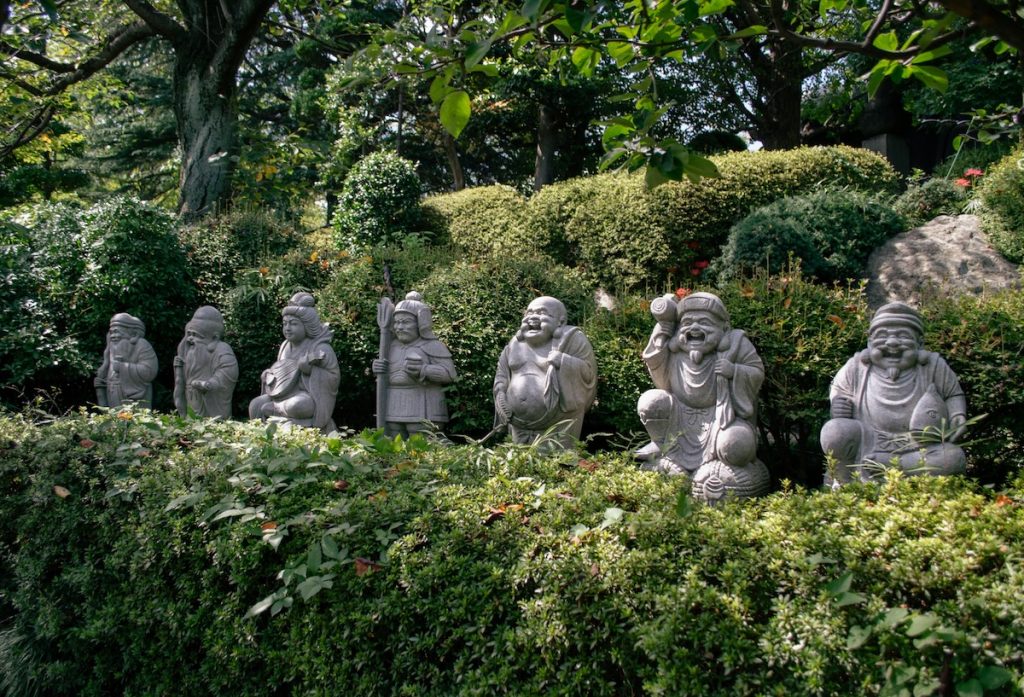
One of my favorite parts of Jōrenji Temple is something that many visitors might overlook.
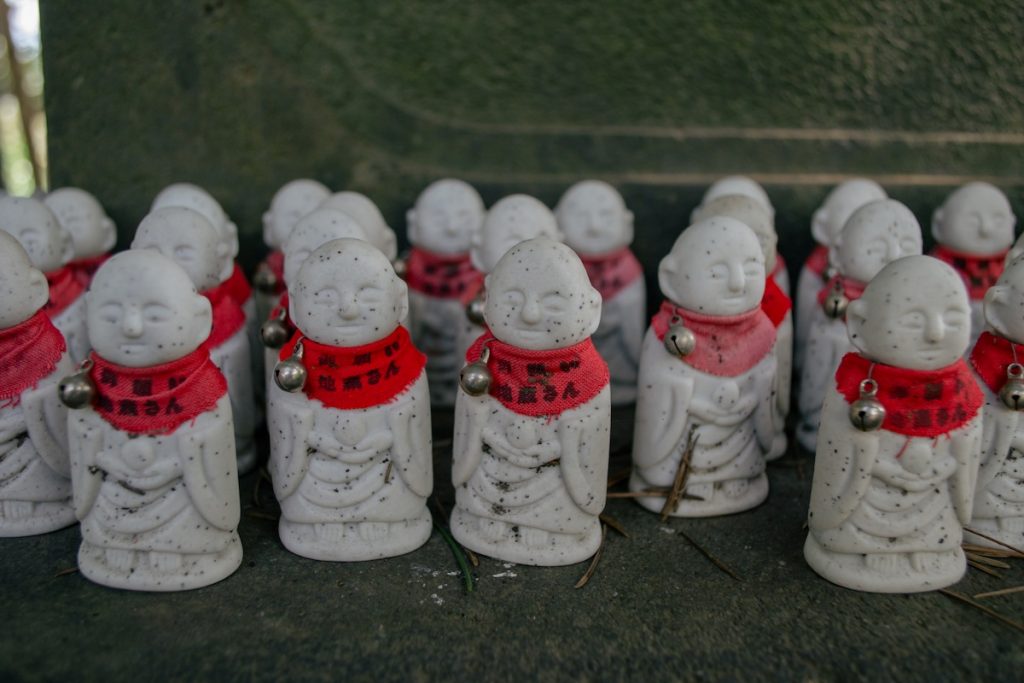
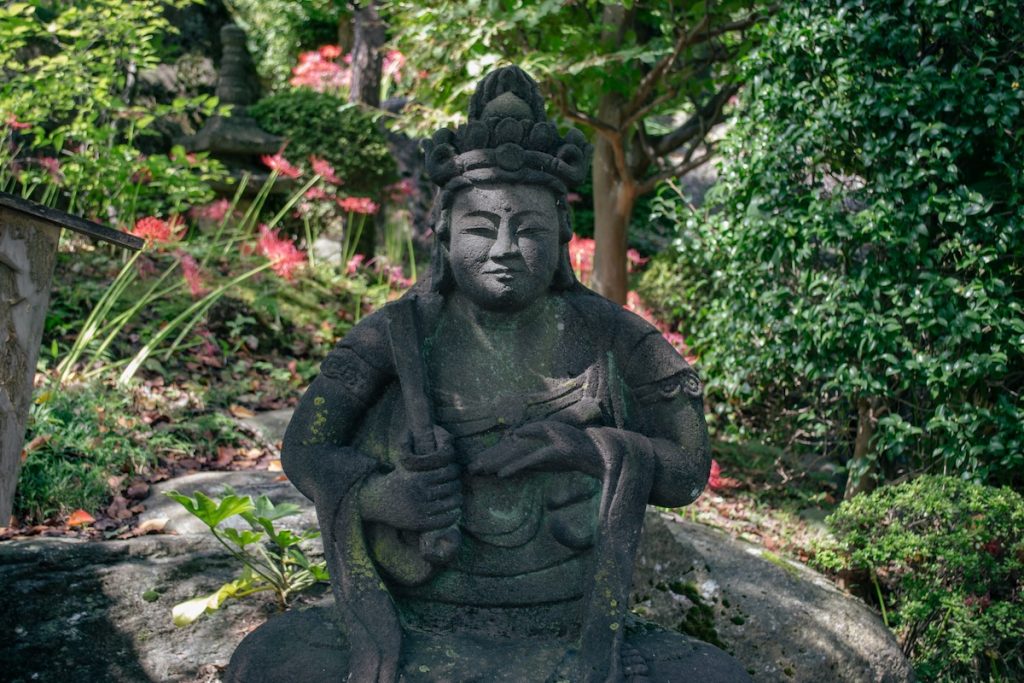
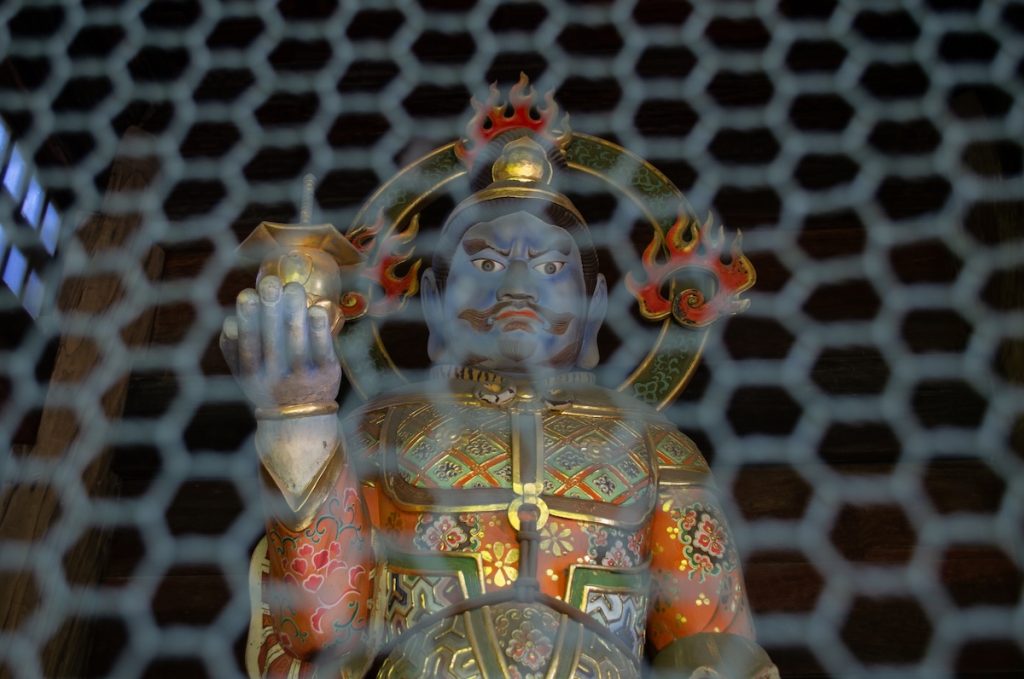
Near the main paths, you’ll find statues representing the Seven Lucky Gods, known in Japanese as Shichifukujin. Compared to the imposing presence of Tokyo Daibutsu, these statues feel surprisingly charming and approachable.
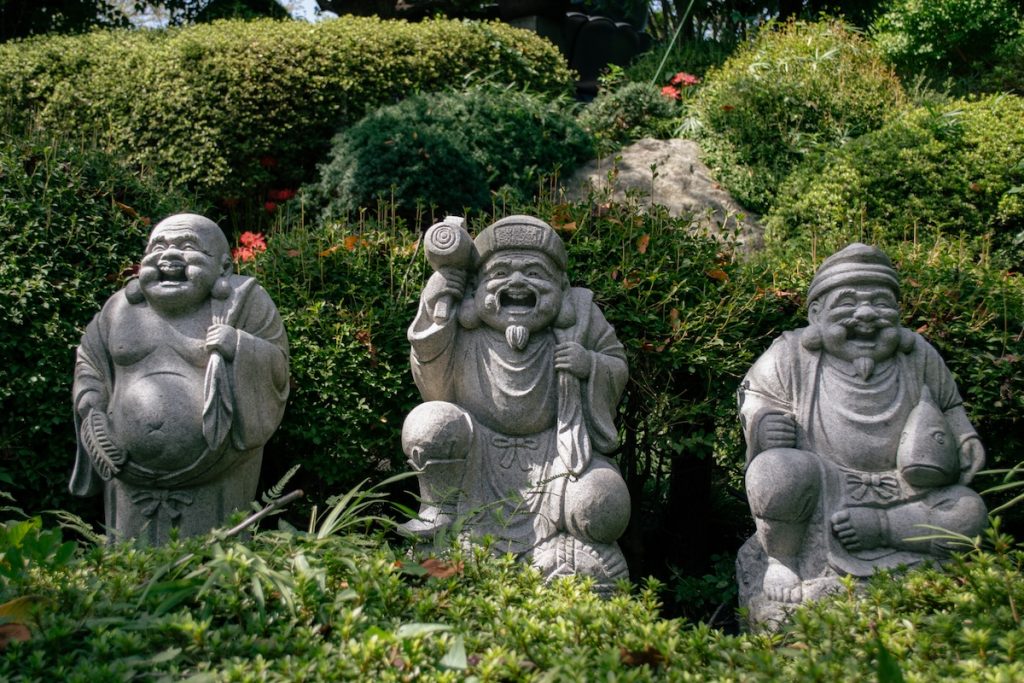
Each figure has its own personality and symbolism, representing different forms of good fortune, prosperity, happiness, and success. I found myself spending more time photographing these statues than I initially expected because each one has its own unique expression and character.
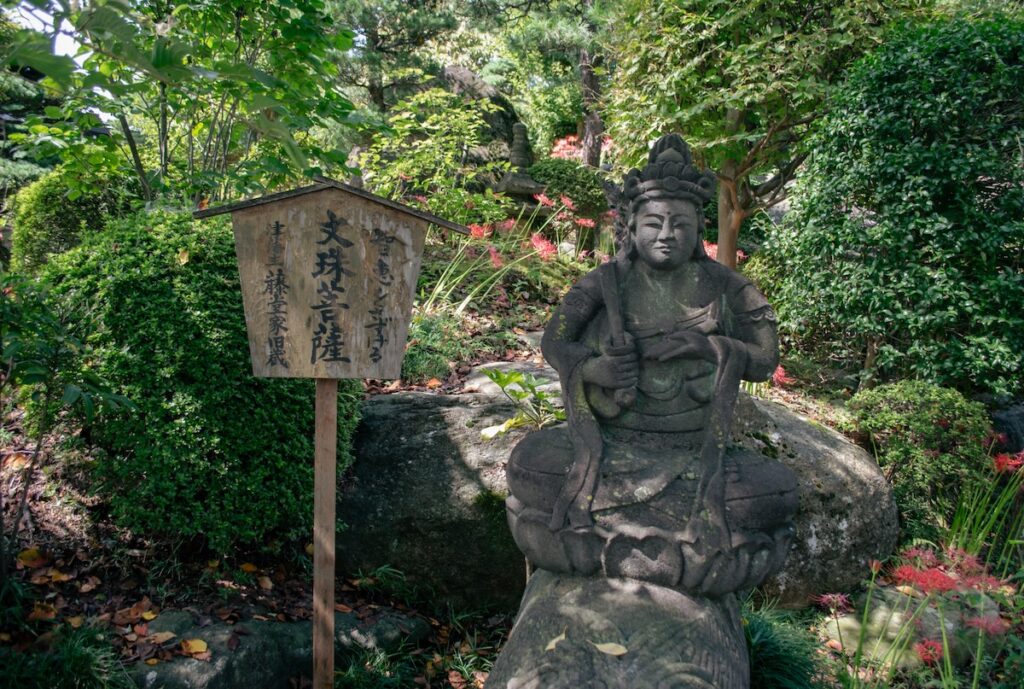
If you’re walking through the temple grounds, don’t rush directly to the giant Buddha and leave. Take some time to look around and discover these smaller details that give the temple much of its charm.
The Pagoda
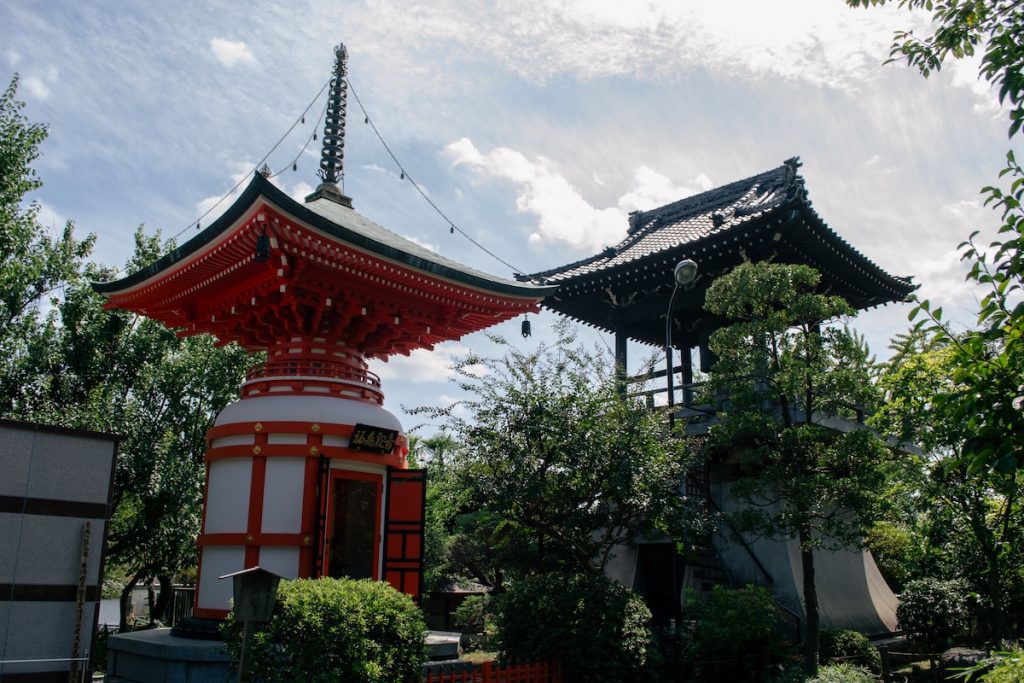
Another feature that caught my attention during my visit was the pagoda located within the temple grounds.
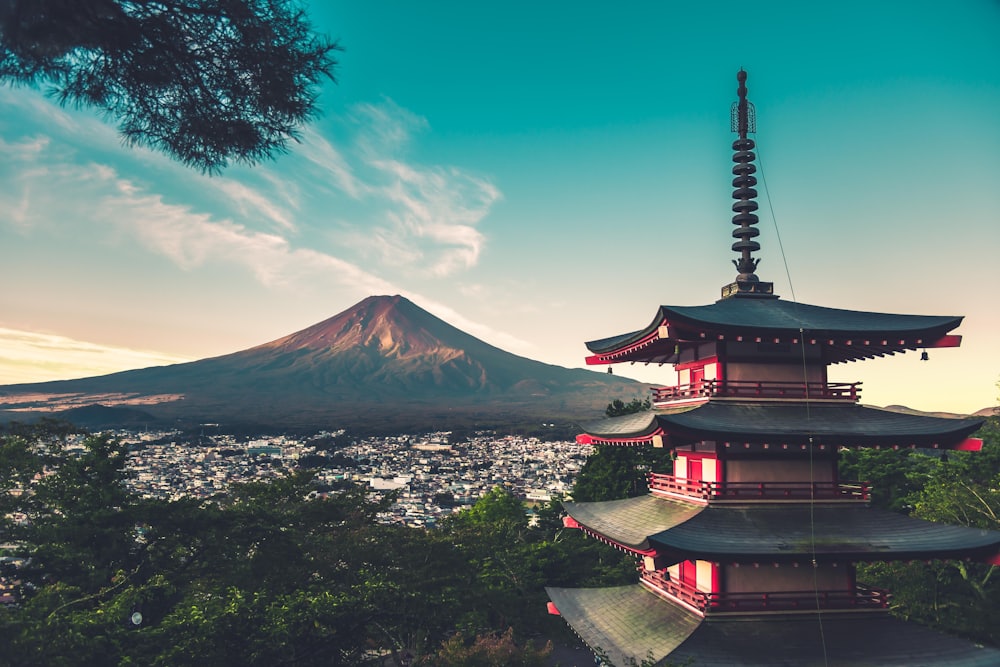
While it is not as famous as Tokyo Daibutsu, it adds another layer of visual interest to the site and creates a beautiful contrast with the giant Buddha statue. The pagoda’s traditional design stands out nicely against the surrounding greenery and is particularly photogenic when viewed from different angles around the temple grounds.
I found that many visitors naturally focus on the Buddha and almost walk past the pagoda without giving it much attention. Take a few minutes to explore this area of the temple, as it offers some of the most balanced and traditional compositions for photography.
The Main Temple Building
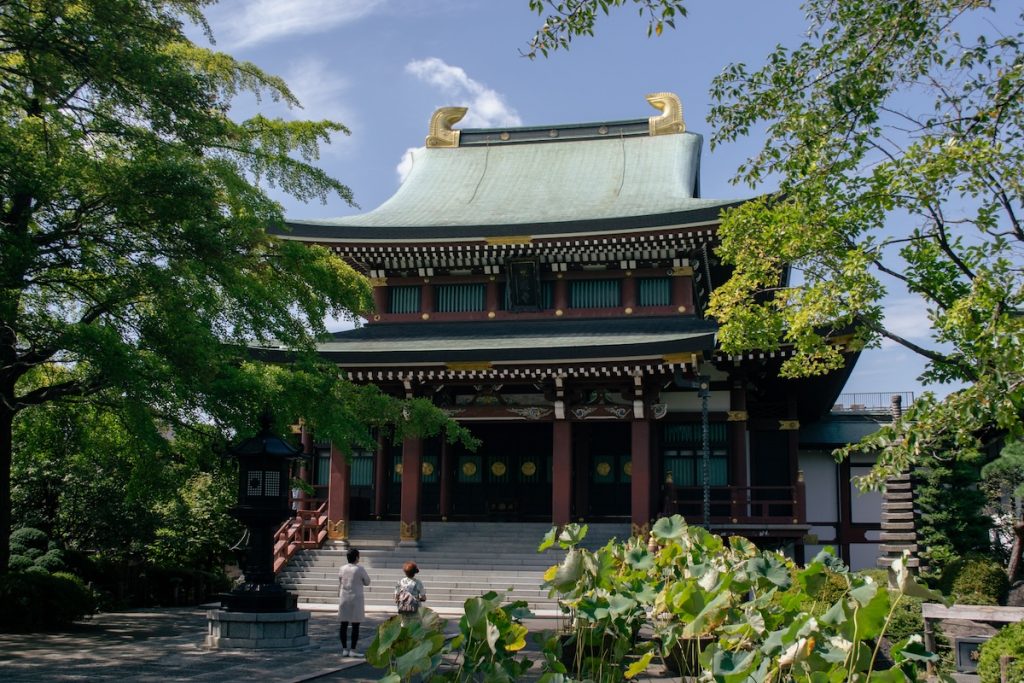
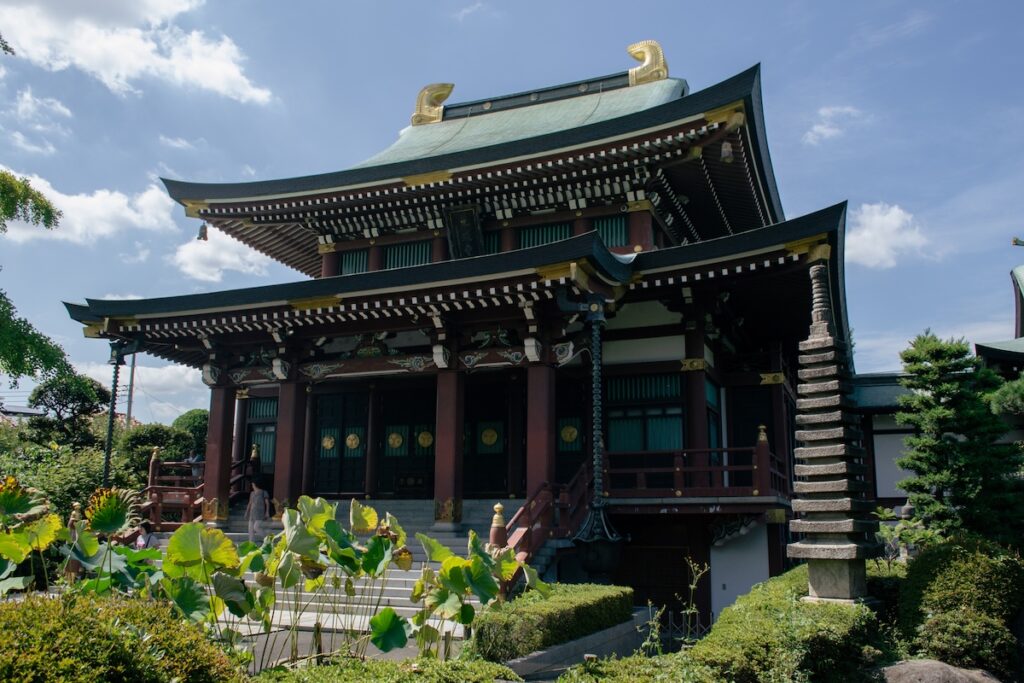
The main temple building is also worth a closer look.
What immediately stood out to me was its architecture, which feels slightly different from many of the temples I have visited around Tokyo. The structure features elegant decorative details, including golden ornaments near the roof that catch the light beautifully throughout the day. The combination of traditional wooden architecture and decorative golden elements gives the building a distinctive appearance and contributes to the overall character of the temple grounds.
Best Time to Visit Jōrenji Temple
Jōrenji Temple can be visited throughout the year, but I personally recommend coming in the morning or late afternoon.
The softer light enhances the atmosphere of the temple grounds and makes the bronze surface of Tokyo Daibutsu particularly photogenic. Early mornings are especially peaceful, allowing you to enjoy the site with very few other visitors around.
Weekdays are generally quieter than weekends, although the temple rarely feels crowded regardless of when you visit.
Seasonal Highlights and Events
Spring
Spring is one of the most pleasant times to visit Jōrenji Temple. Fresh greenery and seasonal flowers add color to the temple grounds and create a beautiful contrast with the dark bronze Buddha statue.
Summer
The surrounding trees provide welcome shade, making the temple a peaceful escape from Tokyo’s summer heat. Early morning visits are especially enjoyable during this season.
Autumn
Autumn is arguably the most photogenic season. The warm colors of the foliage add depth and texture to the temple grounds while creating beautiful framing opportunities around the Buddha statue.
Winter
Winter offers the quietest atmosphere of the year. The absence of crowds makes it easy to appreciate the peaceful character of the temple and focus on details that might otherwise go unnoticed.
How to Get to Jōrenji Temple
Jōrenji Temple is located in Itabashi Ward in northern Tokyo.
The easiest access is from Shimo-Akatsuka Station on the Tobu Tojo Line or Chikatetsu-Akatsuka Station on the Tokyo Metro Yurakucho and Fukutoshin Lines.
From either station, the temple can be reached on foot in around 10 to 15 minutes through a quiet residential neighborhood.
Part of the charm of the visit is the walk itself. Unlike many Tokyo attractions that sit directly outside a station, reaching Jōrenji Temple feels more like discovering a hidden local landmark.
Practical Information
- Location: 5 Chome-28-3 Akatsuka, Itabashi City, Tokyo 175-0092
- Admission: Free
- Opening Hours: 9am to 3:45pm
- Recommended Visit Duration: 45 minutes to 1 hour
- Nearest Stations: Shimo-Akatsuka Station and Chikatetsu-Akatsuka Station
- Photography: Photography is generally allowed in outdoor areas, but visitors should remain respectful and avoid disturbing worshippers.
Frequently Asked Questions
Is Jōrenji Temple worth visiting?
If you enjoy hidden gems, local neighborhoods, and lesser-known temples, absolutely. The combination of Tokyo Daibutsu and the peaceful atmosphere makes it a rewarding destination.
How big is Tokyo Daibutsu?
Tokyo Daibutsu stands approximately 13 meters tall, making it one of the largest Buddha statues in Tokyo.
How long should I spend at Jōrenji Temple?
Most visitors spend between 45 minutes and one hour exploring the temple grounds and photographing the Buddha statue.
Is Jōrenji Temple crowded?
No. Compared with Tokyo’s major temples and shrines, Jōrenji Temple remains relatively quiet throughout the year.
Final Thoughts
Jōrenji Temple is the kind of place that reminds me why I enjoy exploring beyond Tokyo’s most famous neighborhoods.
The giant Buddha is certainly impressive, but what I remember most from my visits is the atmosphere. The quiet residential surroundings, the charming Seven Lucky Gods, and the absence of large crowds make the experience feel much more personal than many of Tokyo’s better-known attractions.
If you’re looking for a hidden gem that combines history, culture, and photography opportunities, Jōrenji Temple and Tokyo Daibutsu deserve a place on your Tokyo itinerary.
Written by Mehdi, Tokyo-based photographer at PhotoTrips.