
Most people photograph Tokyo loud. Neon, crossings, crowds, rain on asphalt. It is a good look, and it has been done thoroughly.
There is a quieter Tokyo underneath it, and you have to go looking for it. Concrete arches in a university library an hour from Shibuya. A cloister of wooden slats around a reflecting pool, two minutes from a subway exit in Shirokanedai. A cathedral that folds itself out of stainless steel. A library built out of its own bookshelves. These are buildings designed around restraint, emptiness and light, by some of the most significant architects of the last seventy years, and almost none of them appear on the usual Tokyo sightseeing lists.
This guide is for travellers who find that kind of thing beautiful. You do not need to know an architect’s name to enjoy standing in these spaces, and you do not need a serious camera to come away with photographs you are glad to have. What you do need is a little planning, because several of these places have genuine restrictions on when you can visit and whether you can take pictures at all.
They are listed by how much they will stop you when you walk in.
1. Tama Art University Library, Hachioji
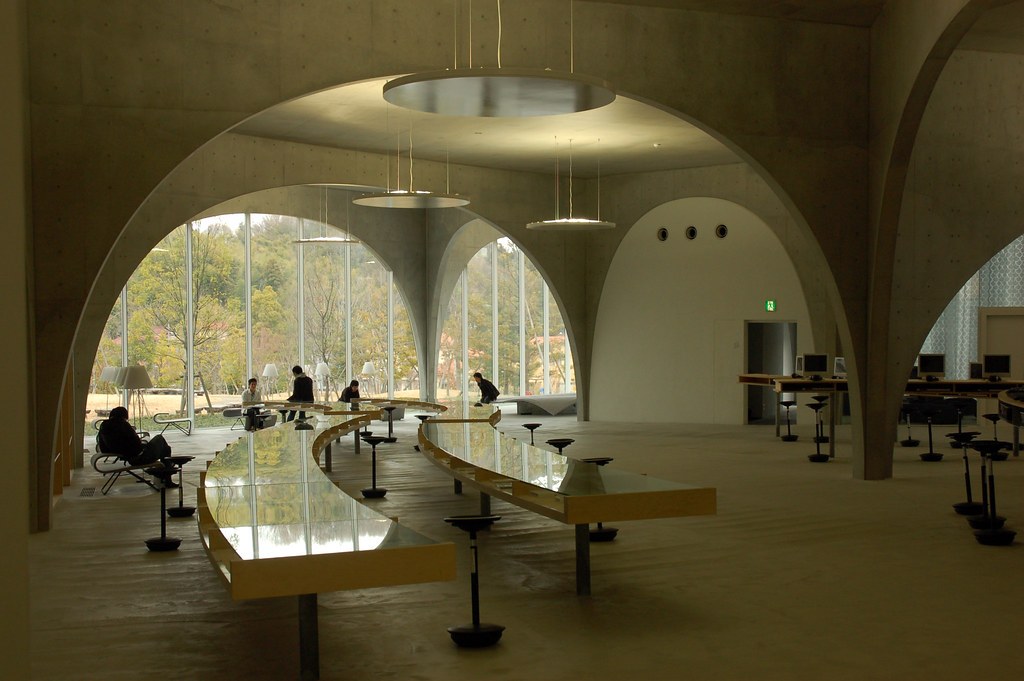
Toyo Ito designed this in 2007, and it remains the building that architects fly to Tokyo to see. Concrete arches of different widths cross a floor that slopes with the hillside, so nothing inside is quite level and no two views along the arches look the same. Photographs make it look serene. In person it is stranger than that, and slightly disorienting in a way you will remember.
It is an hour from central Tokyo and it is worth every minute, but it is also a working university library rather than a tourist attraction, and it needs planning.
Before you go, know these rules. Access for the general public is limited, and the photography policy changes through the academic year.
- Where you can take photographs depends on whether the university is in term or on holiday.
- During teaching terms, photography is not allowed in the study space, which is the room everyone comes to see.
- In areas where photography is permitted: no video, no flash, no tripods, no commercial shoots, and respect the privacy of students who are trying to work.
- Photography can be suspended altogether during exhibitions and events.
- If you work in architecture or design and want to visit for research, apply through the university’s reservation form. Visits run on specified dates and times only.
- Educational groups email [email protected] at least two weeks ahead, must be accompanied by a faculty or staff member, and are capped at 30 people.
Check the library’s visitor page before you travel. Visiting during a holiday period gives you considerably more freedom than term time.
Getting there: Hachioji campus, by bus from Hashimoto Station. Give it a full day rather than trying to fit it around something else.
2. Tokyo International Forum, Yurakucho
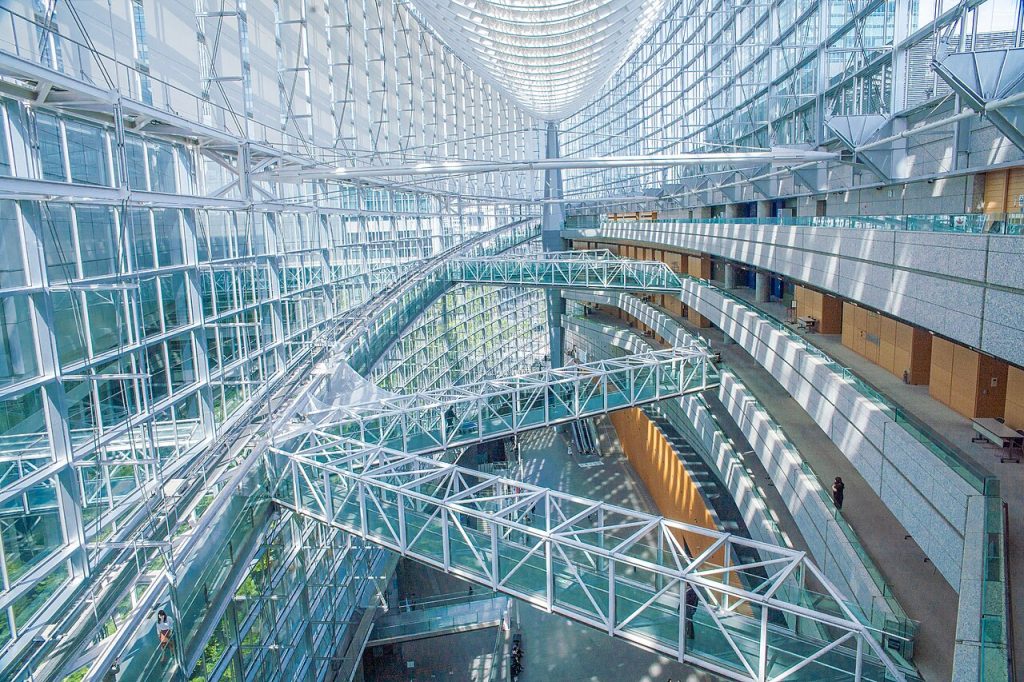
If you only visit one building on this list, make it this one. Rafael Viñoly finished it in 1996, and the Glass Hall is a 60-metre-high shell of glass and steel whose ribbed ceiling was modelled on an upturned boat hull. Walkways cross the empty space at height. Standing at the bottom and looking up is one of the great free experiences in Tokyo, and almost nobody who is not there for a conference thinks to do it.
It is open late, it costs nothing, it is entirely indoors, and it looks extraordinary in any weather. That combination makes it the easiest recommendation here. Go up to the higher walkways for the view down the length of the hall.
Important Notes: open to the public, no ticket needed. Photography is fine, though tripods are tolerated in some areas and not others. Late afternoon into early evening is the most rewarding time, when the interior lights come on and balance the sky through the glass.
Getting there: directly connected to Yurakucho Station, and a short walk from Tokyo Station.
3. St. Mary’s Cathedral, Bunkyo
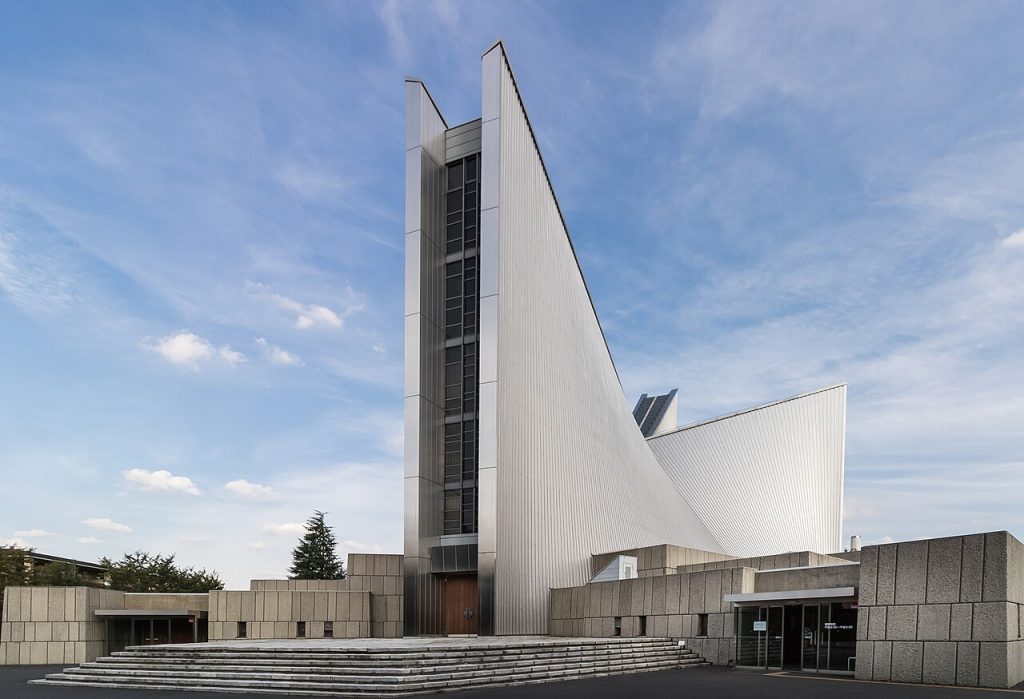
Kenzo Tange, 1964, and quite unlike anything else in the city. From outside, eight curved shells clad in stainless steel rise from a cross-shaped plan, catching whatever light the sky is offering. Inside, those same shells are bare concrete, and the gaps between them let daylight fall in a cross that runs the full height of the building and across the ceiling.
It is enormous, almost always empty, and completely silent. Most visitors to Tokyo have never heard of it, which is part of why it lands the way it does.
Important Notes: this is an active cathedral, and services come first. Photography rules are posted at the entrance and you should not photograph during worship. Keep quiet, no flash, no tripods. Check current opening hours before making the trip, as they vary.
Getting there: Mejirodai in Bunkyo ward, walkable from Edogawabashi Station or by bus from Mejiro.
4. Zuisho-ji, Shirokanedai
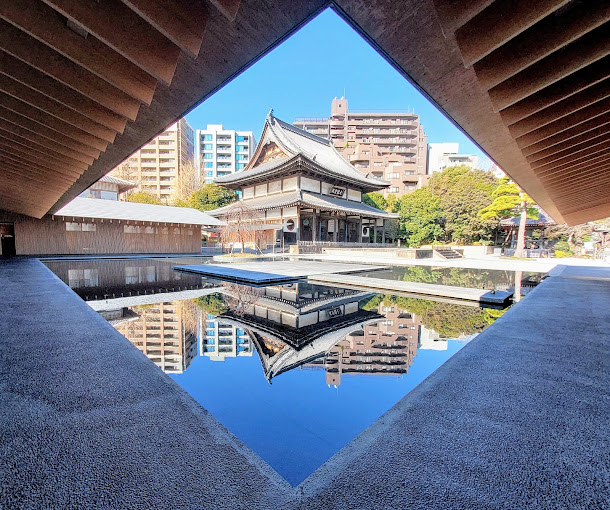
The first Obaku Zen temple in Tokyo, founded in 1670. For its 350th anniversary the temple asked Kengo Kuma to rebuild the kuri, the priests’ quarters, and he finished the work in 2018. He left the historic halls untouched and reworked everything around them: a U-shaped cloister of wooden slats lined up with the temple’s main axis, wrapped around a courtyard with a shallow reflecting pool and a raised stage for performances. The roof is a run of exposed beams that overhang the whole perimeter.
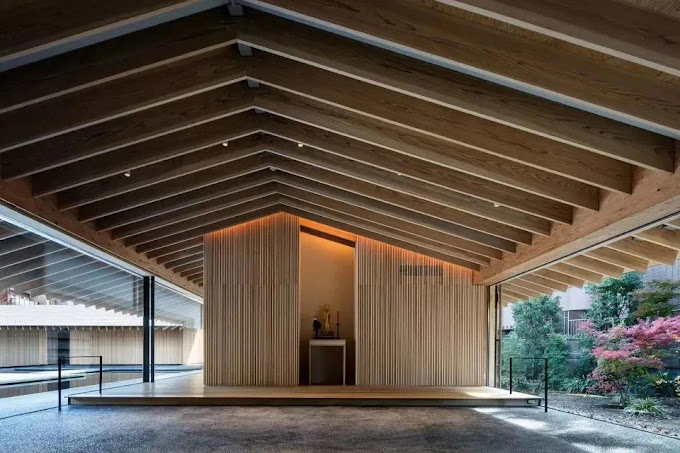
The result is a 350-year-old temple and a contemporary building sitting in conversation, a few minutes from a subway exit in one of Tokyo’s most expensive neighbourhoods. The pool doubles the roofline, the slats throw striped shadows that shift through the day, and it is usually very quiet.
Important Notes: a working temple with a resident community, so visit as a guest rather than as a photographer. The grounds are generally accessible. No tripods, do not move anything, and do not photograph residents or people at prayer.
Getting there: Shirokanedai Station on the Namboku and Mita lines, about two minutes.
5. National Museum of Western Art, Ueno
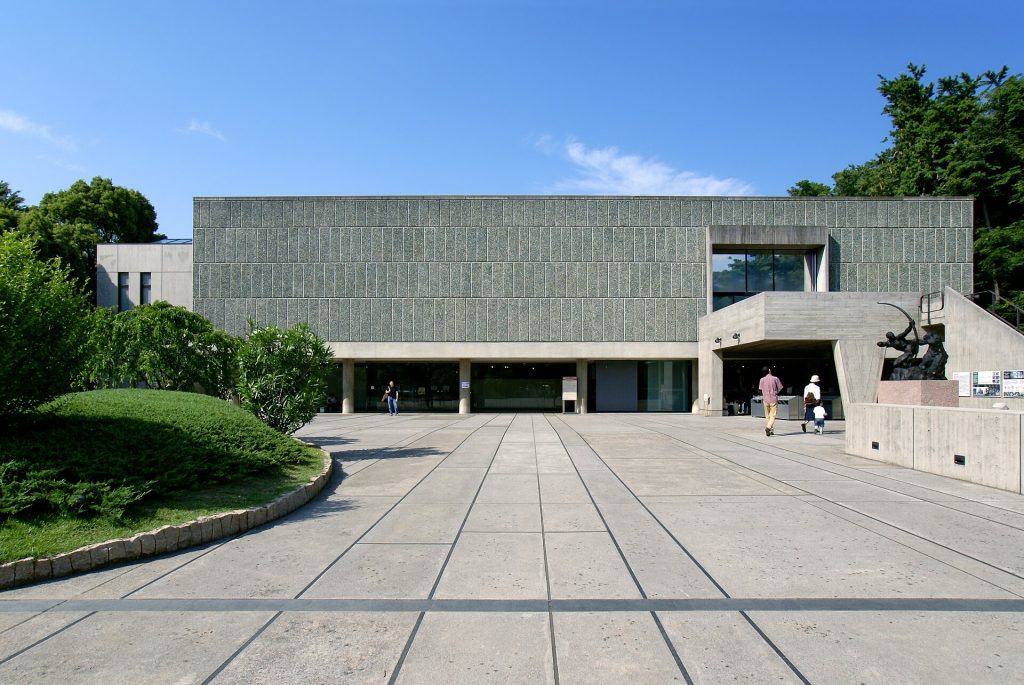
Le Corbusier designed this in 1959, and it is a UNESCO World Heritage Site, which surprises most people who walk past it on the way to the zoo. The central hall is a tall concrete volume lit from above, with a spiralling ramp that carries you up through the building. This was Corbusier’s idea of a museum that could grow outward forever, and it is one of only a handful of his buildings in Asia.
You can enjoy it entirely as architecture, without paying much attention to the collection, though the collection is good.
Important Notes: there is an admission fee to enter the museum. Photographing the building is generally allowed in the permanent collection areas, but temporary exhibitions often prohibit it and the rules are posted gallery by gallery. No flash, no tripods. Ask at the desk if you are unsure.
Getting there: Ueno Station, Park exit, inside Ueno Park.
6. Nezu Museum, Aoyama
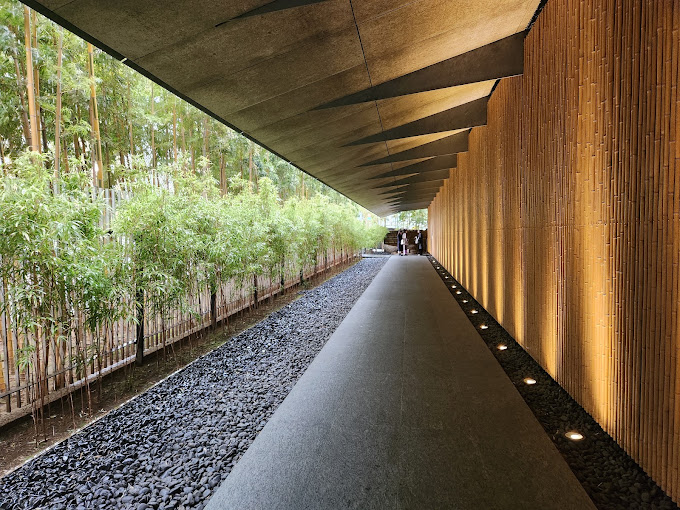
The walk to the entrance is the reason to come. Kengo Kuma’s 2009 building puts a long covered path beside a wall of dense bamboo, under a deep overhanging roof that crops the sky out entirely. By the time you reach the door you have left the Omotesando shopping crowds completely behind, which is exactly what it was designed to do.
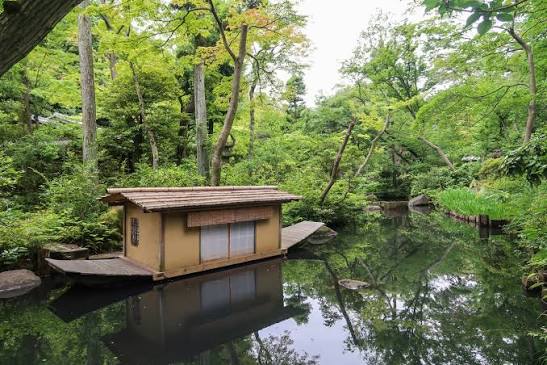
Behind the museum there is also a large traditional garden with ponds, stone lanterns and teahouses, which very few people expect in the middle of Aoyama. Together they make a genuinely restorative hour.
Important Notes: there is an admission fee, which covers both the museum and the garden. Photography is generally permitted along the approach and in the garden, but not in the galleries. Rules are clearly posted. Weekday mornings are quietest, since the entrance path is popular.
Getting there: Omotesando Station, exit A5, roughly eight minutes on foot.
7. 21_21 Design Sight, Roppongi
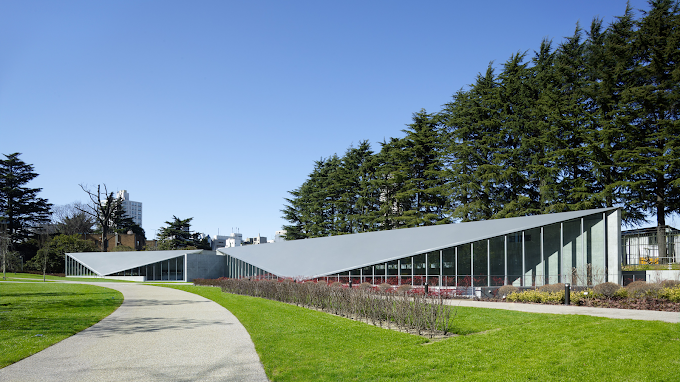
Most of Tadao Ando’s 2007 building is underground. What you see above ground is a single sheet of steel, folded once and pressed low against the lawn at Tokyo Midtown, like a piece of paper laid over the grass. The galleries beneath it are Ando’s familiar smooth concrete, lit from carefully placed openings.
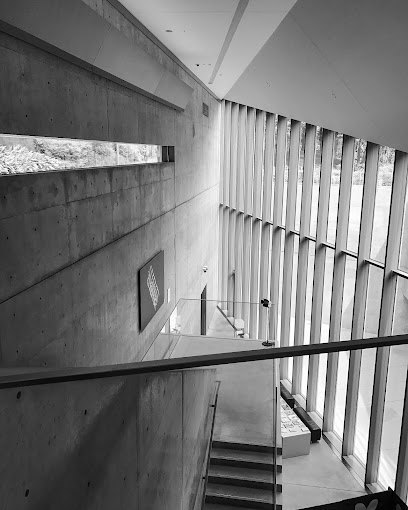
The exhibitions here are design-focused and often excellent, but the building is worth the detour on its own, and you can see the exterior without paying anything.
Important Notes: you need to buy a ticket to see the exhibitions inside. Whether you can photograph in the galleries depends on the show. The exterior sits in a public park and is free to see at any time. It looks best at dusk, when light comes up from beneath the folded roof.
Getting there: Tokyo Midtown, from Roppongi or Nogizaka stations.
8. Sumida Hokusai Museum, Ryogoku
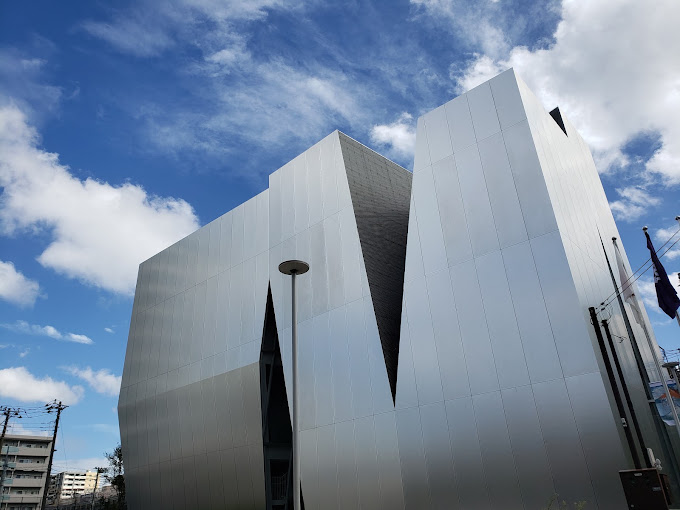
Kazuyo Sejima’s 2016 building is a faceted aluminium block cut through by angled slots that slice into the mass and bring daylight inside. The panels are reflective enough to pick up the colour of the sky and the low-rise streets around it, so the building never looks quite the same twice.
It sits in a residential part of Ryogoku near the sumo stadium, and the contrast between a sharp metallic object and the ordinary neighbourhood around it is a large part of the appeal. Inside, the museum is devoted to Hokusai, who was born in this district.
Important Notes: you need to buy a ticket to visit the exhibitions inside. The exterior is free to see at any time. Photography in the galleries varies by exhibition and the artworks themselves are generally off limits. Cloudy days suit the building better than bright sun.
Getting there: Ryogoku Station, about five minutes on foot.
9. the SOHO, Aomi, Odaiba
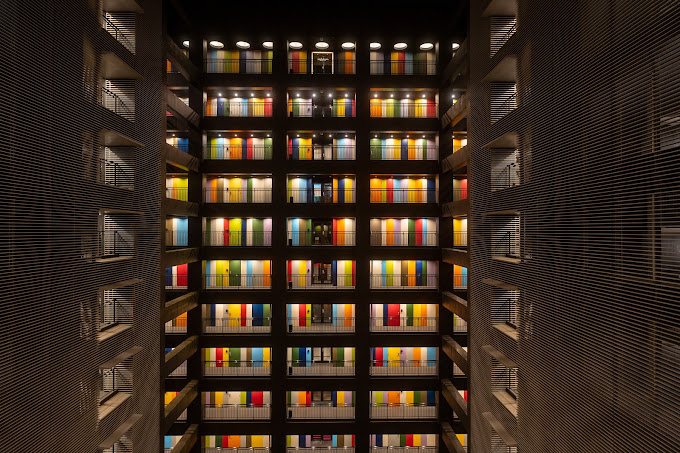
Finished in January 2010 and designed by Masamichi Katayama of Wonderwall, with branding by Sadahiro Nakamura, this is one of the largest SOHO office buildings in the world: thirteen floors of reinforced concrete organised around a strict grid and punctuated with blocks of saturated colour. Katayama built his reputation on retail interiors, and the graphic discipline shows.
Japanese visitors tend to recognise it immediately, because it played the New Wangan Police Station in the Bayside Shakedown films. Almost no international visitors know it at all. Odaiba’s wide streets mean you can stand far enough back to take the whole facade in, which is rare anywhere in Tokyo.
Important Notes: please take this one seriously. This is a private building where people live and work. Look at the exterior and the ground-floor public areas only. Do not go up to the residential or office floors, do not photograph through windows, and do not photograph the people who live there. There is a café and a convenience store on the ground floor if you want a reason to step inside.
Getting there: Aomi in Koto ward. Telecom Center Station on the Yurikamome line, or Tokyo Teleport on the Rinkai line.
10. Musashino Art University Museum & Library, Kodaira
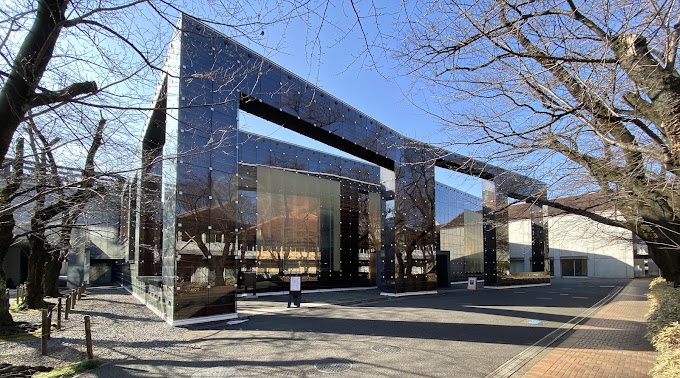
Sou Fujimoto’s 2010 library is built out of its own bookshelves: a spiral of shelving walls that hold the building up as well as holding the books. Where Toyo Ito’s library at Tama is open and airy, this one is dense and enclosing, and seeing both is the best way to understand what Japanese architects were doing with libraries in that decade.
Access here is usually more straightforward than at Tama, which makes it a good alternative if your dates do not work out.
Important Notes: confirm the current visitor policy and photography rules with the university before travelling. Like Tama, this is a working academic building and the rules shift with the term.
Getting there: Kodaira campus in western Tokyo, by bus from Takanodai or Kokubunji.
11. Daikanyama T-Site
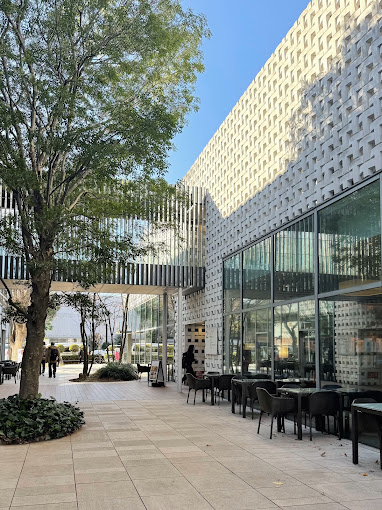
Klein Dytham Architecture, 2011. Three linked buildings wrapped in a lattice of interlocking white Ts, which reads as a flat pattern from across the street and as deep structure when you get close. It is a bookshop, and one of the most pleasant places in Tokyo to spend an unplanned hour: generous magazine sections, a lounge, and a neighbourhood of low-rise streets and cafés around it.
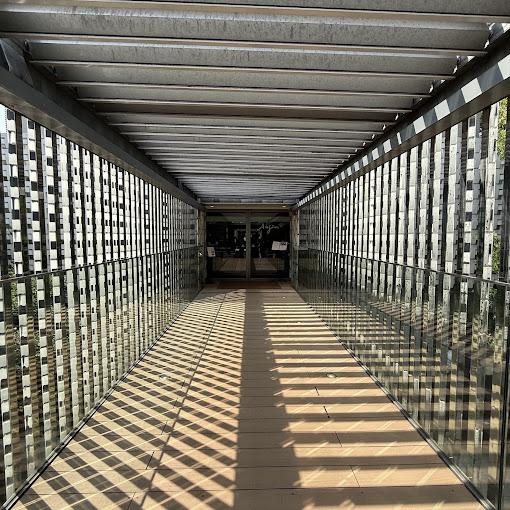
Come at dusk, when the interior lights start glowing through the lattice.
Important Notes: free to enter. Photographing the exterior is fine. Photographing inside the shop, the staff or other customers is not, so enjoy the interior without the camera.
Getting there: Daikanyama Station, about five minutes.
12. Japan National Stadium, Sendagaya
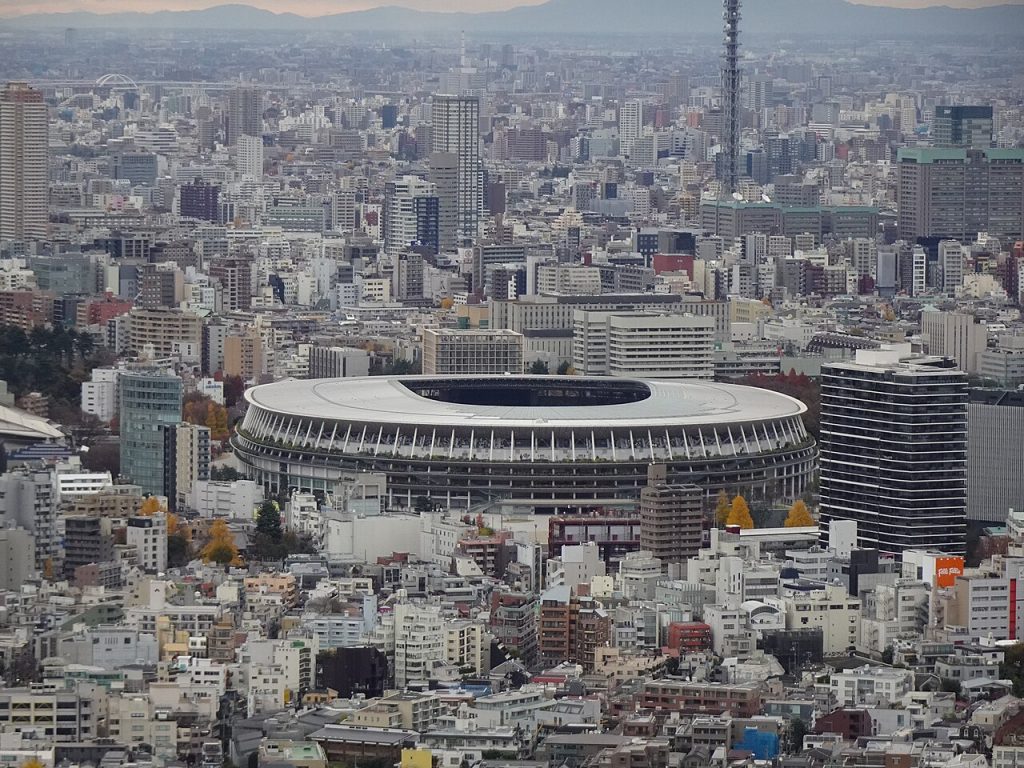
Kengo Kuma’s 2019 stadium is wrapped in layers of timber eaves, using cedar and larch from all 47 prefectures. It is far too big to take in as a whole, so treat it as a detail rather than a monument: walk the outer concourse and look at the way the horizontal timber layers stack and recede.
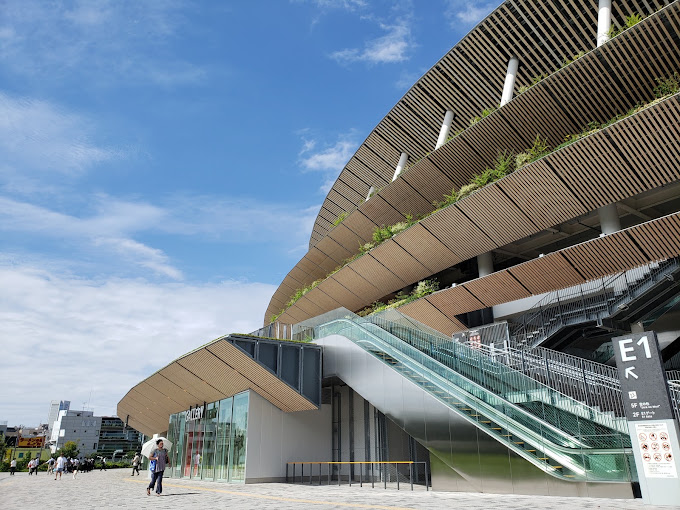
It is free, it is outdoors, and it takes twenty minutes, which makes it an easy addition to a day in the Shinjuku and Harajuku area.
Important Notes: the outer walkway is publicly accessible on non-event days. On event days, security restricts movement.
Getting there: Sendagaya Station, or Kokuritsu-Kyogijo on the Oedo line.
13. The Omotesando walk
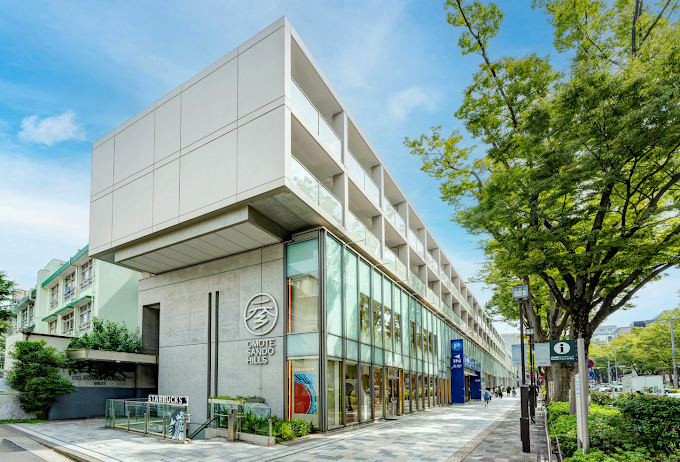
One kilometre, four buildings, about ninety minutes. This is the single best concentration of contemporary architecture in Japan, and you can do it as a walk between shops without setting foot inside any of them.
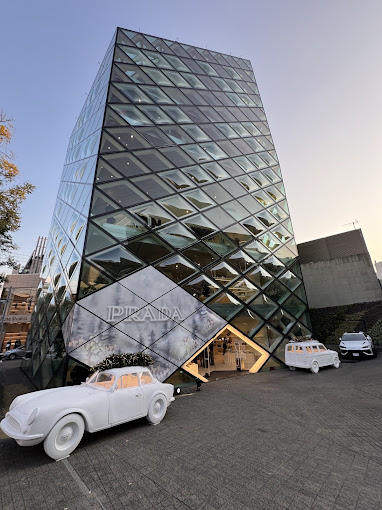
- Prada Aoyama, Herzog & de Meuron, 2003. A grid of curved glass panels, some bulging outward and some pressed in, which distorts everything reflected in them.
- Tod’s Omotesando, Toyo Ito, 2004. Concrete branches wrapping the building, abstracted from the zelkova trees lining the avenue.
- Dior Omotesando, SANAA, 2003. Layers of translucent acrylic behind glass. Flat and white by day, glowing at night.
- Omotesando Hills, Tadao Ando, 2006. Mostly below ground, built around a spiral ramp set at the same gradient as the street outside.
Seeing four practices answer the same brief on the same street, within a few years of each other, is the point.
Important Notes: all luxury retail. The exteriors are visible from the public pavement. Interior photography is not permitted and staff will tell you so. Dusk suits the glass buildings best.
Getting there: Omotesando Station.
The one you should see and cannot photograph
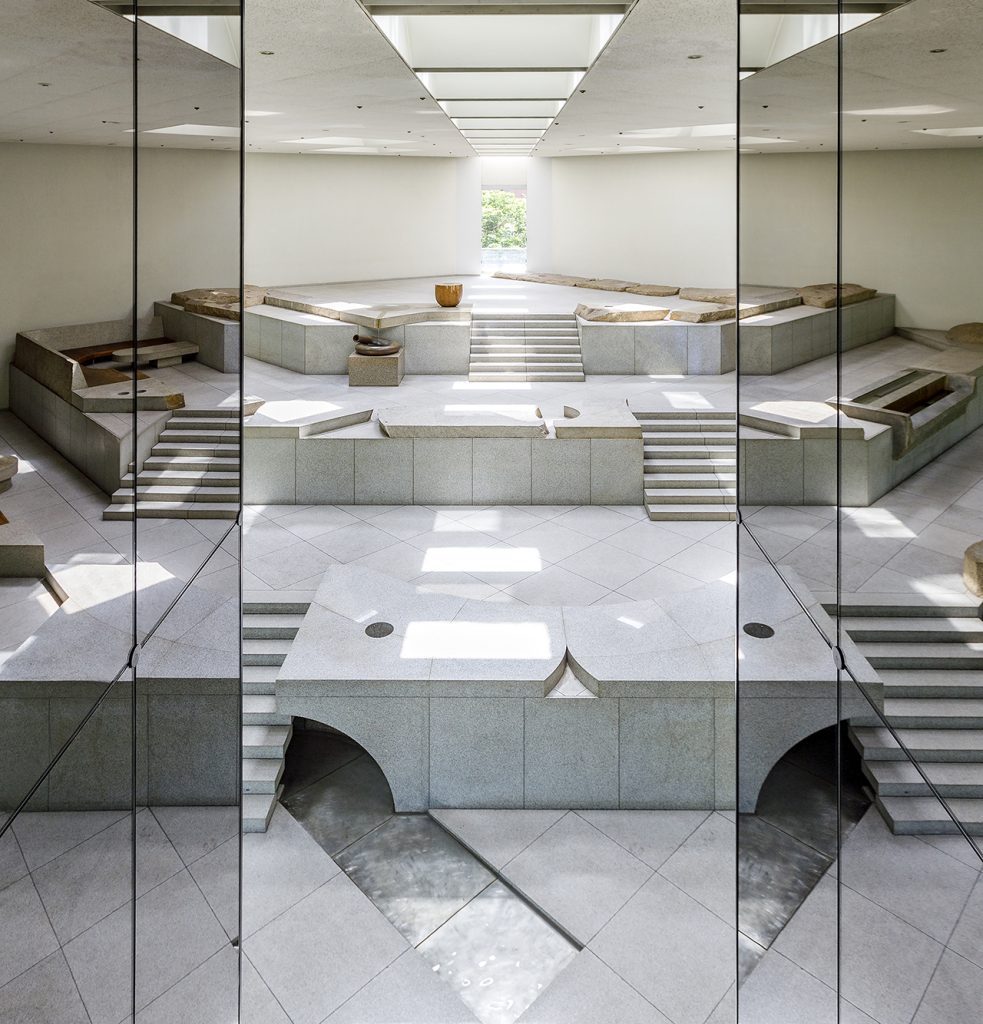
Sogetsu Kaikan, Akasaka. The building is by Kenzo Tange. The ground floor holds Heaven, a garden of stone, water and flowers designed by Isamu Noguchi, commissioned by the ikebana master Sofu Teshigahara and completed in 1978. It is considered among Noguchi’s finest works and it is the purest expression in Tokyo of everything this guide is about.
You very likely cannot see it, and you certainly cannot photograph it.
According to the Sogetsu Foundation itself, there are currently no general public viewing days, and reservations from the general public are not being accepted. When viewing is possible it is by advance reservation only, limited to 15 minutes, with stairs as the only access. Copyright in the work belongs to the Isamu Noguchi Foundation in New York, so photography and filming are prohibited. Eating and drinking in the space are not permitted either.
Occasionally the plaza hosts an exhibition and opens to visitors, which the foundation announces on its events page. If that happens while you are in Tokyo, go. Leave the camera in your bag and simply look at it, which is arguably the right way to see a Noguchi anyway.
Tips to plan your visits
Give Tama a day of its own. It is the furthest, the most restricted and the most rewarding. Do not try to attach it to anything else.
Group the central ones. Nezu Museum, the Omotesando walk and 21_21 Design Sight make a comfortable half day on foot, and Zuisho-ji is a short subway ride from the same area. Tokyo International Forum fits easily into any day that passes through Yurakucho or Tokyo Station.
Keep Odaiba separate. The SOHO and the rest of Odaiba are a trip in themselves.
St. Mary’s Cathedral and the National Museum of Western Art sit on opposite sides of northern Tokyo and do not combine well. Pair each with something else in its own neighbourhood.
Check before you travel. Opening hours, exhibition schedules and photography policies change, particularly at the university buildings and the museums. A two-minute look at the official website will save you a wasted journey.
Respect the rules once you are there. Almost every building here has a photography policy, and it often differs room by room and season by season. Look for the signs, ask staff when you are not sure, and stop immediately if you are asked to. Carrying a tripod, a reflector or an assistant will get you treated as a commercial shoot before you have taken a single picture.
Take home more than snapshots
These buildings reward slowing down, and they photograph beautifully when you know where to stand and what time to arrive.
If you would like proper images of your trip rather than phone snaps, Photo Trips connects you with local photographers across Japan who know these locations, the access rules and the hour when each one comes alive. Have a look at our Tokyo photographers.
Before you set out, it is worth reading our guide to photography etiquette in Japan, which covers temples, private property and public space in more detail.