If you are looking for a peaceful escape from the busy streets of Kyoto, Kurama-dera Temple is one of the best places to visit.
Located in the mountains north of Kyoto, Kurama-dera, often simply called Kurama Temple, is not just a temple you visit quickly before moving to the next attraction. It is a full experience.
You arrive in a quiet mountain village, you meet a giant red Tengu head, you walk through lantern-lined paths, you climb through the forest, and eventually you reach a beautiful temple complex with open views over the surrounding mountains.
As a photographer, I really enjoyed Kurama because it has a very different feeling from central Kyoto. It is wilder, quieter, more spiritual, and much more connected to nature. The whole area feels like a mix between a mountain hike, a temple visit, and a small adventure.
It is also very easy to combine Kurama-dera Temple with Kifune Shrine, since there is a hiking trail connecting both places. If you enjoy temples, nature, and photography, this is one of the most rewarding half-day trips you can do from Kyoto.
Where Is Kurama-dera Temple?
Kurama-dera Temple is located in Kurama, a small mountain village in the northern part of Kyoto.
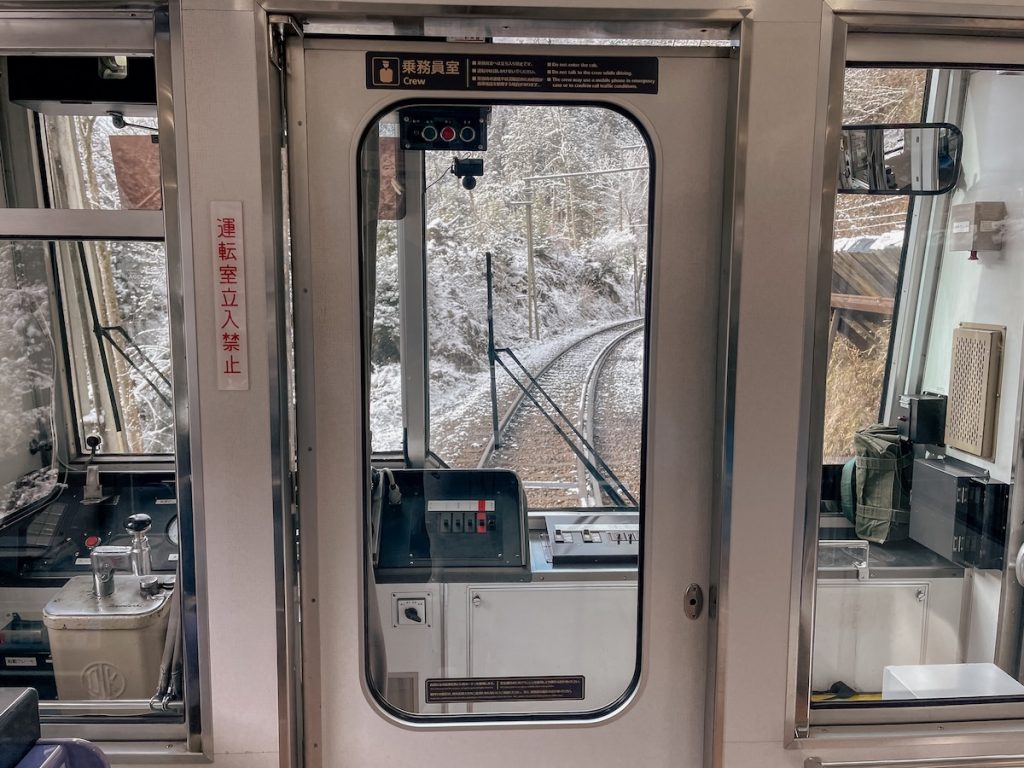
Even though it feels far from the city, it is actually quite easy to access. From central Kyoto, you can take the Eizan Railway from Demachiyanagi Station to Kurama Station. The ride itself is already part of the experience, especially when the train starts going deeper into the mountains.
Once you arrive at Kurama Station, the entrance to Kurama-dera Temple is only a short walk away.
This area is much quieter than places like Gion, Arashiyama, or Fushimi Inari. That is what makes it special. You come here to slow down, breathe fresh air, and enjoy a more natural side of Kyoto.
A Temple With a Mystical Atmosphere
Kurama-dera Temple was founded in the 8th century and has always been linked to mountain worship, spirituality, and legends.
The temple is located on Mount Kurama, a place that has long been considered sacred. The atmosphere here feels different from many other temples in Kyoto. It is less polished, less crowded, and more mysterious.
One of the most famous stories connected to Kurama is the legend of the Tengu, mythical mountain spirits often shown with red faces and long noses. In Japanese folklore, Tengu are powerful beings associated with mountains, martial arts, and supernatural abilities.
Kurama is also connected to Minamoto no Yoshitsune, one of Japan’s most legendary samurai figures. According to tradition, he trained in this mountain area when he was young, learning from the Tengu.
Whether you believe the legends or not, they add a lot of character to the visit. When you walk through the forest paths of Kurama, it is easy to understand why people imagined mountain spirits living here.
What To See At Kurama-dera Temple
1. The Giant Red Tengu Head Near Kurama Station
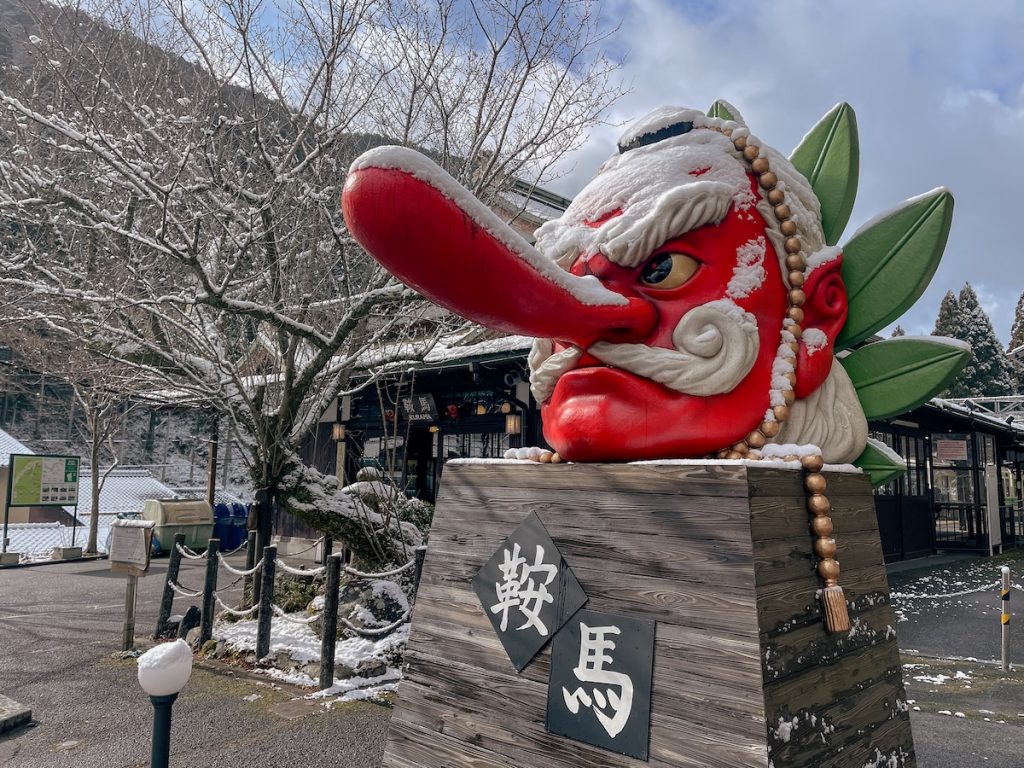
The first thing you will probably notice when arriving at Kurama Station is the huge red Tengu head.
It is impossible to miss.
This giant face, with its long nose and intense expression, is one of the most fun and memorable photo spots in Kurama. It immediately sets the tone for the visit. You are not entering a typical Kyoto temple area. You are entering a place full of folklore and mountain legends.
As a photographer, I think this is a great first shot of the day. It is unusual, colorful, and very different from the classic temple and shrine pictures you usually take in Kyoto.
The red color also stands out beautifully against the green mountain background, especially on cloudy days when the light is soft.
2. The Lantern-Lined Entrance To Kurama-dera Temple
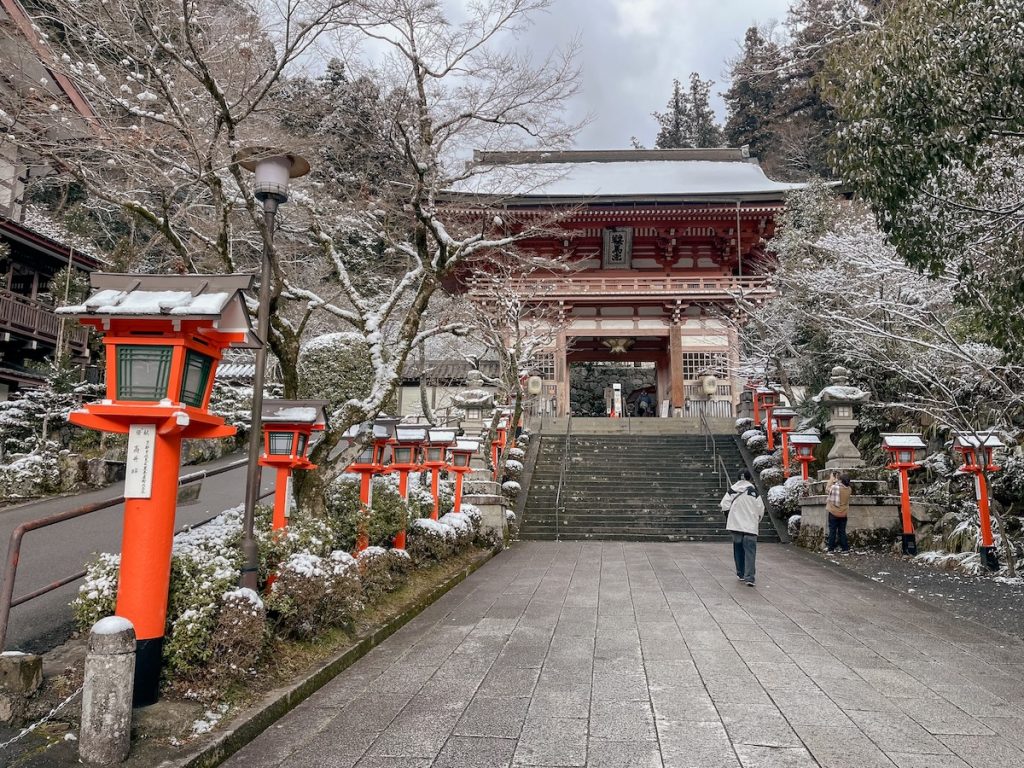
After leaving the station area, you will walk toward the entrance of Kurama-dera Temple.
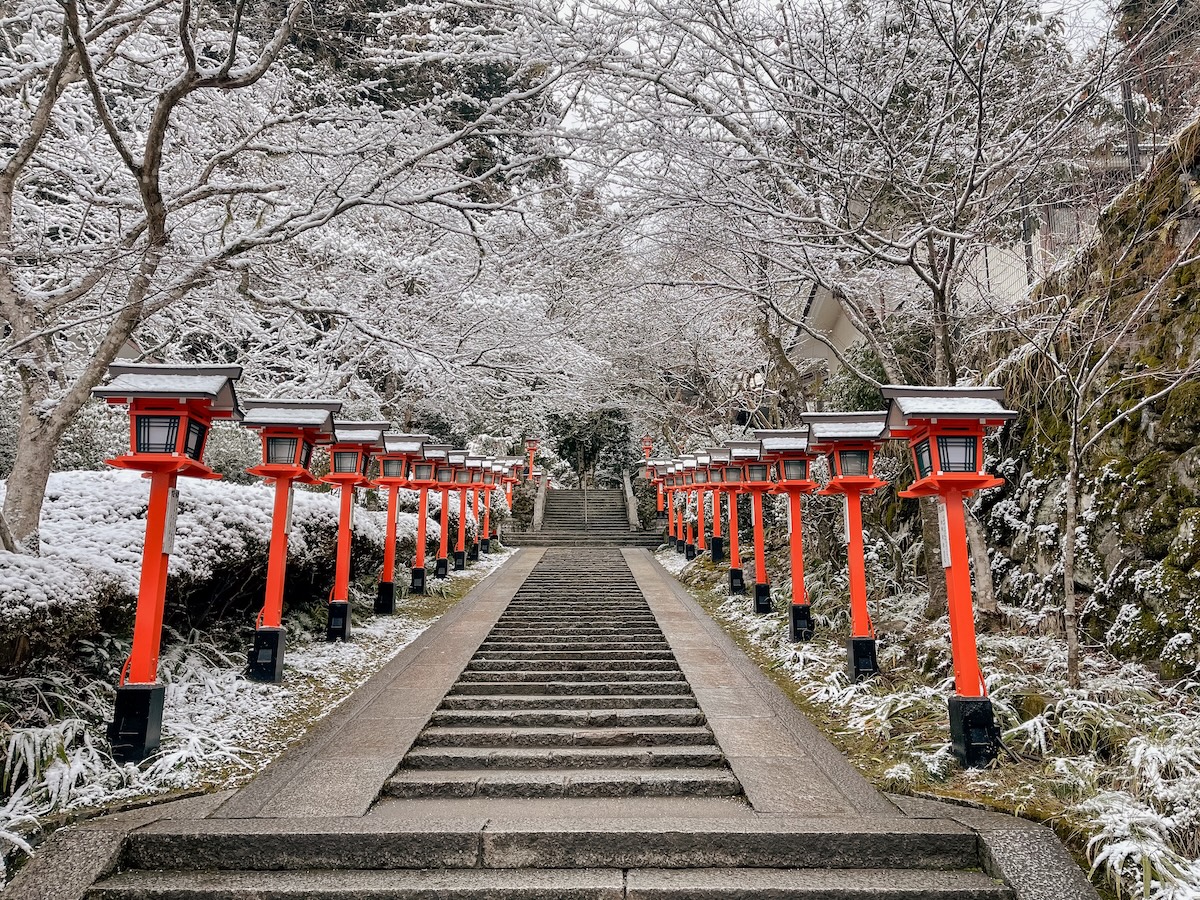
The approach to the temple has a beautiful atmosphere, with stone steps, wooden structures, and lanterns leading you into the mountain. In some ways, it may remind you of Kifune Shrine, especially because of the lanterns and the forest setting.
But Kurama feels a bit more rugged.
Kifune Shrine has a very elegant and photogenic entrance, while Kurama-dera feels more like the beginning of a mountain pilgrimage. You are not just walking to a temple. You are slowly entering a sacred forest.
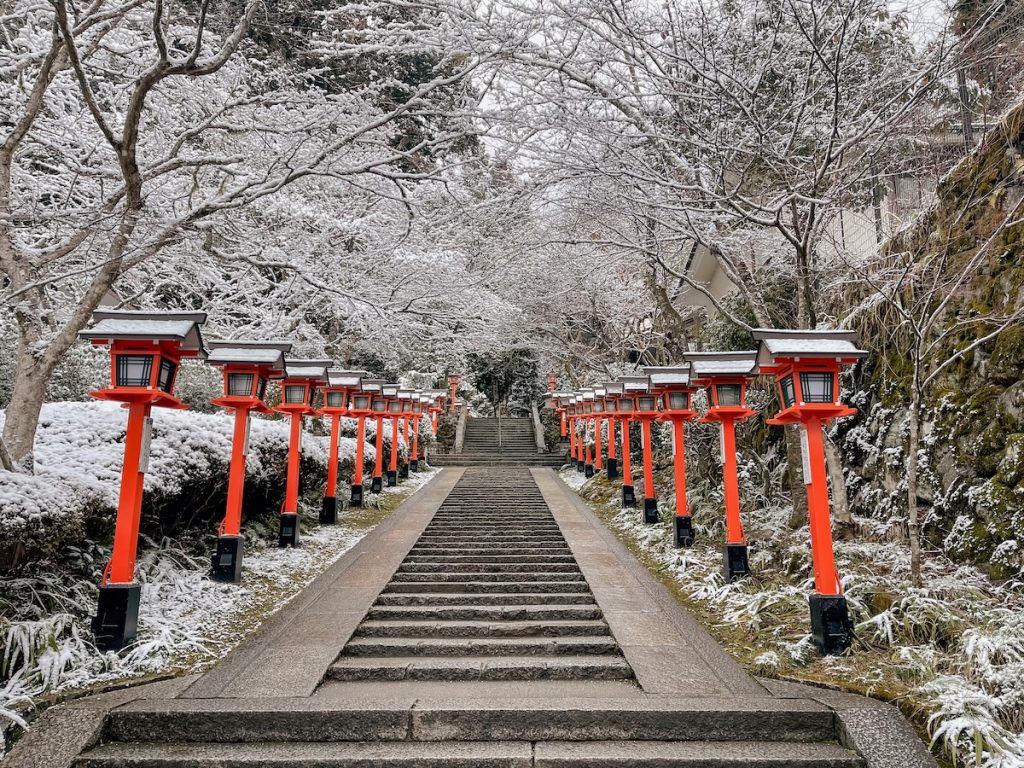
This part is really nice for photography. The lanterns create strong leading lines, and the stairs add depth to your composition. If you visit early in the morning or later in the afternoon, the light can be very soft and atmospheric.
3. The Kurama-dera Cable Car
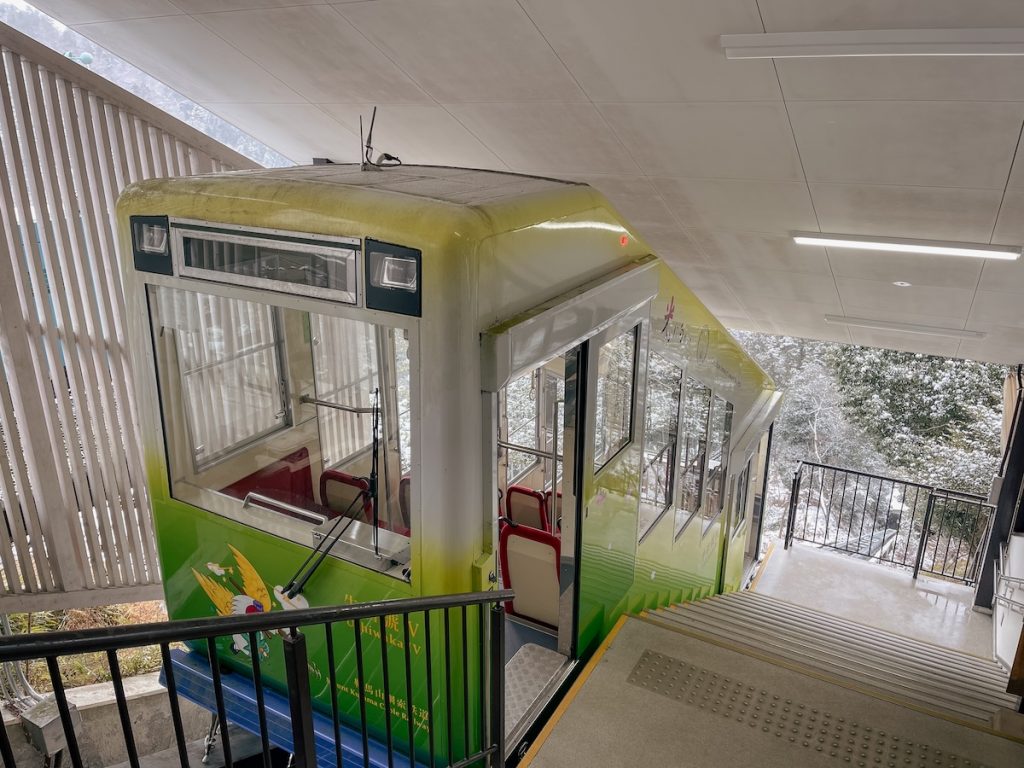
Kurama-dera Temple is built on a mountain, so reaching the main area involves a climb.
At some point, you can choose to continue walking or take the small cable car. This cable car is part of the Kurama-dera experience and is especially useful if you want to save energy before exploring the upper temple grounds or hiking toward Kifune.
The ride itself is short, but it adds something charming to the visit. It feels a bit old-school and local, not like a modern tourist attraction.
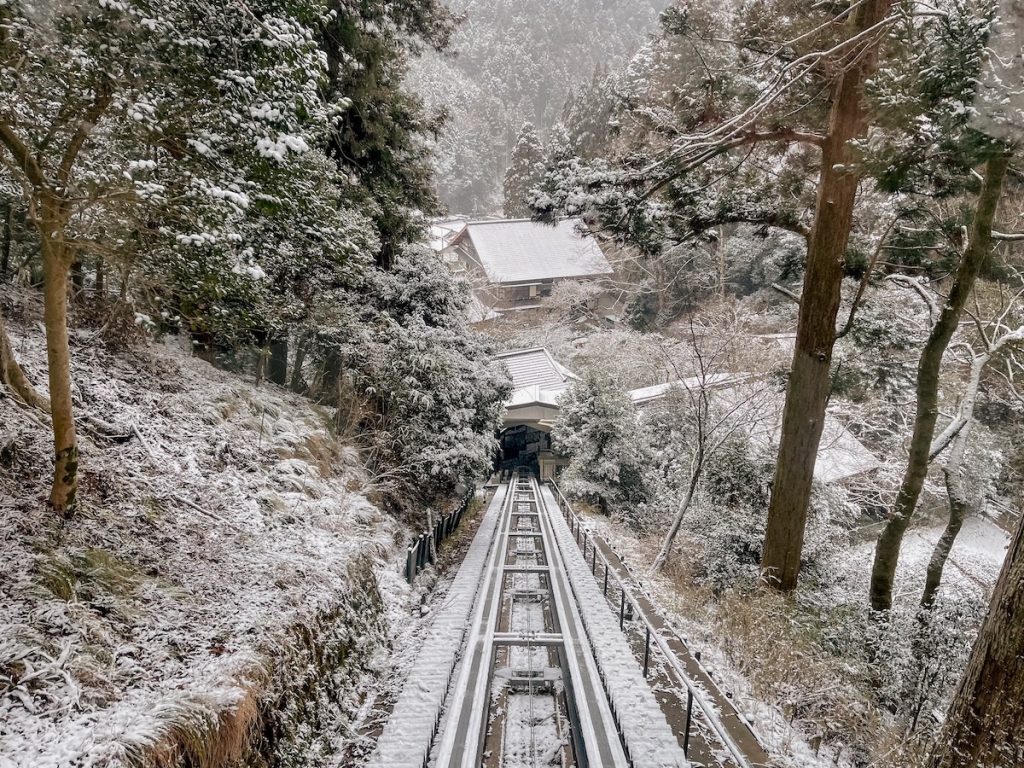
If you are traveling with family, if the weather is hot, or if you simply do not want to climb too much, taking the cable car is a good option.
But even if you take the cable car, you will still need to walk a bit to reach the main temple area, so comfortable shoes are still recommended.
4. The Main Grounds Of Kurama-dera Temple
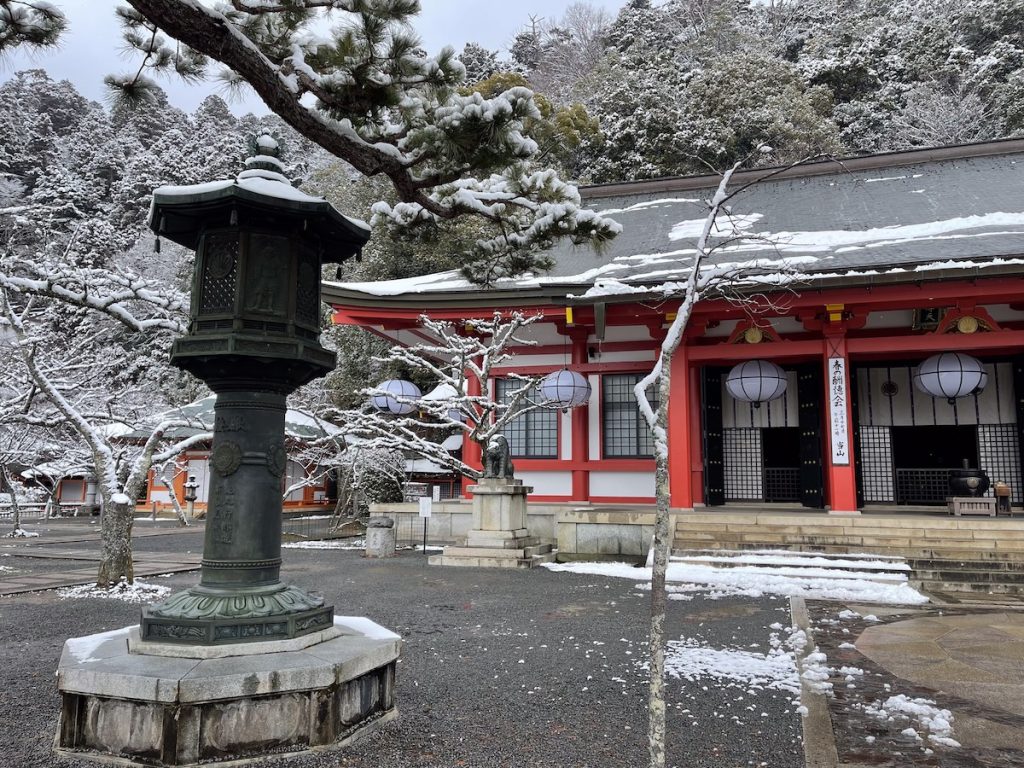
After the climb, you eventually reach the main grounds of Kurama-dera Temple.
This is where the visit becomes really rewarding.
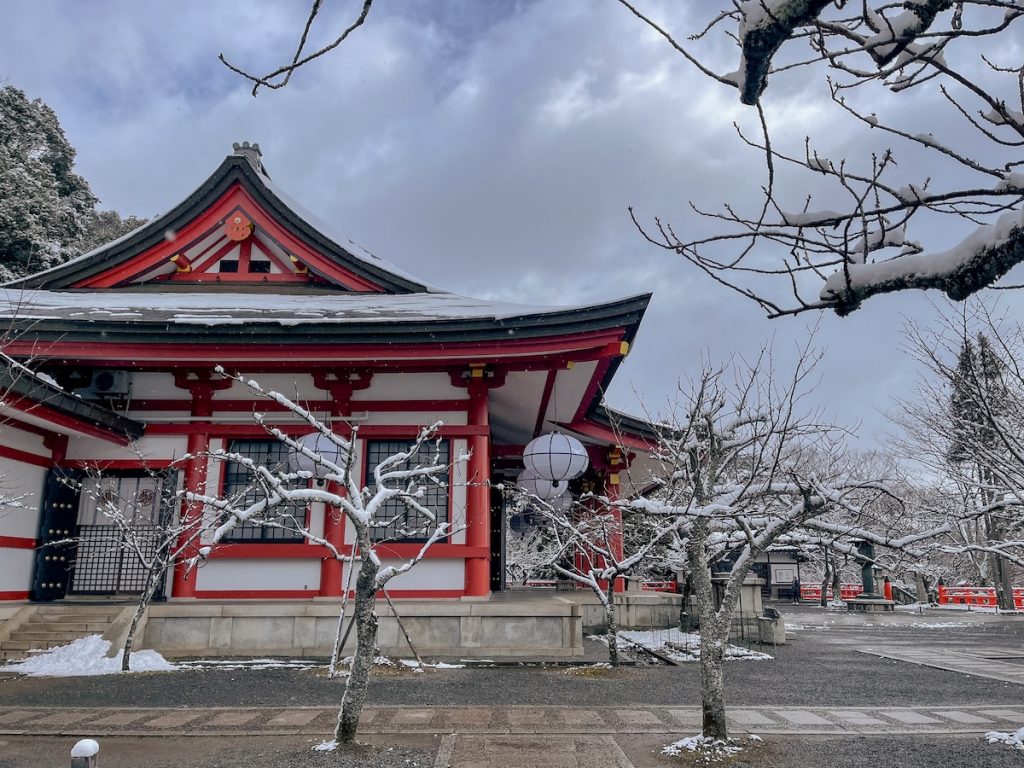
The main hall sits in a wide open space with beautiful views of the surrounding mountains. Compared to many temples in Kyoto, the setting feels very spacious and peaceful. You are high above the village, surrounded by forest, with fresh mountain air all around you.
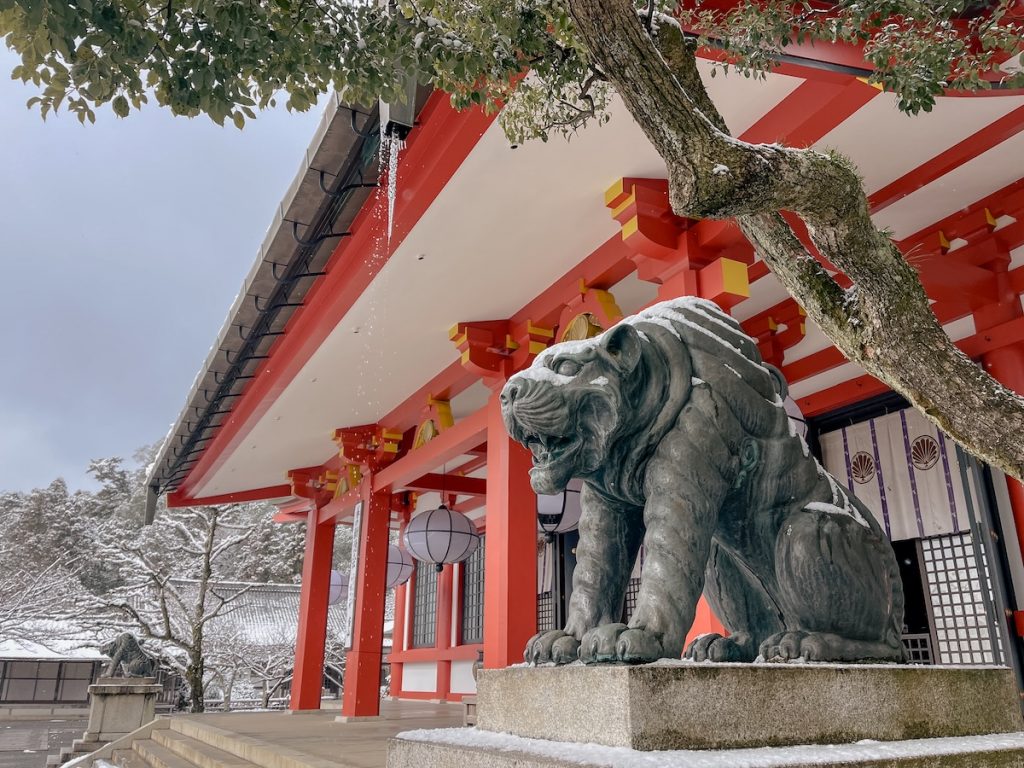
One of the most famous spots here is the stone pattern in front of the main hall, often considered a spiritual “power spot.” Many visitors stand there for a moment, take in the view, and make a wish.
For photography, this area is great because you can capture the temple buildings with the mountains behind them. In autumn, the colors are especially beautiful, but even in spring and summer, the deep green forest gives the whole place a very calm feeling.
What I liked most here was the balance between architecture and nature. The temple is impressive, but it does not dominate the mountain. It feels like it belongs there.
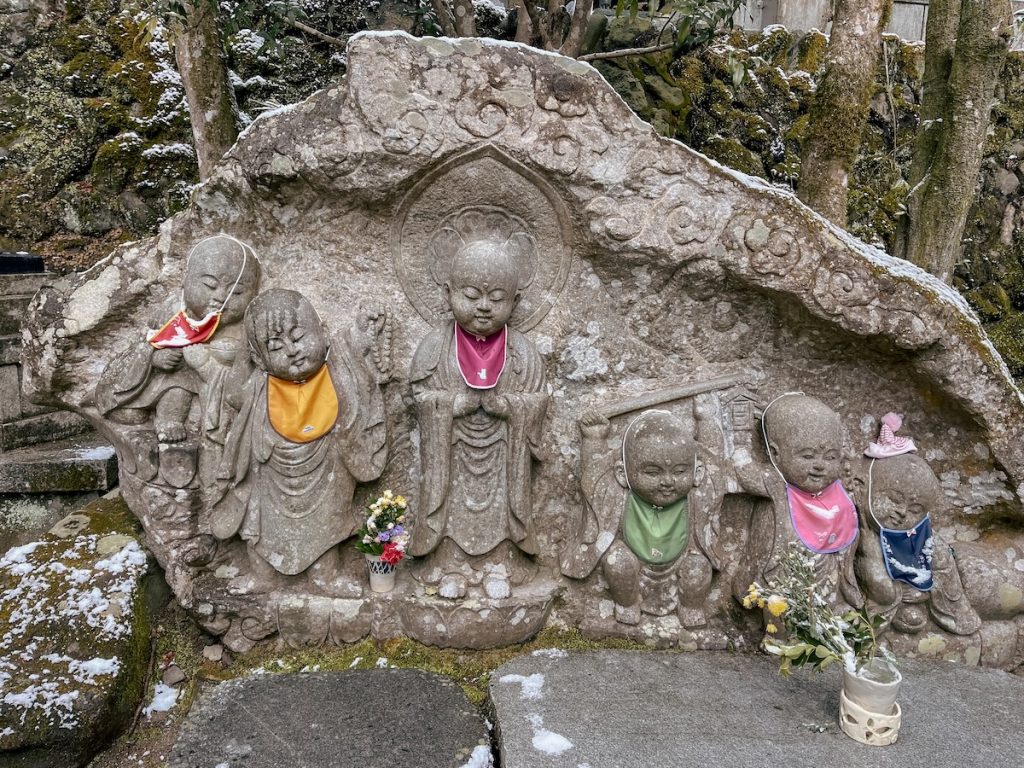
5. The Hiking Trail From Kurama To Kifune Shrine
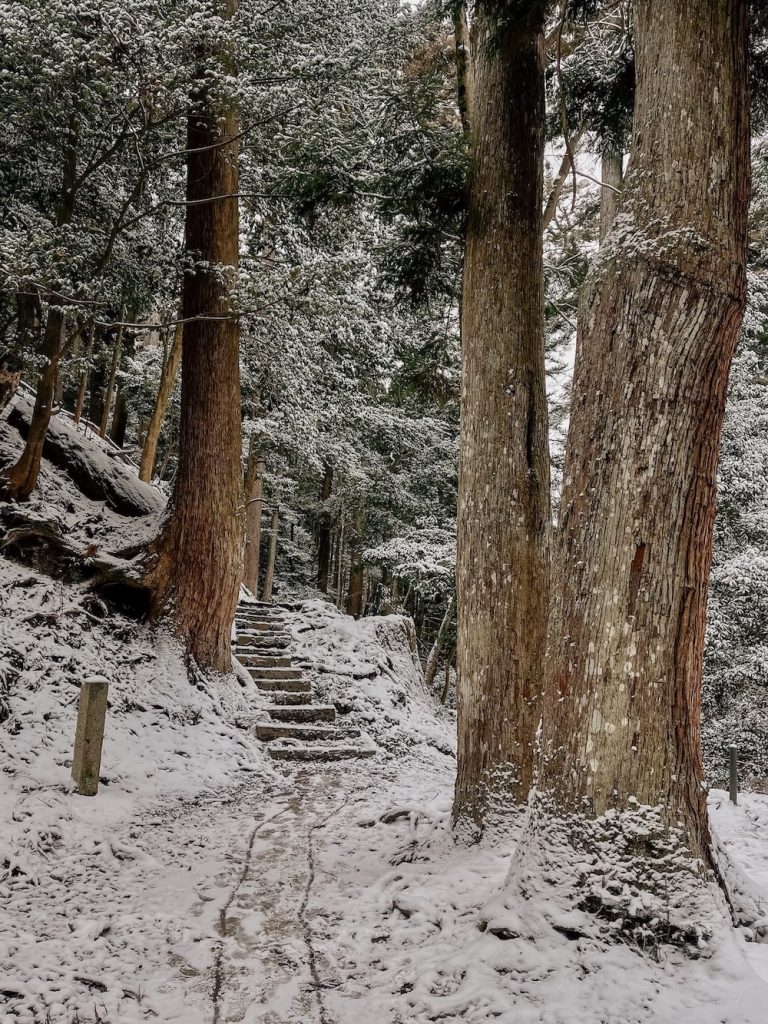
One of the best things to do after visiting Kurama-dera Temple is to continue hiking toward Kifune Shrine.
This is one of the most beautiful short hikes near Kyoto.
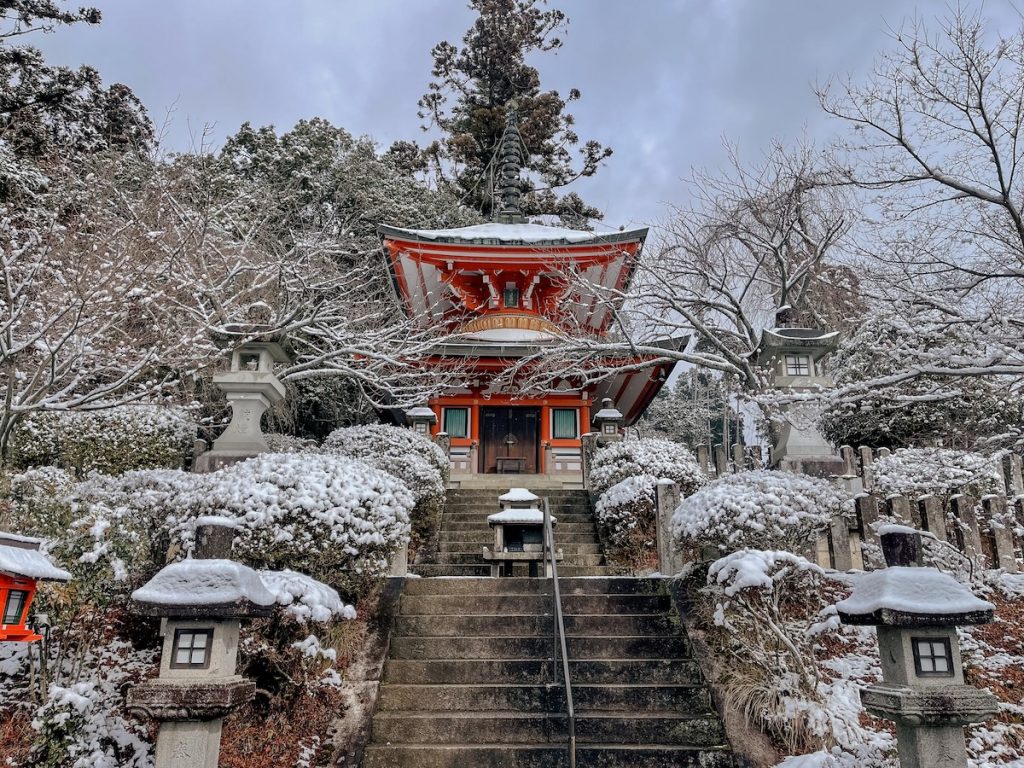
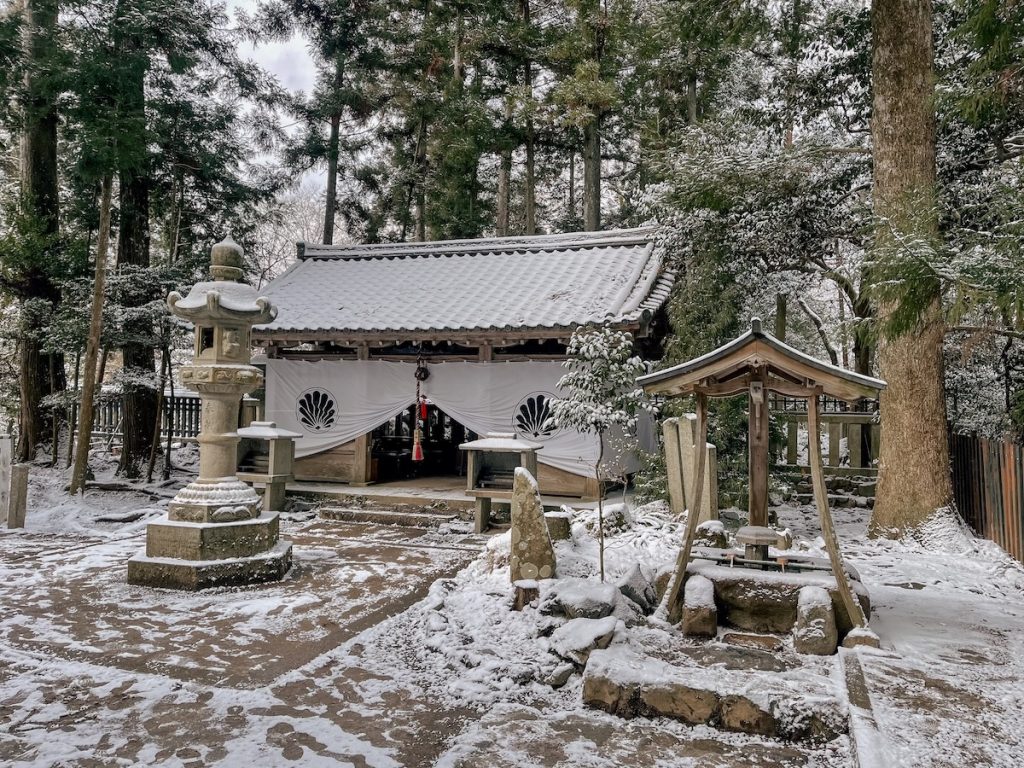
The trail goes through the forest, passing smaller temple structures, tall cedar trees, roots, mossy paths, and quiet mountain scenery. It is not a difficult hike, but there are uphill and downhill sections, so it is still better to wear proper shoes.
From Kurama-dera Temple to Kifune, the hike usually takes around 1 to 1.5 hours, depending on your pace and how often you stop for photos. If you count the full route from Kurama Station to Kifune and include stops at the temple, it can easily become a 2 to 3-hour experience.
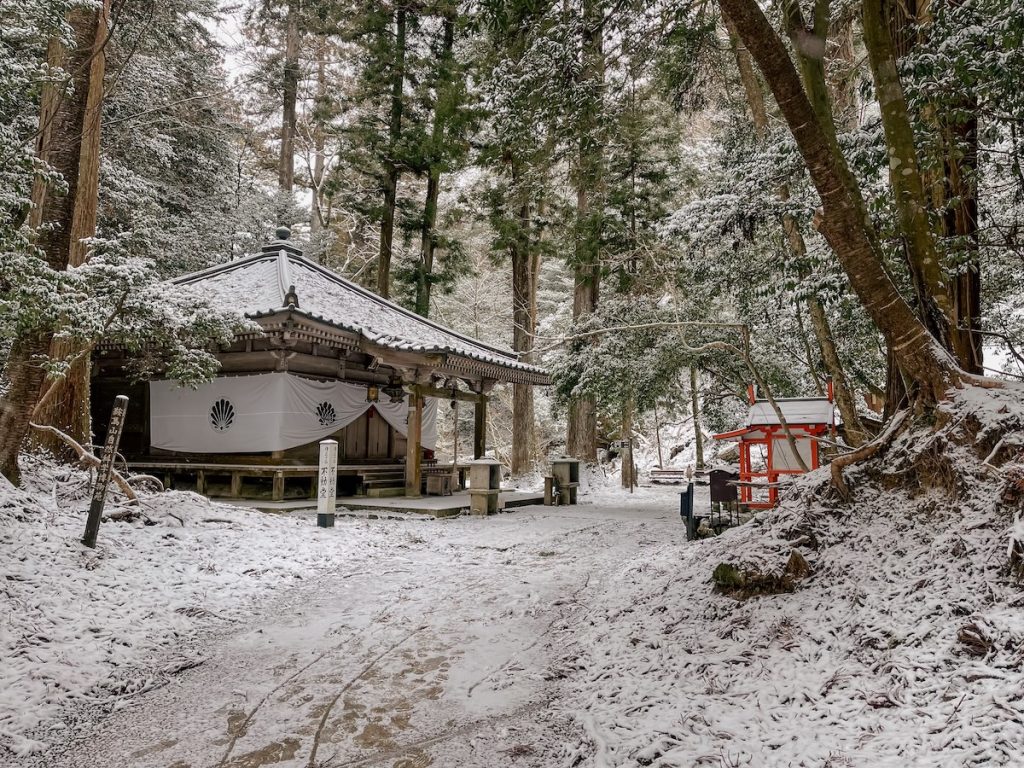
I really recommend doing the route from Kurama to Kifune rather than the opposite direction. This way, you can visit Kurama-dera first, enjoy the mountain trail, and then finish at Kifune Shrine, which is one of the most beautiful shrines in Kyoto.
For photographers, the trail is full of small details: roots crossing the path, stone lanterns, old wooden structures, light filtering through the trees, and quiet corners that feel almost untouched.
It is not the type of place where you only take one iconic photo. It is more about capturing the atmosphere.
Best Time To Visit Kurama-dera Temple
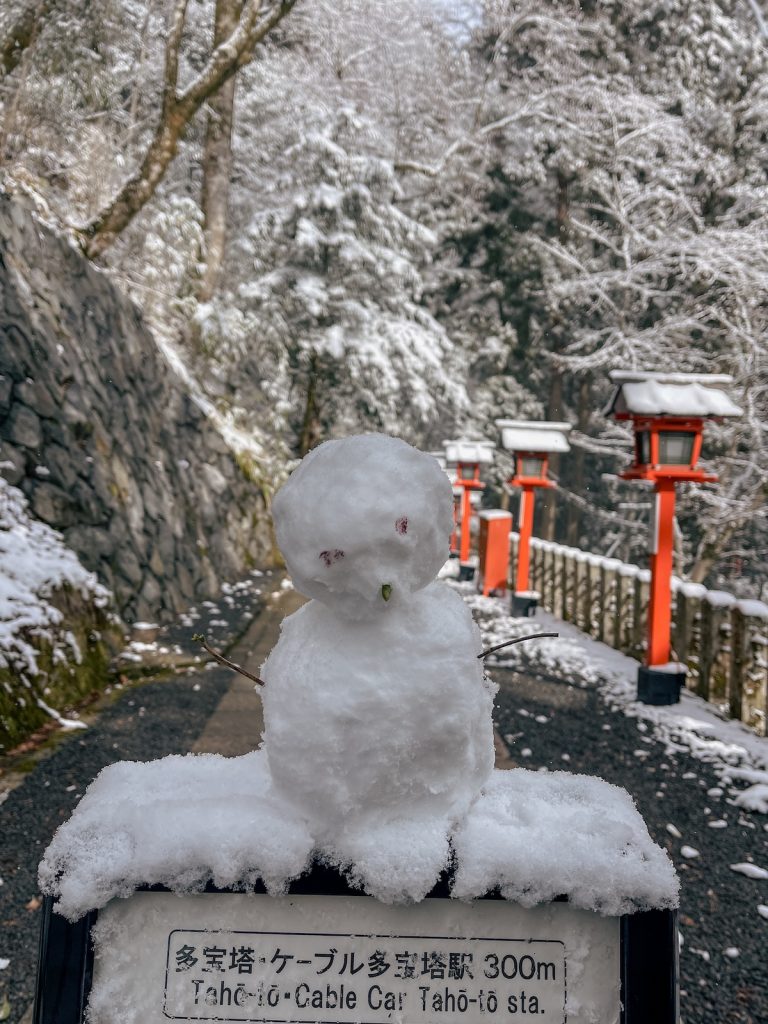
Kurama-dera Temple can be visited all year round, but some seasons are especially beautiful.
Autumn is probably the most spectacular time to visit. The mountain becomes full of red, orange, and yellow colors, and the view from the main temple grounds is stunning.
Spring is also beautiful, especially when the fresh greenery starts appearing. The area feels alive, soft, and peaceful.
Summer can be a good option too because Kurama is cooler than central Kyoto. The forest shade makes the walk more comfortable, although you should still expect humidity.
Winter is quieter and more mysterious. If you are lucky enough to visit when there is snow, the temple and forest can look magical. Just be careful because the paths may become slippery.
For photography, I would recommend going in the morning if possible. The light is softer, the atmosphere is calmer, and you will have more time to continue toward Kifune Shrine afterward.
Things To Do Near Kurama-dera Temple
1. Relax At Kurama Onsen
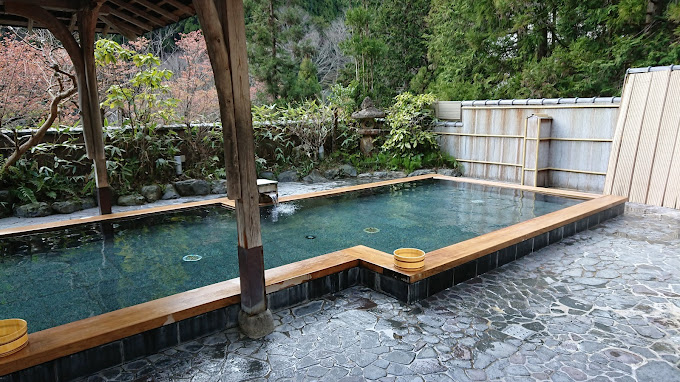
One of the best things to do near Kurama-dera Temple is to visit Kurama Onsen.
This hot spring is located close to Kurama Station and is a perfect place to relax after visiting the temple or hiking from Kifune. After walking through the mountain trails, soaking in an onsen surrounded by nature feels amazing.
Kurama Onsen has open-air baths where you can enjoy the mountain scenery while relaxing in hot spring water. It is especially nice in autumn, when the surrounding trees change color, or in winter, when the cold air makes the hot bath feel even better.
If you want to make your Kurama and Kifune trip more relaxing, this is a great way to end the day.
Just make sure to check the official opening hours before going, because mountain facilities can sometimes change their schedule depending on the season or private reservations.
2. Visit Kifune Shrine
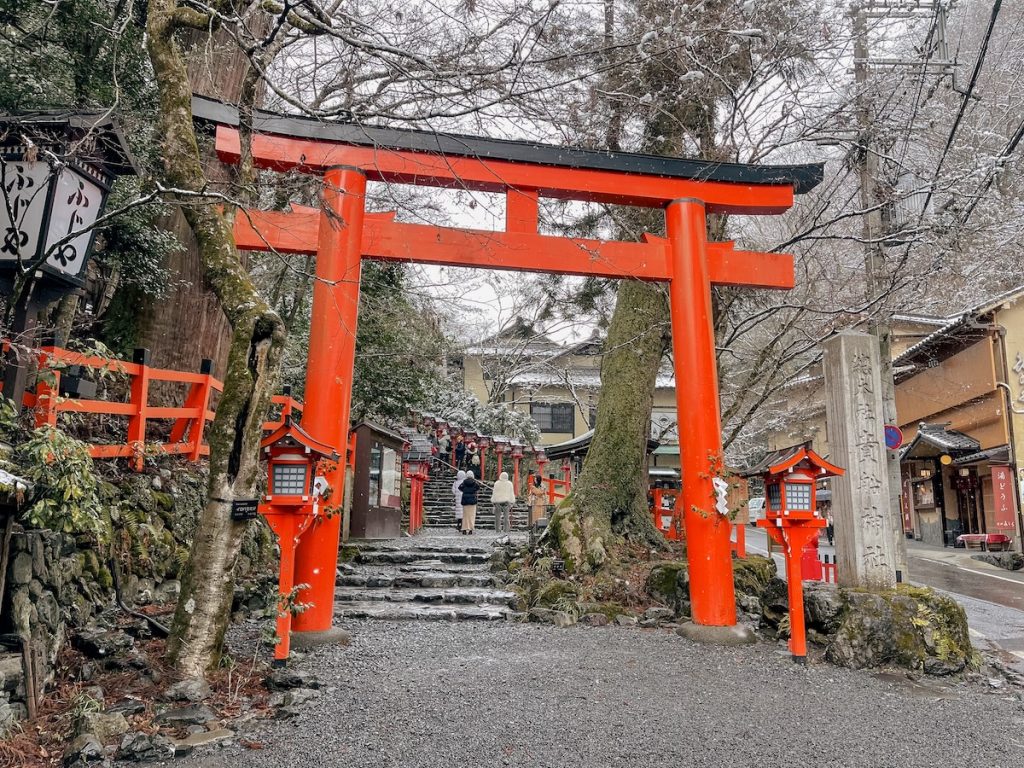
If you continue the hiking trail from Kurama-dera Temple, you will eventually arrive near Kifune Shrine.
Kifune Shrine is one of my favorite places in Kyoto, especially because of its famous lantern-lined staircase. It has a very elegant, peaceful atmosphere, and it is beautiful in every season.
The combination of Kurama-dera Temple and Kifune Shrine makes a perfect half-day trip. Kurama gives you the mountain temple and spiritual forest atmosphere, while Kifune gives you the beautiful shrine, water symbolism, and photogenic lanterns.
If you have enough energy, I highly recommend doing both in the same day.
3. Eat In Kibune
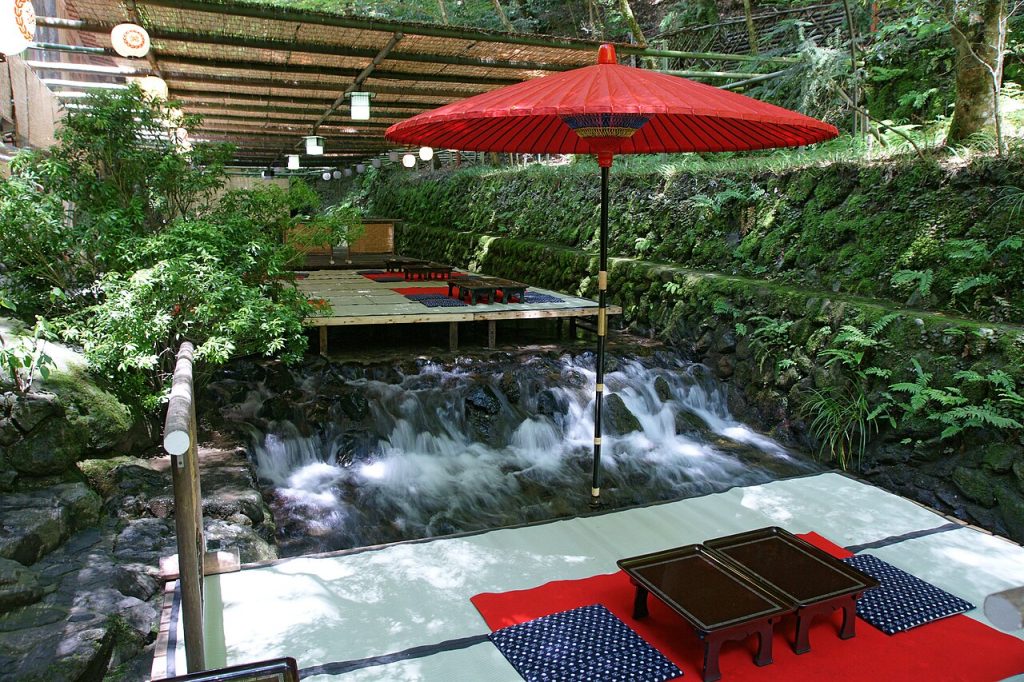
After the hike, you can also stop in Kibune village for food or tea.
Kibune is famous for its riverside restaurants, especially in summer when some restaurants offer kawadoko dining, where you eat on platforms built over the flowing river. It is a unique Kyoto experience, although it can be expensive and usually requires planning.
Even if you do not do a full meal, stopping for a drink or a small dessert in Kibune is a nice reward after the hike.
4. Stop By Myoman-ji Temple
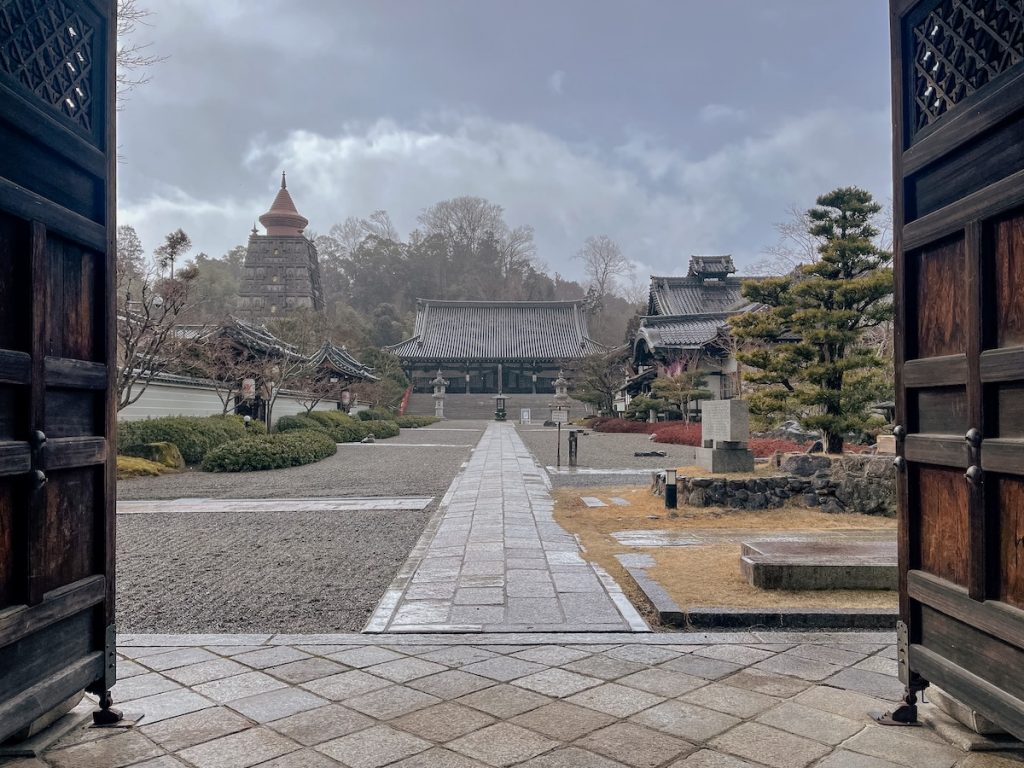
If you are taking the Eizan Railway to Kurama, Myoman-ji Temple can be a very nice stop along the way.
Located near Kino Station in the quiet Iwakura area, Myoman-ji is a peaceful temple that feels completely different from Kurama-dera. While Kurama-dera is deep in the mountains and surrounded by forest paths, Myoman-ji has a more open and spacious atmosphere, with wide temple grounds, a beautiful garden, and a striking Buddhist stupa that immediately makes the place memorable.
This is not one of Kyoto’s most crowded or famous temples, which is exactly why it is interesting. You can walk around slowly, enjoy the calm setting, and see a side of northern Kyoto that many visitors skip.
It is especially worth adding if you want to turn your Kurama trip into a fuller northern Kyoto itinerary, with a mix of mountain temples, quiet gardens, local neighborhoods, and nature.
How Much Time Do You Need?
If you only visit Kurama-dera Temple and return to Kurama Station, you can probably do it in around 1.5 to 2 hours.
If you want to visit Kurama-dera Temple, hike to Kifune Shrine, take photos, and enjoy the area without rushing, I would plan around half a day.
A good itinerary would look like this:
- Start at Demachiyanagi Station in Kyoto
- Take the Eizan Railway to Kurama Station
- See the giant Tengu head
- Walk to Kurama-dera Temple
- Take the cable car or hike up
- Visit the main temple grounds
- Continue the hiking trail to Kifune
- Visit Kifune Shrine
- Eat or drink something in Kibune
- Return to Kyoto from Kibuneguchi Station
If you also want to visit Kurama Onsen, then you can easily make it a slower and more relaxing day trip.
Practical Info
- Name: Kurama-dera Temple
- Japanese name: 鞍馬寺
- Area: Kurama, Sakyo Ward, Kyoto
- Address: 1074 Kuramahonmachi, Sakyo-ku, Kyoto, 601-1111
- Nearest station: Kurama Station on the Eizan Railway
- Access: Around 3 to 5 minutes on foot from Kurama Station to the temple entrance
- Entry fee: 500 yen for the mountain entrance fee
- Cable car fee: 200 yen one way for adults, 100 yen for elementary school students and younger children
- Opening hours: Usually around 9:00 AM to 4:15 PM or 4:30 PM, depending on the season and temple schedule
- Closed: Usually open every day
- Reihoden Museum fee: 200 yen
- Reihoden Museum hours: Usually 9:00 AM to 4:00 PM
- Reihoden Museum closing days: Usually closed on some weekdays and from mid-December to the end of February, so check before visiting
- Recommended visit duration: Around 1.5 to 2 hours for Kurama-dera only, or half a day if you hike to Kifune Shrine
- Walking time to the main hall: Around 30 to 45 minutes from the entrance if you walk all the way
- Hiking time to Kifune Shrine: Around 1 to 1.5 hours from the main temple area
- Best season: Autumn for foliage, spring and early summer for fresh greenery, winter for a quiet mountain atmosphere
- Best time of day: Morning, especially if you plan to continue hiking to Kifune Shrine
- Good for: Nature, temples, hiking, photography, peaceful walks, legends, and mountain views
- Nearby places: Kifune Shrine, Kurama Onsen, Kibune village, and riverside restaurants in Kibune
- Travel tip: Wear comfortable shoes. Even if you take the cable car, Kurama-dera still involves stairs, slopes, and forest paths.
Photography Tips For Kurama-dera Temple
Kurama-dera Temple is not only about taking pictures of buildings. It is more about capturing the feeling of the place.
Here are a few things I would focus on as a photographer:
- The giant red Tengu head near Kurama Station
- The lanterns and stone steps at the temple entrance
- The forest paths leading up the mountain
- The cable car and small mountain details
- The main hall with the mountain view behind it
- The quiet hiking trail toward Kifune
- The contrast between red lanterns, green forest, and old wooden structures
A wide-angle lens is useful for the temple grounds and mountain views, while a 35mm or 50mm lens is perfect for details, portraits, and storytelling shots.
If you are photographing someone here, I would avoid overly posed shots. Kurama feels natural and spiritual, so candid walking shots, quiet portraits, and photos of someone looking into the forest work really well.
Is Kurama-dera Temple Worth Visiting?
Yes, Kurama-dera Temple is absolutely worth visiting, especially if you want to see a different side of Kyoto.
It is not as famous as Kiyomizu-dera, Fushimi Inari, or Arashiyama, but that is exactly why I like it.
Kurama-dera offers something more peaceful and adventurous. You get legends, mountain views, forest paths, temple buildings, a cable car, a hiking trail, and even an onsen nearby.
For me, it is one of the best places near Kyoto if you love nature, photography, and quiet spiritual places.
And if you combine it with Kifune Shrine, it becomes one of the most beautiful short trips you can do from Kyoto.
Kurama-dera Temple is not just a place to visit. It is a place to experience slowly.
Before you leave, I want to remind you that at Photo Trips, we connect you to local photographers all over Japan and it includes Kyoto! If you are interested in getting pro level photos in Kyoto, make sure you check out the photo tours we have here: hire a photographer in Kyoto.