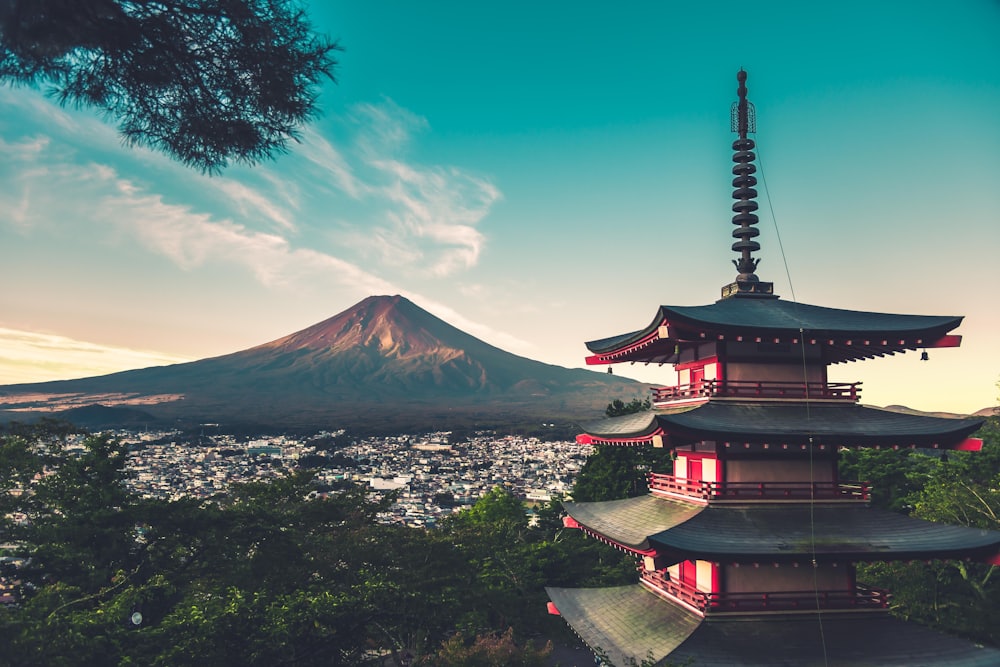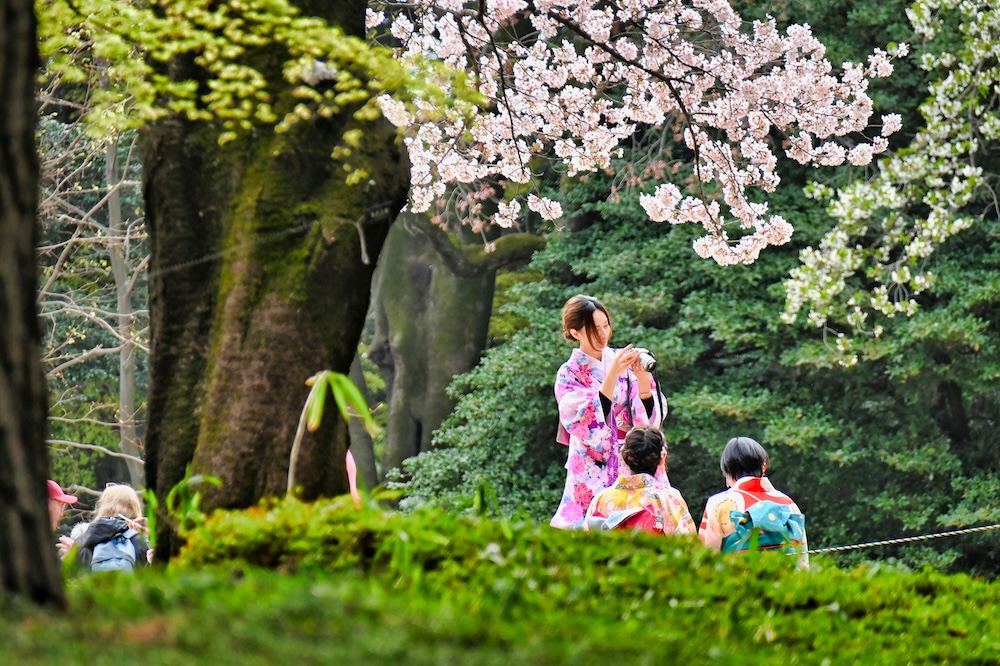
Wearing a kimono in Tokyo can be a beautiful experience, but the location makes a big difference. Some places give you the classic old-Tokyo atmosphere travelers usually picture, while others create a more refined garden setting or a striking contrast between traditional clothing and the modern city around you. For this list, we also kept convenience in mind, including places that are practical for a kimono day and easy to pair with rental shops nearby.
The best kimono locations in Tokyo are not all trying to do the same thing. Some are ideal for shrine and temple scenery, some are better for seasonal colors, and some work because the contrast is what makes the look memorable. These are the places we would recommend first to travelers who want a kimono experience in Tokyo that feels beautiful, smooth, and genuinely worth doing.
If you want to take your kimono pictures to the next level, what don’t you join a kimono photoshoot in Tokyo with Photo Trips. In addition to a nice guided tour, you will get stunning pictures of you in a traditional Japanese attire in some of the most photogenic places in Tokyo!
1. Asakusa
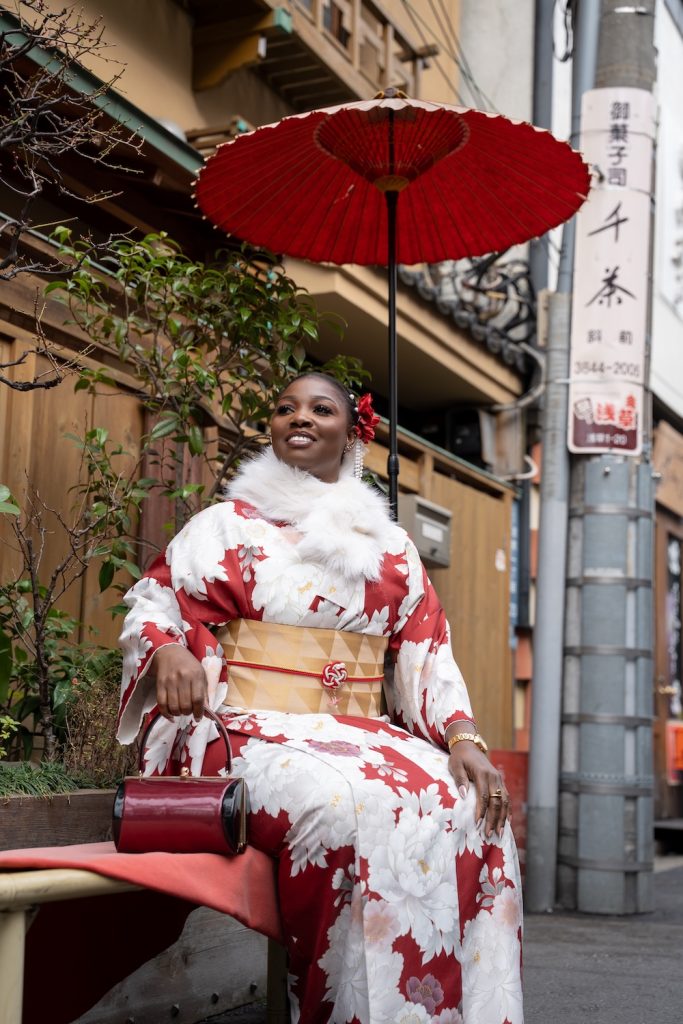
Asakusa is still the classic choice for wearing a kimono in Tokyo. The Kaminarimon gate, Nakamise shopping street, Senso-ji Temple, and the surrounding backstreets give you the most immediate traditional atmosphere in the city. If you want the most recognizable old-Tokyo setting, this is still one of the strongest places to start.
What makes Asakusa work so well is that the area feels complete. Once you are dressed, you do not need to move far to enjoy the experience properly. The temple approach is the obvious highlight, but some of the smaller nearby streets are often more enjoyable because they keep the atmosphere without the same crowd pressure.
Go early. That matters more here than almost anywhere else on this list. Asakusa gets busy quickly, and the difference between early morning and late morning is huge. If you want the area to feel elegant rather than hectic, make it one of your first stops of the day.
2. Yanaka Ginza
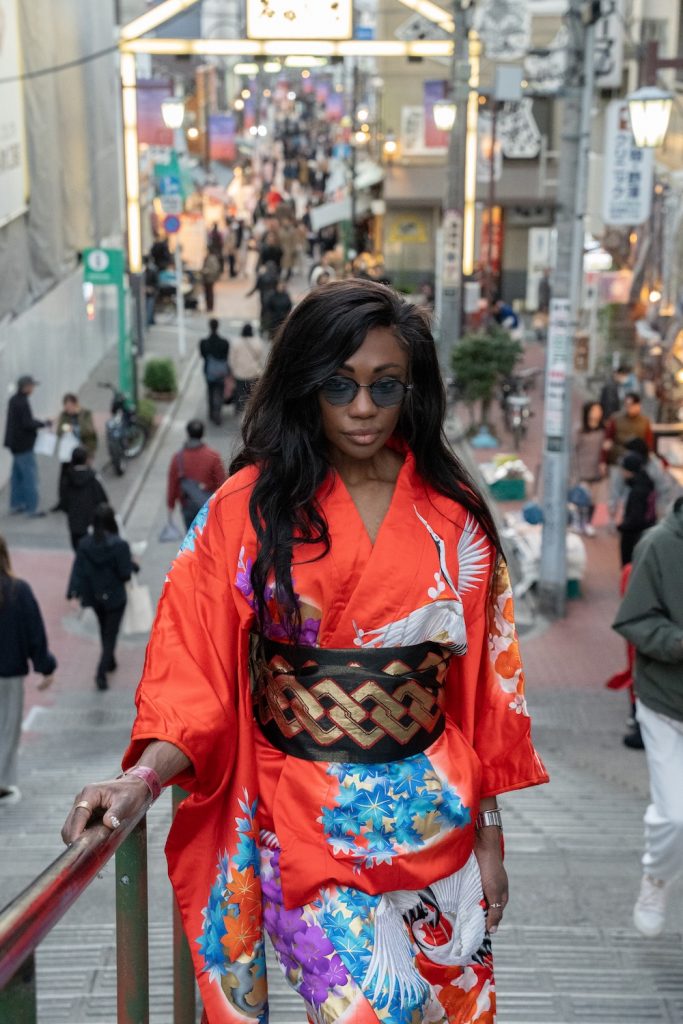
Yanaka Ginza is one of the best places to wear a kimono if you want a softer, more local version of traditional Tokyo. The old shopping street, nearby temple lanes, and low-rise neighborhood feel make the whole area more relaxed and more personal than the city’s major tourist zones.
This is a very good choice if you want your kimono day to feel like a slow walk rather than a major sightseeing mission. Yanaka suits travelers who enjoy atmosphere, side streets, and quieter charm more than giant landmarks. It is one of the easiest places in Tokyo to simply wander and let the setting carry the experience.
Pair Yanaka Ginza with nearby temple streets and small café stops rather than rushing through it. The neighborhood looks best when you treat it gently. It is not the most dramatic kimono backdrop in Tokyo, but it is one of the most natural and enjoyable.
3. Nezu Shrine
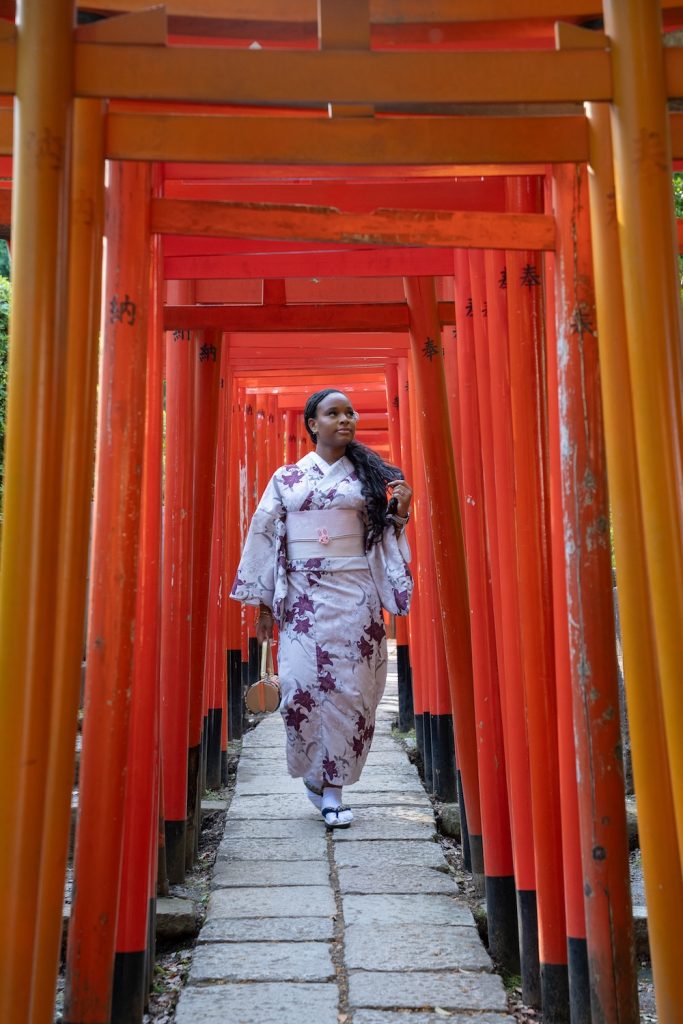
Nezu Shrine is one of the most graceful kimono locations in Tokyo. The shrine grounds, vermilion torii, greenery, and old atmosphere make it feel refined without being overwhelming. It is especially good if you want something traditional and photogenic, but calmer than Asakusa.
What makes Nezu Shrine stand out is balance. It has enough visual character to feel special, but the setting still feels peaceful. That makes it a strong choice for travelers who want shrine architecture and a more composed atmosphere rather than a loud tourist area.
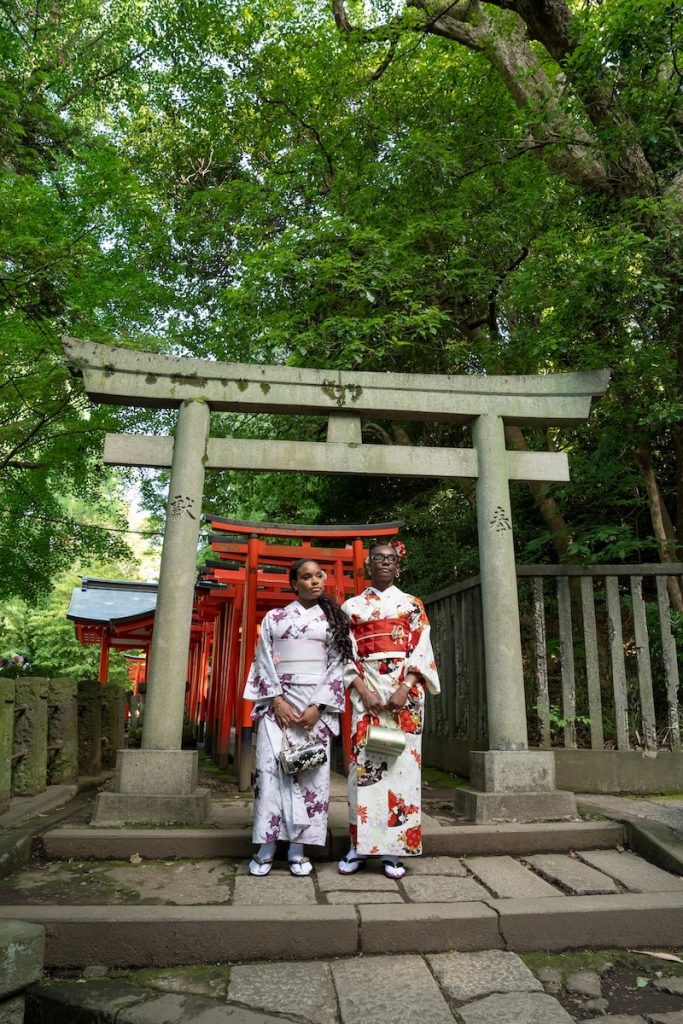
Go on a weekday if you can. The grounds are much easier to enjoy when the pace is slower. Nezu also works very well combined with Yanaka, since the two fit naturally into the same old-Tokyo style outing.
4. Hie Shrine
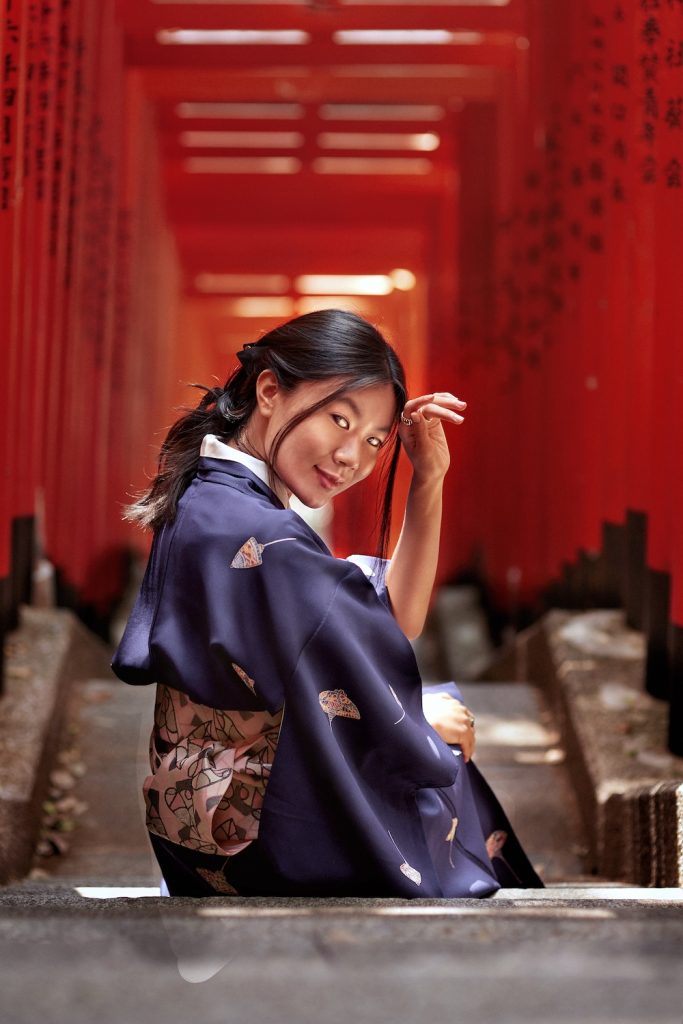
Hie Shrine is one of the best kimono spots in Tokyo if you want a shrine setting with a slightly more polished and central-city feel. It is especially known for its red torii staircase, which gives the place a distinctive look and makes it one of the strongest shrine backdrops in the city.
What makes Hie Shrine appealing is the contrast between the formal shrine atmosphere and the surrounding Tokyo setting. It still feels traditional, but not in the same old-downtown way as Asakusa or Yanaka. That gives it a cleaner, more structured look that works particularly well in photos.
Come here if you want a shrine stop that feels elegant and easy to access. It also works well as part of a wider Tokyo day rather than a full kimono-only outing, because the area is so convenient.
5. Shinjuku by night
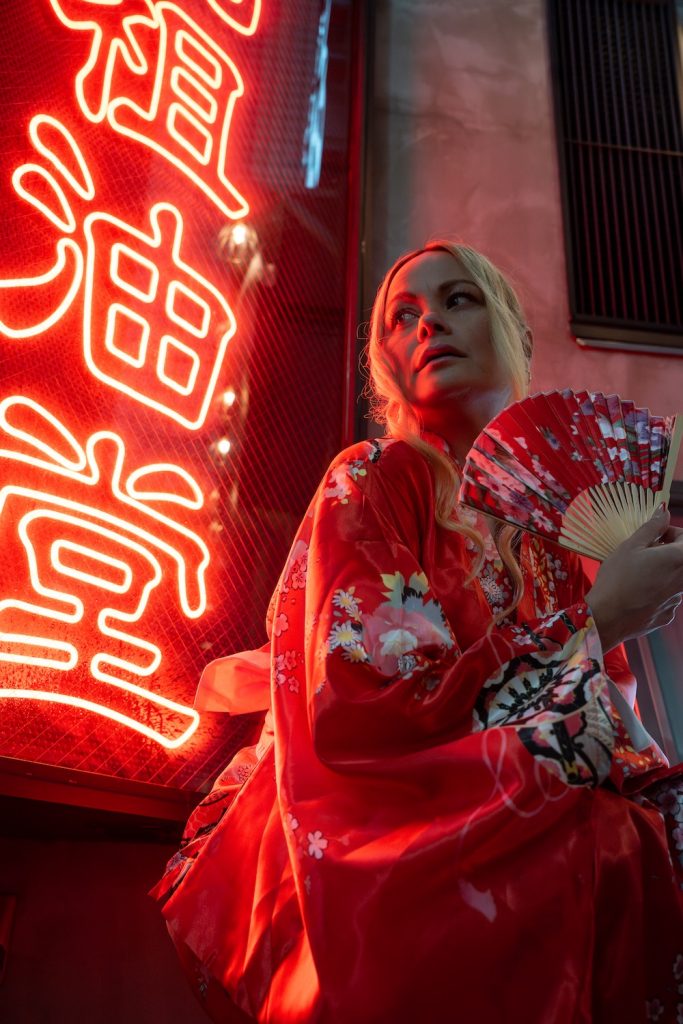
Shinjuku at night is not the obvious kimono choice, and that is exactly why it works. If you want contrast between traditional clothing and modern Tokyo, few places do it better. Neon signs, narrow alleys, reflections, and city lights can make kimono look surprisingly striking in a way that feels more fashion-forward and distinctly urban.
This works best if you lean into the contrast rather than trying to make the setting feel traditional. The appeal here is not temples or old streets. It is the tension between old and new, soft fabric and hard city light, classic styling and modern Tokyo energy. For some travelers, this ends up being far more memorable than a standard shrine backdrop.
Go after sunset and choose a clear route rather than wandering too widely. Areas with interesting light and manageable foot traffic work better than the busiest stationside chaos. This is one of the strongest choices if you want a Tokyo kimono look rather than a generic Japan kimono look.
To get similar pictures, you can book this photoshoot: Epic Street Photoshoot Experience at Tokyo Most Iconic Locations
6. Sakura spots in Tokyo
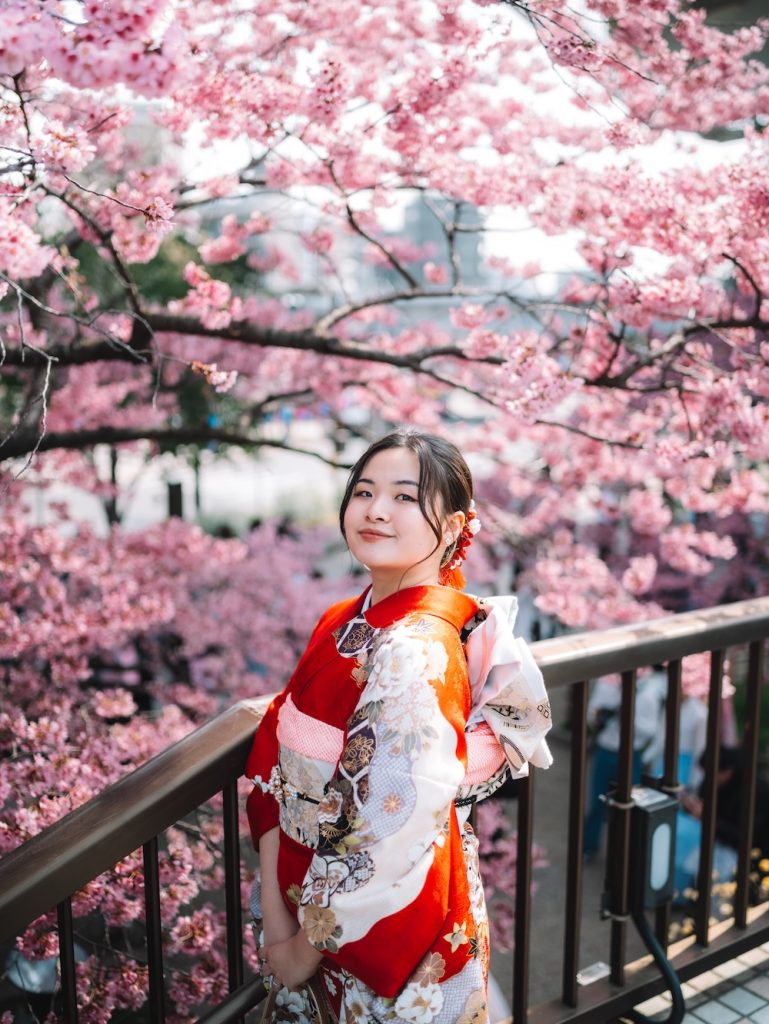
Cherry blossom season is one of the best times to wear a kimono in Tokyo, and it works especially well if you choose a location where the setting feels elegant rather than overcrowded. Some of the strongest examples are Chidorigafuchi for classic blossom views by the moat, Shinjuku Gyoen for variety and spaciousness, Sumida Park if you like sakura with a Tokyo Skytree backdrop, and Nakameguro if you want a more urban cherry blossom atmosphere.
What matters most here is timing. Sakura season can make even calm places feel busy, so the location should match the kind of mood you want. Chidorigafuchi is one of the most iconic, Shinjuku Gyoen is more comfortable if you want space, Sumida Park works well if you still want a traditional Tokyo feeling, and Nakameguro suits travelers who like a more stylish city atmosphere.
For more recommendation, feel free to read our article on the best cherry blossom photo spots in Tokyo.
Go early in the day and keep your expectations realistic during peak bloom. Sakura in Tokyo is beautiful, but it is never completely hidden. The best move is to choose a place that suits your style and enjoy the season rather than chasing a perfect empty scene.
7. Kawagoe
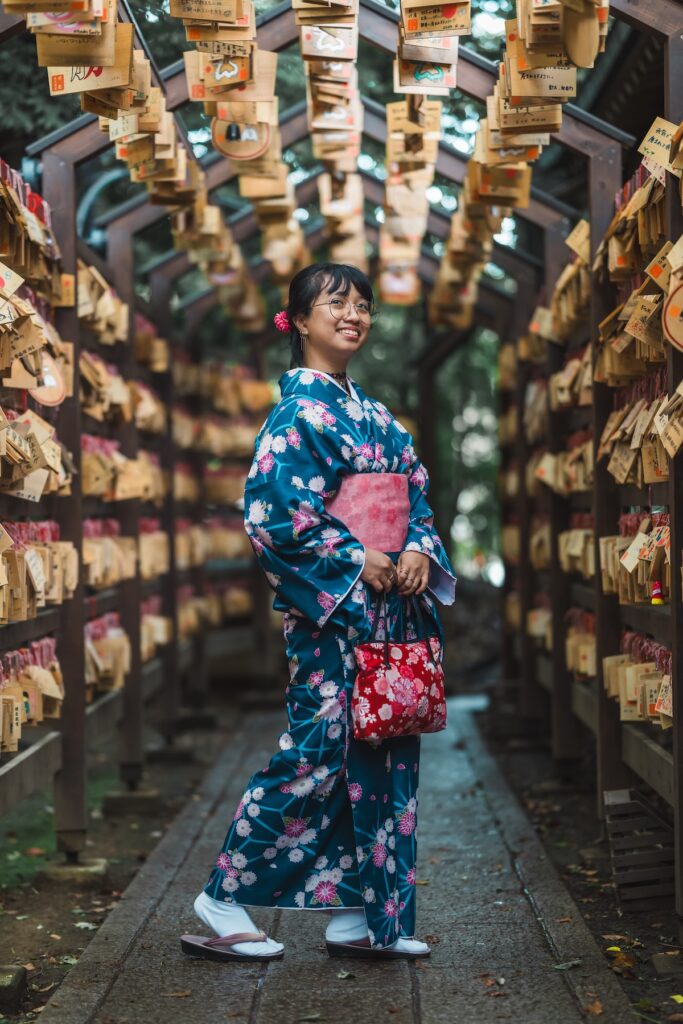
Kawagoe is one of the strongest day-trip options for wearing a kimono near Tokyo. The old warehouse district, traditional merchant streets, and Little Edo atmosphere make it one of the best places to get a much deeper historical townscape than you usually find inside Tokyo itself.
What makes Kawagoe so satisfying is scale. The traditional atmosphere extends well beyond a single temple or one photogenic corner, so the whole outing feels immersive. If you want the old-street look many travelers imagine before coming to Japan, Kawagoe delivers that very well.
Go on a weekday if possible. It is easier to enjoy when the streets are not packed. Start early, stay for most of the day, and let the town unfold slowly. Kawagoe rewards a relaxed pace much more than a rushed stop.
To get stunning shots, you may want to book this kimono photoshoot in Kawagoe.
8. Rikugien Garden
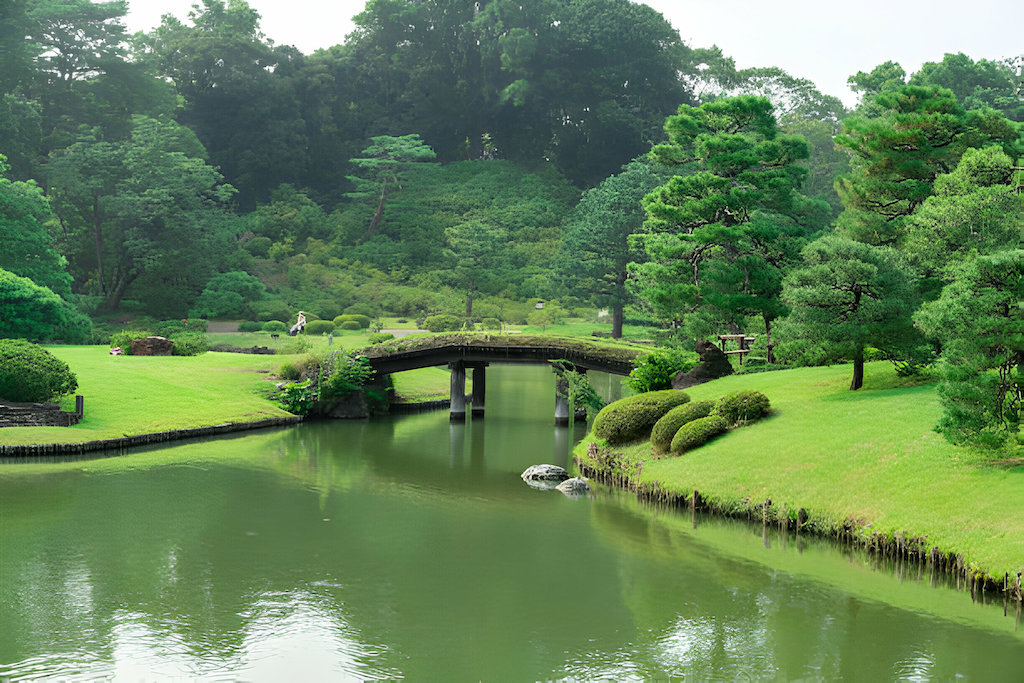
Rikugien is one of the best places to wear a kimono in Tokyo if you want a refined garden setting. It is an Edo-period strolling garden, and the atmosphere feels composed, quiet, and beautifully arranged in a way that suits kimono especially well.
This is a very good option for travelers who want elegance rather than busy sightseeing energy. The paths, ponds, bridges, and carefully framed views make the experience feel calmer and more polished than a typical city shrine stop. It is especially strong if you want a more classic and understated look.
Come here when you want a slower kimono outing. Gardens always work better when you are not rushing, and Rikugien is no exception. It suits travelers who prefer quiet beauty and atmosphere over famous Tokyo landmarks.
9. Hama-rikyu Gardens
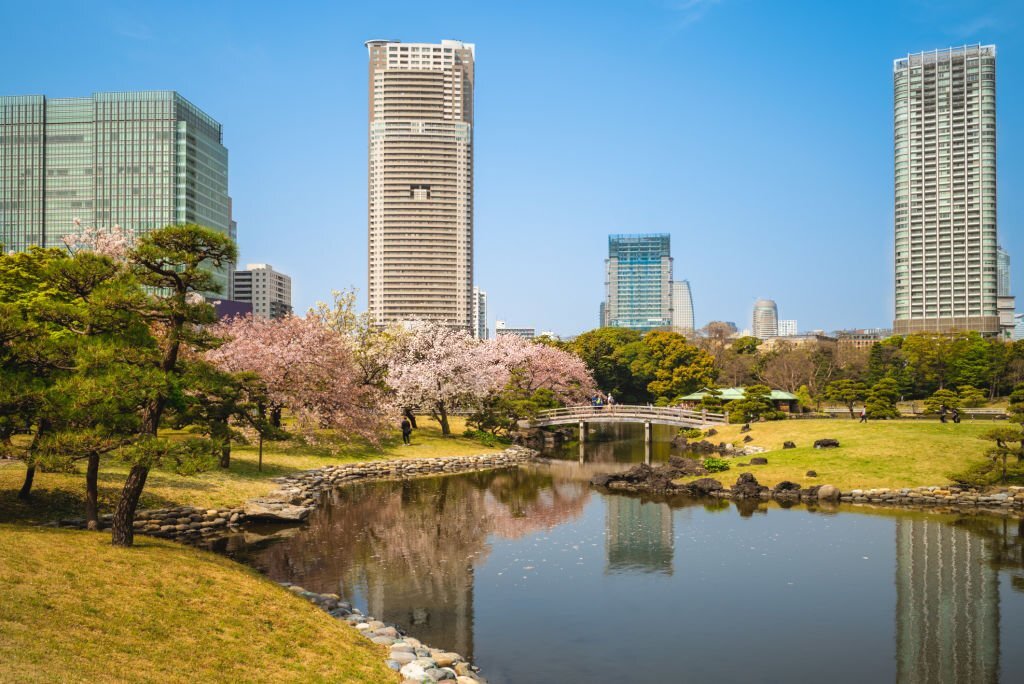
Hama-rikyu Gardens are a great choice if you want a traditional garden with a distinctly Tokyo feel. The landscape is classic, with ponds, walking paths, and a teahouse, but the surrounding skyline reminds you that you are still in the middle of a massive modern city. That contrast makes it feel very different from garden settings in Kyoto.
What makes Hama-rikyu especially interesting for kimono is that it gives you both serenity and city context. You can get graceful garden scenery, but also a look that feels unmistakably Tokyo. That makes it one of the best places if you want something traditional without losing the identity of the city around you.
Plan enough time to actually enjoy the grounds rather than treating it as a quick photo stop. It works best as part of a slower day, and it pairs especially well with tea or a more relaxed itinerary.
10. Tea ceremony
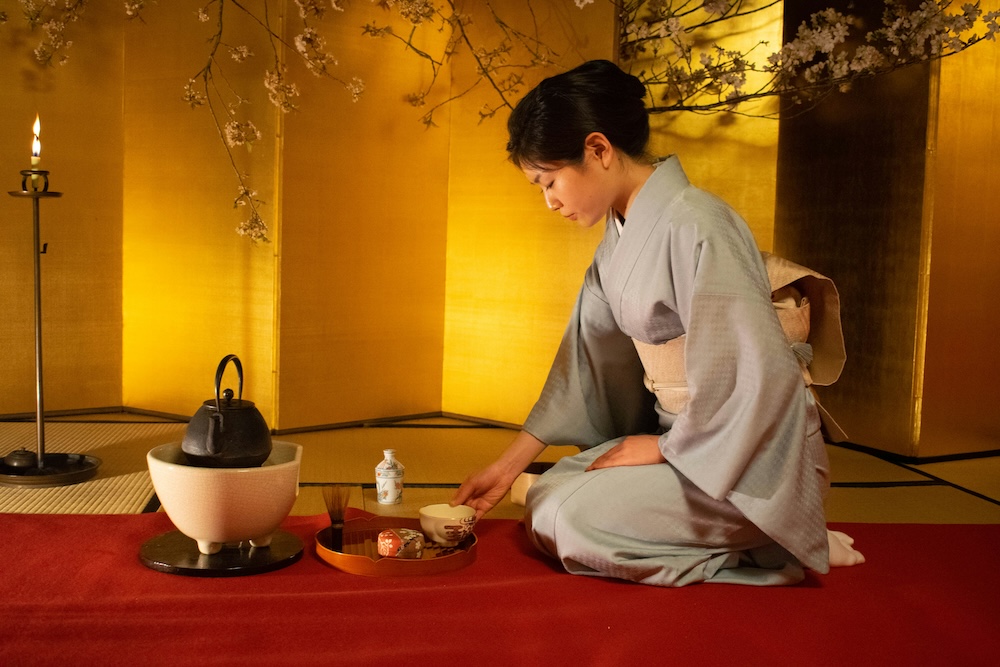
A tea ceremony is not just a backdrop. It is one of the best ways to make a kimono day feel more complete and meaningful. Instead of only walking around in traditional clothing, you add an experience that actually matches it. In Tokyo, that works especially well in settings where the atmosphere still feels calm and intentional.
Two strong options are a tea experience in Asakusa, where the traditional neighborhood atmosphere fits naturally, and a more garden-focused tea experience at Happo-en’s Mu-an tea house, where the setting feels quieter and more refined. Asakusa works well if you want something beginner-friendly and easy to combine with a wider kimono day, while Mu-an is better if you want the experience to feel more formal and more serene.
This is one of the best additions if you want your kimono day to feel like more than just a photo opportunity. It slows the pace down, gives the outing more depth, and creates a natural way to enjoy traditional culture in Tokyo without rushing from place to place.
Final thoughts
The best place to wear a kimono in Tokyo depends on the kind of mood you want. If you want the classic traditional look, Asakusa, Nezu Shrine, and Kawagoe are among the strongest choices. If you want something quieter and more refined, Rikugien and Hama-rikyu work beautifully. If you want contrast and a more fashion-forward Tokyo feel, Shinjuku at night stands out. And if you are visiting in spring, sakura season can make the whole experience even more special.
The best kimono day is usually the one that keeps the logistics simple and the pace slow. Choose one area or one clear route, avoid trying to do too much, and give yourself time to actually enjoy being dressed up in the city. That always works better than treating kimono as one more rushed stop on a packed Tokyo itinerary.